Quickmart’s NSE offer is a partial shareholder exit, a KES30 billion valuation and a new test for the retailer’s growth model

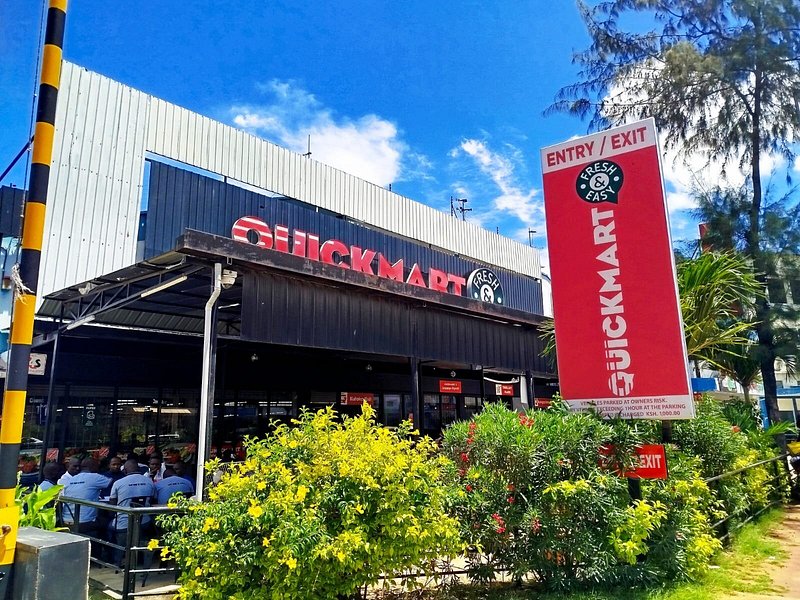
Quickmart has priced its NSE public offer at KES7.50 per share, putting an implied KES30 billion equity value on the supermarket chain as its private-equity-backed growth story moves into public markets.
The offer involves 2 billion existing ordinary shares, equivalent to 50% of Quickmart’s issued share capital. The offer opened on October 5 and will close on October 30, with trading on the Nairobi Securities Exchange expected to begin on November 12, subject to the offer timetable and any approved changes.
The important detail is that this is not a capital raise for Quickmart. The shares are being sold by Sokoni Retail Kenya Limited, the existing shareholder, meaning the supermarket chain will receive none of the KES15 billion gross proceeds if the full offer is taken up.
The transaction is therefore doing two things at once. It gives public investors access to one of Kenya’s largest supermarket chains, while allowing Adenia and the other existing shareholders to monetise half of their holdings without giving up their remaining interest in the business.


A KES15 billion sale of existing ownership
At KES7.50 per share, the 2 billion shares on offer have a gross value of KES15 billion. With those shares representing half of Quickmart, the offer price implies an equity value of about KES30 billion for the entire retailer.
The money, however, belongs to the selling shareholders rather than Quickmart.

Sokoni Retail Kenya is owned by a group that includes Adenia, the family of late Quickmart founder John Kinuthia, the founders of Tumaini Supermarket and Quickmart chief executive Peter Kang’iri. Each group is selling half of its existing holding through the public offer.
Adenia holds 50.79% of Sokoni Retail Kenya and is expected to receive about KES7.62 billion from the sale of roughly 1.06 billion shares. The Kinuthia family interests account for 31.83% of the vehicle, while the Tumaini founders hold 12.02%. Kang’iri holds 5.36%.
The structure gives all of them liquidity while leaving their remaining holdings exposed to the future performance of Quickmart as a listed company.
For Adenia, the transaction represents a partial realisation of an investment made during a period when Kenya’s supermarket industry was under severe pressure. The private-equity firm first acquired a majority stake in Tumaini in 2018 and a majority stake in Quickmart in 2019 before the two businesses were brought together under the Quickmart brand.
The public offer therefore represents a partial exit rather than a complete departure. Existing shareholders will retain substantial ownership after the listing, with at least 60% of their remaining shares subject to a 24-month lock-in under the offer arrangements.
From four stores to 72
The valuation is easier to understand when Quickmart’s growth is viewed against where the business started.
Betty Wamaitha joined Quickmart in 2015 when the retailer had four branches and about 100 employees. By the time she left the business in August 2026, the chain had grown to 72 stores, more than 8,000 employees and annual revenue above KES50 billion.
The expansion included the combination with Tumaini and the subsequent acceleration of store openings under Adenia-backed ownership. Peter Kang’iri, who joined Quickmart in 2019, has described an original ambition of about 40 stores. The business now operates across 16 counties and has set its sights on more than 100 stores over the medium term.
Quickmart reported FY2025 revenue of KES50.43 billion and adjusted profit after tax of KES1.7 billion. Revenue grew at a compound annual rate of 18.4% between FY2021 and FY2025.
The retailer also reported statutory net profit of about KES1.51 billion for the year, representing 33% growth, while sales increased by 9.3%.
Those figures give investors a financial base against which to assess the KES30 billion implied valuation. Using the KES1.7 billion adjusted profit figure, the offer price corresponds to an approximate 17.6 times adjusted price-to-earnings multiple. Using the reported KES1.51 billion net profit produces a multiple of roughly 19.9 times.
Both are analytical calculations rather than valuation multiples stated by Quickmart.
The question for public investors is whether the retailer can continue growing earnings at a pace that supports the price after listing.
Why Quickmart is not using the IPO money to expand
Quickmart’s decision to list without raising new capital is central to understanding the transaction.
Management says the business has historically financed organic expansion from internally generated cash flows. The retailer has also operated without debt, with working-capital management playing a major role in its ability to fund operations.
Supermarket retail can generate a useful working-capital cycle when inventory is sold to customers before suppliers need to be paid. That does not eliminate the need for capital, but it can reduce dependence on external financing when inventory turnover, supplier terms and store-level profitability are managed tightly.
Kang’iri has indicated that Quickmart intends to continue using internally generated cash for organic expansion. The company could consider debt for larger opportunities, including acquisitions or expansion beyond Kenya, but management does not currently present borrowing as necessary for its ordinary store rollout.
The NSE listing therefore serves a different purpose.
It broadens ownership, gives the market a public price for the business, increases disclosure and creates another potential source of long-term capital. For existing shareholders, it also creates a more visible route to liquidity.
The International Finance Corporation has committed KES1.94 billion as an anchor investor, adding institutional backing to the offer.
What Adenia has built
Adenia entered Quickmart at a difficult point for Kenya’s supermarket sector.
Uchumi, Nakumatt and Tuskys had either collapsed or were struggling, while international operators including Shoprite and Game had also scaled back or exited Kenya. The market was therefore undergoing significant disruption when Adenia backed Tumaini and Quickmart.
The investment thesis centred on two relatively small Kenyan supermarket businesses that had built their customer bases around neighbourhood locations, convenience and value.
Adenia brought capital, professional management and governance support to a business that was previously expanding at a much slower rate.
Kang’iri has described the private-equity period as one in which Quickmart moved from opening roughly one store a year to significantly faster expansion, reaching 72 stores today.
The result is a business with a much larger revenue base and operating footprint than the one Adenia entered.
The NSE transaction now gives the market a mechanism to put a price on the value created during that period.
The retail economics behind the valuation
Store numbers alone do not explain Quickmart’s growth.
Wamaitha’s account of the business points to a retail model built around footfall, transactions, basket value, category performance, customer frequency and supplier economics.
Quickmart has about 2.5 million Q-Points loyalty members, giving the retailer a substantial base from which to track purchasing behaviour.
That data can reveal changes in consumer spending before they become obvious in aggregate revenue. A customer switching from a larger pack of diapers to a smaller one, for example, can indicate pressure on household budgets while the customer remains within the same store.
Category management is equally important. Lower-margin products such as flour, sugar, milk and cooking oil can be used to attract customers, with retailers relying on the wider basket to recover margin. Shelf placement, stock availability, supplier promotions and product movement all influence the economics of each store.
Supplier relationships also form part of the model. Wamaitha described commercial arrangements in which suppliers could provide additional margin when agreed sales targets were achieved, allowing Quickmart to improve returns without relying only on higher consumer prices.
That becomes increasingly important as the chain grows because a store can add revenue without necessarily adding enough profit if rent, staffing, inventory and other operating costs are not controlled.
Scale is useful, but proximity is no longer enough
Quickmart’s 72-store network gives it purchasing scale, brand recognition and a broader customer footprint. But the retailer is operating in a market where competing supermarkets can sit within the same catchment.
Wamaitha described locations where Quickmart competes directly with Chanderana, NAS, Jazza and other retailers. When several supermarkets are close to the same customers, convenience alone becomes a weaker differentiator.
Price, promotions, service, parking, product availability and operating hours can determine where the customer spends the basket.
That puts pressure on Quickmart’s medium-term target of more than 100 stores. The relevant question for each new location is not simply whether the store can attract customers, but whether it can generate sufficient sales and category profitability after the full cost of operating it is taken into account.
Quickmart’s 24-hour model is one response to that competition. Kang’iri has said nearly half of the chain’s stores operate around the clock, with night sales contributing a meaningful share of turnover.
The strategy gives the retailer another way to compete for customers whose shopping patterns fall outside conventional supermarket hours.
Quickmart is also becoming a digital retail network
The company’s physical footprint is increasingly connected to digital commerce.
In June, Bolt Food partnered with Quickmart to make more than 12,000 products available through its platform across more than 60 Quickmart stores.
That partnership illustrates why the value of the 72-store network extends beyond people walking into stores. Each location can also function as a fulfilment point for digital orders.
Quickmart is therefore competing on several fronts at once: physical convenience, pricing, product availability, loyalty, supplier relationships and digital fulfilment.
The NSE valuation ultimately reflects the market’s assessment of how effectively those pieces can be converted into sustained earnings.
The dividend proposition
Quickmart is also offering investors a relatively clear dividend proposition.
The company intends to maintain a dividend payout ratio of at least 80% of annual profit after tax, subject to financial performance, capital requirements and board discretion. The first dividend under the new policy is expected to relate to the second half of 2026 and be paid in the first half of 2027.
The retailer paid KES1.65 billion in dividends against FY2025 reported net profit of about KES1.51 billion, a payout equivalent to roughly 109%.
That historical distribution should not be treated as a guarantee of future dividends. The stated 80% policy remains subject to the company’s financial position, capital needs and board decisions.
For investors, however, the policy gives the listing another dimension. They are not only assessing whether Quickmart can grow its store network and earnings, but also how much of those earnings can ultimately be returned to shareholders.
Who gets the shares?
The offer is structured to bring several categories of investors into Quickmart’s ownership base.
Institutional investors have been allocated 35% of the offer, while local retail and other offering investors each have 20%. East African Community investors have an allocation of 12%, with the categories subject to adjustment depending on subscription levels and the terms of the offer.
That distribution is significant because Quickmart’s public-market story depends on more than attracting large institutions.
The retailer has a familiar consumer brand, and its offer gives individual Kenyans an opportunity to become shareholders in a business whose stores they already use. But familiarity does not automatically translate into sustained share trading. The company’s performance after listing will determine whether that initial interest develops into an active investor base.
When Quickmart starts trading on the NSE
The offer opened on October 5 and closes on October 30.
The formal timetable then provides several steps before trading begins:
- October 5, 2026: Offer opens
- October 30, 2026: Offer closes and final day for retail investor payment
- November 6, 2026: Offer results and allocation announced
- November 10, 2026: Payment date for qualified institutional investors
- November 11, 2026: Shares credited to CDS accounts and refunds processed where applicable
- November 12, 2026: Quickmart shares begin trading on the NSE
The dates remain subject to the provisions of the offer and any approved changes announced by the company and regulators.
The sequence gives investors a defined path from subscription to actual trading, with the November 12 listing date marking the point at which the market begins setting a live price for the shares.
A rare public-market route for a private-equity investment
Quickmart’s listing also matters beyond the supermarket sector.
Private-equity investors typically need to realise their investments through a sale to another investor, a strategic buyer or a public-market transaction. The NSE has been looking for ways to deepen this exit market, including exploring a secondary vehicle for private-equity and development-finance investors.
Quickmart’s transaction is not that proposed vehicle, but it demonstrates how a privately backed Kenyan business can use the public market to provide liquidity while its original investor retains a major stake.
It also arrives as the NSE seeks to broaden the range of companies available to investors after a long period of limited new listings.
Quickmart will become only the second listed supermarket retailer on the NSE after Uchumi, which entered the market in 1992.
That history makes the listing particularly significant. Kenya has seen several supermarket failures over the past two decades, making Quickmart’s route from a four-store operation to a 72-store chain a useful case study in how scale, working-capital discipline, supplier relationships and professional management can shape retail survival.
The valuation question starts after the listing
At KES7.50 a share, the market is being asked to value Quickmart at approximately KES30 billion.
That valuation is being attached to a business that generated KES50.43 billion in sales in 2025, reported KES1.51 billion in net profit and KES1.7 billion in adjusted profit, operates 72 stores and has ambitions to exceed 100.
The KES15 billion being offered to investors will not finance that expansion. It is the price existing shareholders are receiving for selling half of their holdings.
That makes the listing fundamentally a valuation and ownership event for Quickmart rather than a conventional fundraising exercise.
The next question belongs to the public market. Quickmart has to show that the operating discipline that took it from four stores to 72 can continue to generate earnings, cash and dividends as the network gets larger.
For Adenia and the founding shareholders, the offer unlocks part of the value created during that journey while leaving them invested in what comes next.
For new shareholders, KES7.50 is the entry price.
What the market eventually decides that stake is worth will depend on what Quickmart does with the business after November 12.
Real ESG impact doesn’t happen in panels alone, it happens in the rooms where financiers, operators, and policymakers actually align. Our GreenShift Forum 2026 cuts the noise, bringing together the people rewiring Africa’s sustainability and energy frameworks for one focused day in Nairobi. Secure your seat.
Go to TECHTRENDSKE.co.ke for more tech and business news from the African continent and across the world.
Follow us on WhatsApp, Telegram, Twitter, and Facebook, or subscribe to our weekly newsletter to ensure you don’t miss out on any future updates. Send tips to info@techtrendsmedia.co.ke