From Nairobi to New York, Lagos and Abu Dhabi, NSE is widening its capital-market reach

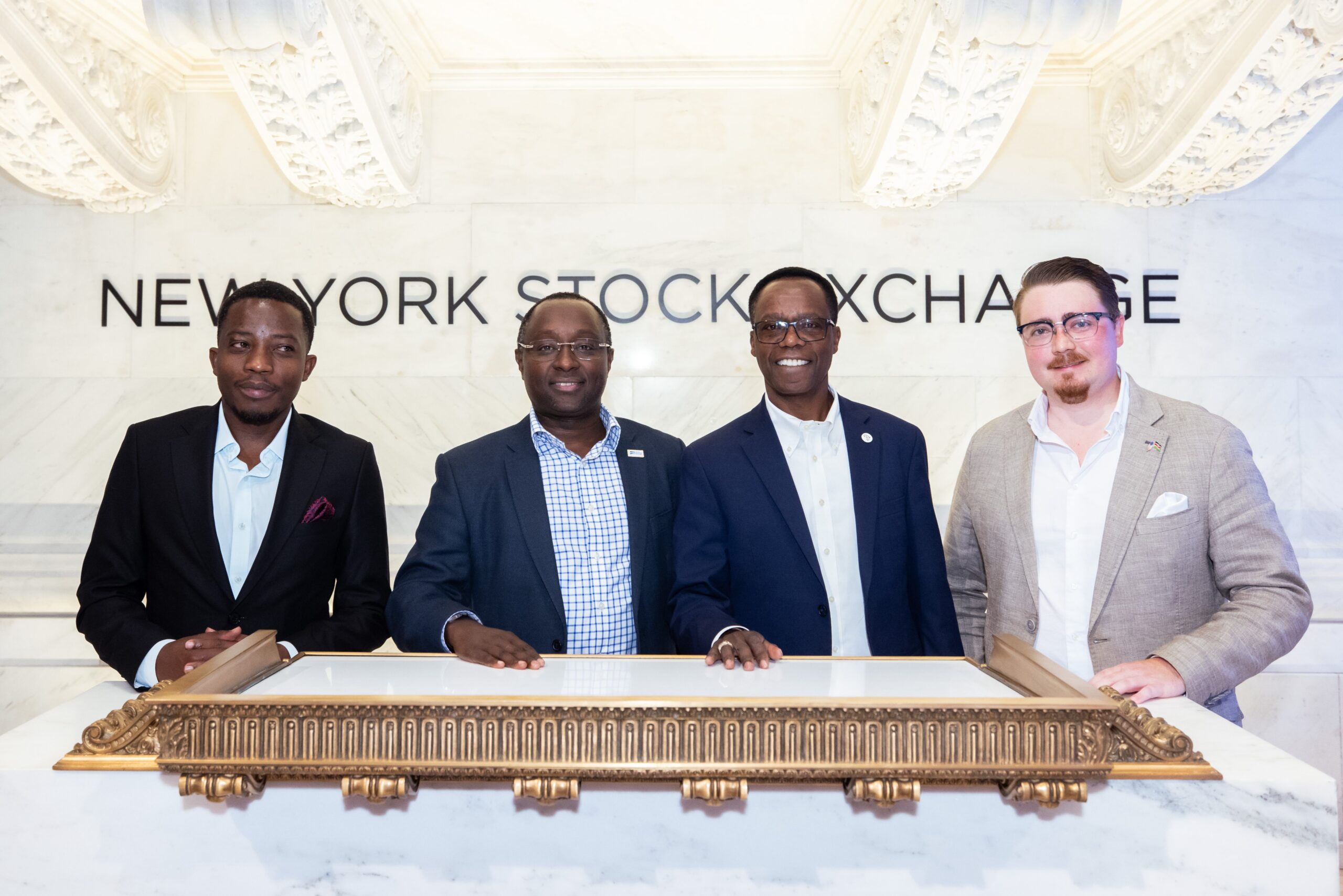
The Nairobi Securities Exchange is widening its focus beyond conventional listings as it builds relationships with financial centres in New York, Lagos and Abu Dhabi, seeking new ways to connect Kenyan and regional investors with international capital.
The strategy now has a concrete African example.
On October 5, the Capital Markets Authority approved a Short Form Prospectus submitted by Renaissance Capital Kenya for global depositary receipts linked to Dangote Petroleum Refinery & Petrochemicals’ Nigerian initial public offering. The approval gives eligible Kenyan investors a regulated route into the Nigerian offer, although the resulting GDRs still require the relevant Nigerian approval before they can be admitted to trading on the NSE.
The Dangote transaction is particularly useful because it turns the NSE’s internationalisation agenda into a practical market structure. Instead of simply discussing cross-border cooperation, the exchange is now positioned to host a security representing underlying shares held in another African market.

Dangote puts cross-border access into practice
The Nigerian refinery IPO opened on September 14 and closes on October 13, with 4.1 billion shares being offered at ₦525 each. Under the approved Kenyan GDR arrangement, Renaissance Capital Kenya will work with its Nigerian affiliate and custodial partners to facilitate the creation of receipts against allocated underlying shares.
The approved Kenyan structure requires a minimum subscription of 2,000 GDRs at Sh53.50 each, or Sh107,000. The GDRs are targeted for NSE admission in December, subject to the remaining regulatory and transaction requirements.
The product is therefore not simply a foreign share appearing on the Nairobi exchange.
The underlying Dangote shares remain in Nigeria, while the GDR is intended to provide Kenyan investors with a locally traded instrument. The model brings brokers, custody, settlement, regulation and the exchange into a single cross-border investment chain.
That distinction matters to the NSE’s wider strategy.
A functioning GDR mechanism gives Nairobi a potential role as an access point between investors and companies operating in other African markets. The same infrastructure could, in principle, support other cross-border securities if issuers, regulators, intermediaries and investors find the structure commercially viable.
Nairobi wants to become a regional capital gateway
The Dangote transaction fits into a broader effort by the NSE to expand the range of ways capital can move through Nairobi.
For Kenyan investors, that means potentially gaining access to assets outside the domestic market without having to establish entirely separate investment arrangements in every foreign jurisdiction.
For companies, the proposition runs in the other direction. A regional issuer could potentially use Kenyan capital-market infrastructure to reach investors in Kenya and East Africa.
That two-way model is more ambitious than simply attracting another company to list on the NSE.
It requires the exchange to work alongside brokers, custodians, fund managers, central securities infrastructure, regulators and technology providers. It also requires reliable information so investors can understand securities whose underlying businesses operate outside Kenya.
The Dangote GDR puts several of those requirements into one transaction.
New York offers lessons beyond listings
The NSE’s engagement with New York adds a different dimension to the strategy.
During discussions at the New York Stock Exchange, NSE chief executive Frank Mwiti examined how a mature exchange uses financial data, media, technology and products alongside its core trading infrastructure. Potential American Depositary Receipts were among the ideas discussed, although no ADR programme with the NYSE was announced.
That distinction is important.
The New York engagement should be understood as an exploration of possible models and products rather than an announcement that Kenyan companies will automatically begin trading on the NYSE.
The broader lesson concerns what sits around an exchange.
Investors need more than a trading screen. They need reliable prices, corporate information, market data, research, liquidity information and corporate-action details. Financial institutions building investment products need access to the same underlying information.
This becomes even more important when investors are considering securities across different jurisdictions.
The NSE’s New York discussions therefore point toward a wider conception of market infrastructure, where data and technology are part of the investment-access chain.
Financial data is becoming part of market connectivity
The New York discussions also brought the NSE into contact with Wall Street Africa, which is developing financial-data products focused on African markets.
That matters because international investors often face an information problem before they face a trading problem.
African companies and markets can be investable in principle while remaining difficult for global investors to compare, research and monitor at scale. Consistent market data can reduce some of that friction.
The same principle applies in reverse.
A Kenyan investor considering a Nigerian, Nigerian-linked or other foreign security needs access to information about the underlying company, market conditions, currency exposure and trading environment.
For the NSE, building stronger links with data and technology providers can therefore complement the physical and regulatory infrastructure required for cross-border securities.
Lagos offers a closer African reference point
The NSE’s engagement with Lagos adds another layer to the strategy.
During discussions with FMDQ Securities Exchange, Mwiti examined Nigeria’s capital-market infrastructure, including its deeper fixed-income market and secondary trading activity.
That provides a useful comparison for Kenya.
Kenya’s government securities market remains substantially more developed than its corporate debt market. Corporate bonds, commercial paper and other short-term debt instruments occupy a smaller part of the market.
A broader fixed-income ecosystem could give Kenyan companies additional financing options while providing institutional investors with more securities to trade and hold.
The NSE and Nigeria Exchange Group have also been discussing greater cooperation, including possible links among brokers, custodians, fund managers and other market participants.
That is wider than a technical exchange-linkage project.
It involves the institutions that actually make cross-border securities markets work.
Abu Dhabi adds another capital channel
The NSE’s international outreach has also extended to Abu Dhabi.
At the AFCM Annual Conference on September 29 and 30, Mwiti participated in discussions on automation, regulation and changing investor requirements in brokerage. Representatives from the Abu Dhabi Securities Exchange, BHM Capital, ADIB Securities, Beltone Holding and Arqaam Capital were also involved in the discussions.
The Abu Dhabi engagement gives the NSE another reference point for how technology is changing financial-market intermediaries.
It also brings the exchange closer to investors and institutions in the Middle East and North Africa, adding another potential source of capital and financial-market partnerships.
The three markets therefore offer different reference points.
New York provides lessons around data, technology, media and diversified financial products.
Lagos provides a major African example around fixed income, cross-border investment and exchange cooperation.
Abu Dhabi offers exposure to MENA capital, brokerage infrastructure and automated financial-market services.
The challenge for Nairobi is turning those relationships into usable market products.
Dangote and Lamu show both directions of capital
The Dangote transaction also illustrates the two directions in which the NSE wants capital to move.
The current GDR concerns Dangote’s Nigerian refinery. If the transaction completes, Kenyan investors will be able to obtain exposure to the Nigerian asset through a security traded in Nairobi, while the underlying shares remain in Nigeria.
The proposed Dangote East African Petroleum Refinery and Petrochemicals project in Lamu is different.
CMA has explicitly stated that the current Nigerian IPO does not represent shares in the Lamu project.
Dangote has separately discussed the possibility of listing the East African refinery on the NSE once the project is completed.
If that happens, it would represent the opposite direction of capital flow. Rather than bringing exposure to a Nigerian asset to Kenyan investors through a GDR, the Nairobi market would potentially host the shares of a major industrial project located in Kenya.
The two opportunities should therefore not be conflated, but together they illustrate the broader ambition around Nairobi as a regional capital market.
International connectivity still depends on the domestic market
Global connections cannot compensate for weaknesses in the domestic market.
The NSE has been developing new investment products and digital channels while working to broaden participation in Kenyan securities. The exchange has also been operating against a market capitalisation that has returned above the KSh4 trillion level.
Those domestic developments matter because international investors still need liquidity, reliable information and investable securities when entering Kenya.
The same infrastructure benefits local investors looking outward.
A stronger domestic exchange gives cross-border products a more credible base. It provides the brokers, custodians, settlement systems, investor accounts and regulatory infrastructure through which international securities can eventually be accessed.
The Dangote GDR is therefore connected to domestic market development even though the underlying company is Nigerian.
The technology layer sits underneath all of it
The common thread running through the NSE’s engagements in New York, Lagos and Abu Dhabi is infrastructure.
Cross-border investment requires more than an exchange relationship. It requires regulatory coordination, brokers, custodians, settlement systems, investor identification, pricing mechanisms and reliable market information.
Technology connects those layers.
That makes the NSE’s technology agenda broader than digitising trading. The more important question is whether technology can make securities easier to access, research, trade and settle across jurisdictions.
The Dangote GDR provides the clearest live example.
Its Sh107,000 minimum means the product is not simply a mass-market version of the Nigerian retail offer. But the structure demonstrates that a Kenyan investor can potentially access a major African capital-raising transaction through Nairobi while the underlying security remains in its home market.
That is precisely the kind of infrastructure the NSE’s internationalisation strategy is trying to develop.
From exchange to capital-market gateway
The NSE’s relationships with New York, Lagos and Abu Dhabi are at different stages. Some involve active transactions, others exploratory discussions and institutional engagement.
The Dangote GDR is the clearest example of the strategy moving from discussion into a defined market structure. CMA has approved the Kenyan prospectus, while the remaining steps involve Nigerian regulatory approval, completion of the IPO allocation and creation and admission of the GDRs.
New York offers lessons around the data and technology ecosystem surrounding a global exchange. Lagos offers a major African reference point for fixed income and market cooperation. Abu Dhabi adds another international investor base and a perspective on automated financial intermediation.
The value of these relationships will ultimately be measured by what they produce.
For the NSE, that means more usable investment products, better market information, stronger links between intermediaries and easier movement of capital across markets.
That would leave Nairobi doing more than matching buyers and sellers of Kenyan securities.
It would make the exchange part of the infrastructure through which African investors reach African markets, global investors reach Kenya and companies tap capital beyond the borders of their home market.
Real ESG impact doesn’t happen in panels alone, it happens in the rooms where financiers, operators, and policymakers actually align. Our GreenShift Forum 2026 cuts the noise, bringing together the people rewiring Africa’s sustainability and energy frameworks for one focused day in Nairobi. Secure your seat.
Go to TECHTRENDSKE.co.ke for more tech and business news from the African continent and across the world.
Follow us on WhatsApp, Telegram, Twitter, and Facebook, or subscribe to our weekly newsletter to ensure you don’t miss out on any future updates. Send tips to info@techtrendsmedia.co.ke