
Former CBK governor wants M-Pesa users to share in returns from their wallet funds

Do M-Pesa customers earn returns from the money held in their wallets? Under Kenya’s current framework, the answer is no, even though customer funds placed in regulated trust accounts can generate investment income.
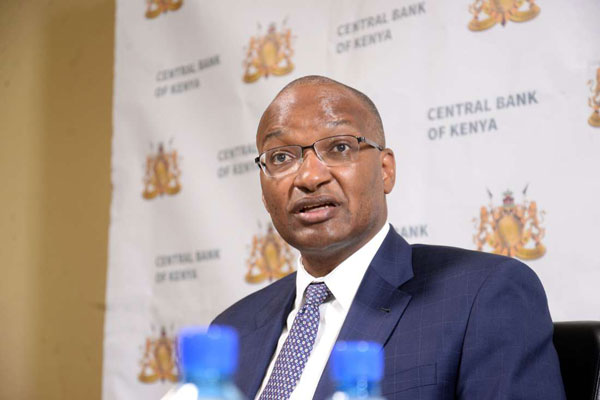
Former Central Bank of Kenya governor Patrick Njoroge is now calling for the rules to change, proposing regular “bonus payouts” to wallet holders from income earned on customer funds after the costs of running the trust have been deducted.
Njoroge made the proposal in comments submitted on September 28, 2026, on the draft National Payment System Policy, August 2026. He wants payment laws and regulations amended to explicitly require payment service providers to distribute part of the income generated from customer funds held in trust to wallet holders. The proposal comes as Kenya prepares a new payments framework intended to strengthen competition, interoperability, consumer protection, innovation and financial stability.
What Patrick Njoroge is proposing
The proposal would change what happens to the income generated while customer funds sit in trust accounts. Under the existing Kenyan framework, payment providers must safeguard funds equivalent to their outstanding electronic-money liabilities, with the money separated from the providers’ own operating funds.


The draft National Payment System Bill, 2026 retains that protection. It allows electronic-money issuers and wallet providers to hold customer funds in government securities or interest-bearing trust accounts at banks or microfinance banks, while requiring the trust balance to remain at least equal to the amount owed to customers. The Bill also requires providers to submit information on the number of beneficiaries and the aggregate amount attributable to them.
Njoroge’s proposed change concerns the income generated from those investments. Rather than allowing the income to continue flowing primarily into the existing charitable framework, he wants payment service providers to make regular bonus payouts to wallet holders after deducting operating costs and related expenses of the trust.

The proposal does not establish a particular interest rate or guarantee a fixed payment to every customer. The eventual amount would depend on the income generated, the costs of administering the trust, the balance attributable to each customer and the mechanism ultimately approved by regulators.
M-Pesa has about KSh250 billion held in trust
The scale of M-Pesa makes the question considerably larger than a theoretical debate over a few shillings of interest.
The Central Bank of Kenya told a parliamentary committee that M-Pesa held about KSh250 billion in customer funds in trust accounts across local commercial banks. CBK also classified M-Pesa as a Systemically Important Payment System, reflecting the platform’s role in Kenya’s wider financial infrastructure.
That KSh250 billion is important because it is much closer to the economic base relevant to the debate than M-Pesa’s annual transaction value. It represents customer funds held in trust, whereas transaction value measures money moving through the platform over a period and can count the same shilling multiple times.
The distinction is particularly important when looking at Safaricom’s KSh41.7 trillion M-Pesa transaction value for the financial year ended March 2026. That figure demonstrates the enormous volume flowing through the network, but it cannot be treated as KSh41.7 trillion sitting in trust and earning investment income.
The relevant calculation for any future payout would instead require information on average trust balances, investment yields, the duration for which funds are invested, trust expenses and the amount of income actually available for distribution.
How Kenya currently handles trust fund income
Kenya’s regulatory approach has historically separated the customer’s underlying funds from the income generated by holding those funds.
The trust structure exists primarily to protect customers. Payment providers cannot simply transfer customer funds into their ordinary operating accounts, and the proposed Bill maintains restrictions against commingling the funds with the provider’s own money. The trust balance must also remain sufficient to meet customer liabilities.
The treatment of the income is different. Kenya currently does not permit mobile-money providers to distribute trust-account interest directly to customers. The GSMA’s comparative research identifies Kenya as a jurisdiction where income generated from mobile-money trust accounts is directed toward public charitable purposes, subject to the applicable regulatory requirements.
That arrangement is what Njoroge wants reconsidered. His argument is that the economic scale of mobile wallets has moved well beyond the assumptions that shaped the original model, with customer funds now representing a substantial pool capable of generating meaningful investment income.
The question is therefore no longer simply whether mobile-money providers should be allowed to invest safeguarded customer funds. It is who should ultimately benefit from the income produced while those funds remain in the regulated trust structure.
Other African markets already let customers benefit
Kenya is not the only country wrestling with the issue, but its approach differs from several other African markets.
GSMA research covering 10 countries found different regulatory approaches to mobile-money trust-account interest. Rwanda requires mobile-money providers to distribute at least 80% of accrued interest, net of fees and charges related to administering pooled float accounts, to customers. Tanzania requires interest to benefit customers, while Uganda permits providers to pay interest to customers in proportion to their balances with regulatory approval. Zambia allows interest to be used for customer-benefiting initiatives, including measures such as fee reductions and consumer programmes.
Tanzania provides one of the earliest examples. In 2014, Tigo Pesa distributed US$8.7 million from returns generated by its trust fund to 3.5 million customers and agents, following a Bank of Tanzania framework that allowed accrued interest to directly benefit customers. The funds could also be used for customer education, rural operations, insurance and other customer benefits.
The examples show that allowing customers to benefit from trust-account income does not necessarily mean every provider has to operate an identical interest-bearing wallet. Regulators can determine whether the benefit is paid directly, used to reduce fees or directed toward other services that benefit customers.
Kenya’s model is therefore one end of a broader regulatory spectrum rather than the only possible approach.
The potential benefits and practical challenges
The case for customer payouts rests partly on the argument that mobile money has become an important savings and financial-services channel, particularly for people who may not maintain conventional bank accounts.
GSMA research says interest payments can provide passive income, with potentially greater significance for low-income users. It also identifies stronger consumer trust and greater use of mobile-money services as potential benefits. In markets where customers retain larger balances in their wallets, a return could also strengthen the incentive to keep money within the formal digital financial system.
There are practical challenges, however. Individual payouts could be small, particularly for customers who maintain low balances or move money frequently. Providers would also have to calculate entitlements, establish payment schedules, communicate the methodology and absorb the administrative costs of making potentially millions of small payments.
Those costs are part of why Njoroge’s proposal specifically refers to payouts after the operating costs and related expenses of the trust have been deducted. The existence of a large trust-fund balance does not mean the same amount of investment income is available to customers.
There is also a question of expectations. A wallet holder might see a large headline figure for aggregate trust funds and expect a substantial personal return, while the actual amount could depend on their average balance and how long that balance remained in the system.
Where the charitable money goes
Changing the rules would also affect a charitable funding model that has developed around the income generated from mobile-money trust funds.
M-Pesa Holding Company has been a major donor to the M-Pesa Foundation. Foundation records show donations from M-Pesa Holding Company of about KSh18.8 billion between 2017 and 2024, accounting for almost all of the Foundation’s donation income during that period.
The Foundation has directed funds toward education, scholarships, construction projects, healthcare programmes, telemedicine, maternal-health initiatives, water and livelihood projects and environmental programmes. In the year ended March 2024, it reported KSh1.45 billion in donations granted.
The Foundation also has its own investment portfolio. Its 2024 financial statements show KSh15.24 billion invested in Treasury bills, Treasury bonds and fixed deposits at year-end, alongside KSh1.15 billion in cash and cash equivalents. It reported KSh2.15 billion in investment income during the year. Those investments and returns belong to the Foundation’s own financial structure and should not be confused with income generated directly from M-Pesa customer trust funds.
That distinction matters because Njoroge’s proposal concerns the original trust-account income before any potential charitable transfer, rather than the subsequent investment income earned by a charitable organisation.
If the regulatory framework changes, charities that currently benefit from trust-account income could therefore face a different funding environment. The scale of that effect would depend on the eventual distribution rules and how much income is made available to customers.
Why KSh41.7 trillion is not the payout pool
M-Pesa’s KSh41.7 trillion transaction value remains relevant because it illustrates how deeply the platform is embedded in Kenya’s economy, but it should not be used to estimate potential customer returns.
A transaction-value figure measures activity over an entire financial year. A trust balance measures the customer funds backing outstanding electronic-money liabilities at a particular point in time. The same funds can circulate through multiple transactions during the year without creating an equivalent amount of additional trust-account assets.
The KSh250 billion figure cited by CBK therefore gives a much better sense of the scale of funds at the centre of the policy debate. Even then, it is not a measure of the income available for distribution.
To establish that figure, regulators and providers would need to account for the actual investment portfolio, average balances, investment income and trust expenses. The distribution mechanism would then have to determine how any remaining amount is allocated among eligible customers.
What would have to change for customers to be paid
A customer payout regime would require more than a broad legal entitlement.
The rules would need to establish which income qualifies for distribution, which expenses can be deducted, how customer balances are measured, whether inactive accounts qualify, how often payouts are made and whether customers can receive cash, wallet credits, fee reductions or another form of benefit.
The framework would also need to preserve the protection of the underlying funds. The draft Bill requires trust balances to remain sufficient to cover customer liabilities and protects those funds from being used to settle the provider’s own business obligations.
Liquidity would remain central. Providers have to be able to meet customer withdrawals and payment obligations, so investment decisions cannot simply be based on maximising returns.
The international examples suggest that Kenya would have several possible models if policymakers decide to change the current arrangement. Rwanda uses a minimum distribution requirement, Tanzania allows customer benefits through several mechanisms, while Uganda uses a framework in which direct interest payments require regulatory approval.
Njoroge has not proposed a specific percentage comparable to Rwanda’s 80% requirement. His submission instead establishes the principle that customers should receive regular bonus payouts after the trust’s costs have been covered.
No M-Pesa interest payment has been announced
Njoroge’s proposal does not mean Safaricom or Airtel Money customers are about to start receiving interest on their wallet balances.
The National Payment System Policy and National Payment System Bill, 2026 are still part of the proposed framework. CBK and the National Treasury published the draft policy and Bill for public comment as part of the process of replacing the existing National Payment System Act.
Njoroge’s wider submission covers other changes to Kenya’s payments ecosystem, including stronger consumer consent, digital identity, fraud protection, financial inclusion and interoperability. His trust-fund proposal is one part of a broader argument that the next payments framework should respond to the scale and complexity of Kenya’s digital financial system.
For mobile-money users, however, the question is particularly tangible. Hundreds of billions of shillings can sit in regulated trust structures while generating investment income, yet the customers whose funds underpin those balances do not currently receive that income directly.
The debate now is whether Kenya should retain the charitable model that has governed those returns for years or create a framework in which part of the income is passed back to the wallet holders after the costs of protecting and administering their funds have been covered. The answer will depend on how the proposed payments framework develops and whether Njoroge’s recommendation is reflected in the final policy, legislation and regulations.
Real ESG impact doesn’t happen in panels alone, it happens in the rooms where financiers, operators, and policymakers actually align. Our GreenShift Forum 2026 cuts the noise, bringing together the people rewiring Africa’s sustainability and energy frameworks for one focused day in Nairobi. Secure your seat.
Go to TECHTRENDSKE.co.ke for more tech and business news from the African continent and across the world.
Follow us on WhatsApp, Telegram, Twitter, and Facebook, or subscribe to our weekly newsletter to ensure you don’t miss out on any future updates. Send tips to info@techtrendsmedia.co.ke


