
Kenya’s EV industry is taking shape, but policy could decide how much value stays local

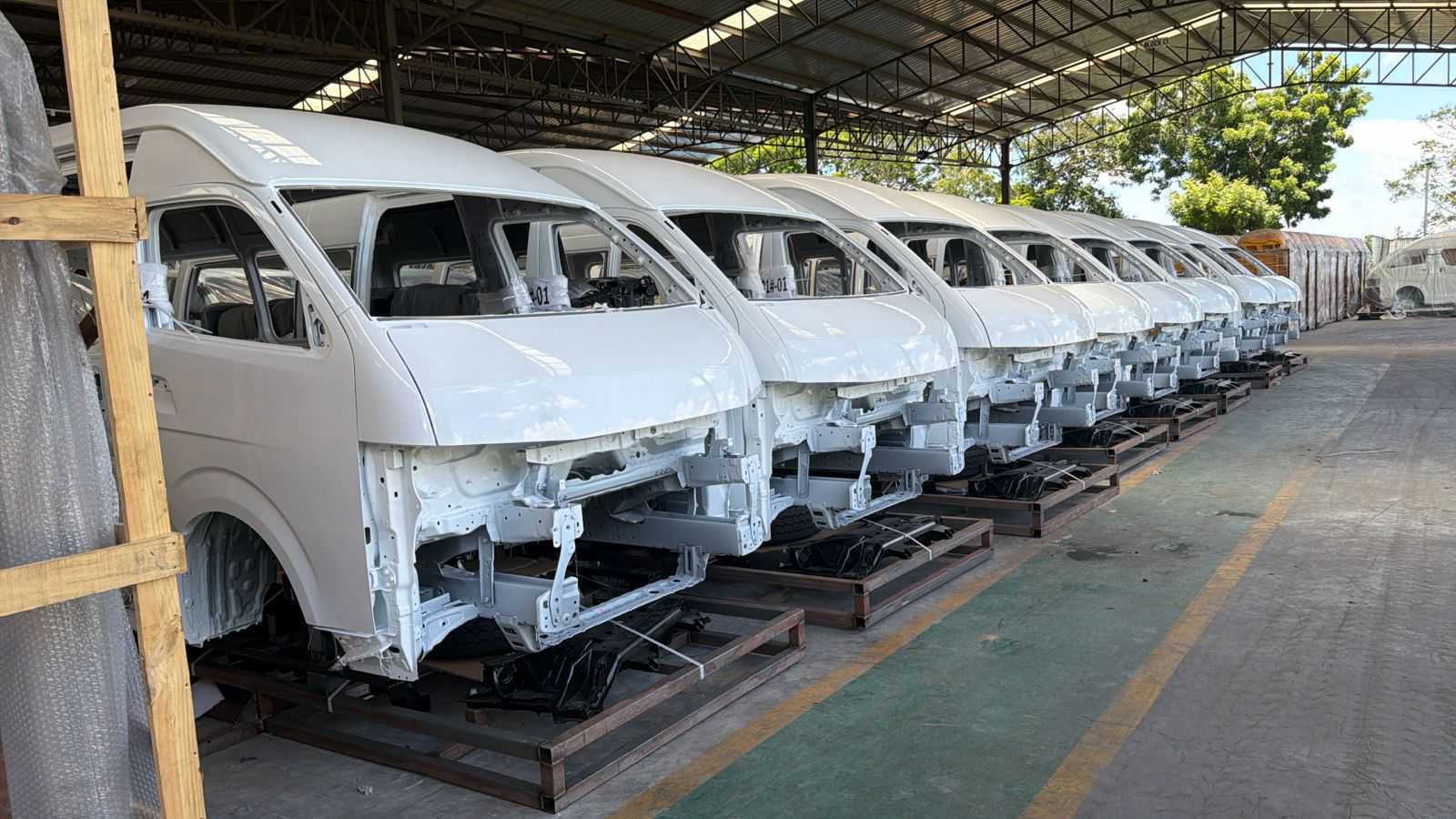
Kenya’s EV manufacturing industry is reaching a point where the structure of government incentives could determine whether rising electric mobility demand produces a deeper industrial ecosystem or mainly creates a larger market for imported vehicles.
The Kenya Association of Manufacturers (KAM) wants the proposed duty-free treatment for more than 100,000 electric vehicles to be linked to local assembly, component production, investment and jobs. KAM says more than $400 million has already been invested across vehicle assembly, batteries, charging infrastructure and related services, making the policy question relevant to companies that have already committed capital to the sector.
The debate comes as Kenya’s EV market develops across several connected layers. Electric buses and vans are being assembled from completely knocked-down kits, electric motorcycles are being paired with battery-swapping networks, banks are creating financing products for operators, and charging infrastructure is expanding beyond Nairobi. The result is a market that is beginning to resemble an industrial and technology ecosystem rather than a collection of imported vehicles and pilot projects. Much of this infrastructure is being built around commercial transport, where vehicle utilisation and operating costs can make electrification easier to justify.
Kenya is building an EV industry before mass adoption
One of the clearest developments is the expansion of local production capacity while private passenger EV demand remains relatively modest. Associated Vehicle Assemblers in Mombasa is planning a Sh1 billion dedicated EV assembly line, with the facility already assembling electric buses, passenger vehicles, vans and three-wheelers for companies operating in Kenya. The investment includes factory modifications, specialised equipment and technician training, placing manufacturing capability alongside demand as a central part of the sector’s development.


That capacity has been building through several projects. Rideence Africa and AVA announced a Sh320 million EV assembly line in February, initially targeting electric taxis and high-roof matatus using CKD kits, while BasiGo has been assembling its Ma3e electric vans locally. Rideence said it wanted to increase local parts procurement beyond 25% in the initial stage, with a longer-term ambition of reaching 40–60%.
Spiro provides another example, although its model is concentrated on electric two-wheelers and battery infrastructure. The company said in June that it was targeting 90% local production of its components by the first quarter of 2027, while its September financing announcement put its total AfricaGoGreen commitment at $36 million. As of September, Spiro said it had deployed more than 135,000 electric motorcycles and operated 2,500 battery-swapping stations across seven countries, with assembly facilities in Kenya, Uganda, Nigeria and Rwanda.

The scale of those investments makes KAM’s argument more than a question about the final vehicle. Localisation can extend into steel, plastics, electronics, batteries, software, electrical equipment, logistics, maintenance and technical services. Whether those businesses develop alongside vehicle assembly will depend partly on whether Kenya’s policy framework rewards companies for building that wider supply chain.
Local assembly is moving beyond pilot projects
Kenya’s early EV market has been concentrated in commercial applications because the economics are easier to measure. An electric bus operating repeatedly on a defined route, or an electric motorcycle used throughout the day by a commercial rider, generates a clearer comparison between electricity, fuel, maintenance and vehicle-financing costs than a privately owned passenger car that may travel only a few kilometres on a typical day.
BasiGo has built its expansion around that commercial market, with electric buses and vans being deployed on established routes and charging infrastructure being developed around depots and transport corridors. Its local assembly relationship with AVA gives the company a domestic production base while its financing partnerships address another barrier for operators: the upfront cost of acquiring an electric vehicle. NCBA and BasiGo have been working toward financing 1,000 electric vehicles, connecting vehicle supply with a mechanism for commercial operators to acquire them.
The motorcycle market is developing around a different technology model. Spiro uses battery-as-a-service, allowing riders to exchange depleted batteries rather than waiting for a vehicle battery to recharge. SUN Mobility has also been developing a shared swapping network intended to support multiple vehicle manufacturers, while Spiro’s latest financing will fund additional motorcycles and larger battery-swapping hubs in Uganda and Rwanda.
That infrastructure changes the manufacturing equation because the product is no longer just the motorcycle. A functioning commercial network also requires battery management, charging equipment, software, payments, maintenance, logistics and reliable electricity. The companies that can localise those supporting services could capture value even where some vehicle or battery components remain imported.
Charging and batteries are becoming industrial infrastructure
Kenya’s charging network is expanding alongside vehicle deployment. The country had 235 EV charging stations in 2025, placing it among Africa’s more developed charging markets. The headline ranking needs context because station numbers do not show charger capacity, utilisation, uptime or the types of vehicles being served, but the network is moving beyond a Nairobi-only proposition.
BasiGo is expanding charging facilities around its commercial operations and has worked with Rubis Energy Kenya to establish public charging points at fuel stations. Other networks are being built around battery swapping, while Kenya Power is developing its own charging business. The infrastructure therefore spans different operating models, from high-power depot charging to public charging and rapid battery exchange.
Electricity regulation is also adapting to that growth. EPRA amended the e-mobility tariff framework in September, removing the previous 15,000 kWh monthly ceiling and replacing it with an Energy Consumption Threshold mechanism. The change is particularly relevant to charging operators, electric bus depots and battery-swapping networks because their electricity consumption rises directly with the number of vehicles and batteries they serve.
The numbers show why that matters. EPRA reported electricity consumption under the e-mobility tariff at 5.04 GWh in the year ended June 2025, compared with 1.26 GWh a year earlier. Kenya Power has also reported substantial growth in its EV-charging business, while commercial bus charging sites are being designed around large batteries and high-power chargers. The transport transition is consequently creating a new category of electricity demand that requires grid connections, transformers, charging software and tariff structures alongside the vehicles themselves.
The duty-free question is about where value stays
This is where KAM’s proposal becomes more significant.
The association says more than 100,000 EVs could enter Kenya duty-free under the proposed government incentive and argues that the measure should encourage manufacturers to assemble vehicles locally wherever Kenya already has production capacity. Its preliminary analysis estimates that assembling 100,000 vehicles locally could support about 6,300 jobs in the early years and about 12,500 as production deepens, while retaining roughly $94.6 million in local value each year. KAM compares that with about 400 jobs and $53.5 million in local value if the same number of vehicles were imported fully built. Those figures are KAM’s estimates and should be treated as such rather than as independently verified economic forecasts.
The distinction matters because the two approaches can produce different outcomes even if the same number of electric vehicles reaches Kenyan roads. Fully built imports can accelerate vehicle availability and give consumers and operators access to a wider range of models, while local assembly can create demand for factories, technicians, suppliers and related services. The policy challenge is determining how far incentives should go in encouraging the second outcome without making EVs unnecessarily expensive or limiting access to vehicles that cannot yet be produced competitively in Kenya.
There is also an affordability argument for deeper localisation, although it requires evidence specific to Kenya. KAM cites a Siemens Stiftung study in Nigeria that found electric motorcycles with more than 25% local content cost about 41% less per unit than fully imported motorcycles. That finding cannot be directly applied to Kenya, but it illustrates why local sourcing can eventually become an issue of production economics as well as employment and industrial policy.
Kenya’s recent experience also shows why policy consistency matters to manufacturers. Earlier changes proposed around VAT treatment for electric mobility products raised concerns among industry participants about the treatment of production inputs and the potential effect on local assembly costs. EV factories require investment in tooling, equipment, supplier relationships and technical training that can take years to recover, so changes in tax treatment can alter the economics of a production line long after the initial investment decision.
Regional scale could determine Kenya’s EV opportunity
Kenya’s domestic market provides the initial demand, but regional scale could determine whether local EV manufacturing becomes economically significant. KAM has pointed to the East African Community, COMESA and AfCFTA as potential markets for locally manufactured vehicles and components, while companies such as Spiro are already building operations across East Africa. Its latest $18 million AfricaGoGreen financing is targeted partly at Uganda and Rwanda, demonstrating how an African EV company can use one manufacturing and technology base while serving multiple markets.
That regional opportunity is particularly relevant for components and specialised services. A supplier making battery enclosures, vehicle electronics, charging equipment or software for a Kenyan manufacturer does not necessarily need to rely on Kenyan vehicle sales alone. If regional production and distribution networks develop, the addressable market becomes considerably larger.
The Kenya-Japan financing programme also places the EV discussion within a broader automotive industrial strategy. The Sh22.1 billion financing agreement has been presented in the context of strengthening vehicle manufacturing and related industries, with funding directed toward automotive and spare-parts sectors. The need for supplier networks, technical capacity and reliable infrastructure remains central if investment in assembly is to develop into a deeper industrial base.
The immediate question for Kenya is therefore less about whether electric vehicles will arrive. They already are, and companies are committing capital to the factories, charging networks and financing structures needed to put more of them into commercial use. The question is what happens around those vehicles as volumes grow: whether more components are produced locally, whether engineering and software capabilities deepen, whether batteries and charging equipment become part of the domestic supply chain, and whether Kenyan manufacturers can use regional markets to achieve scale.
KAM’s call to connect EV duty incentives with local assembly puts that question directly into the policy debate. The outcome will affect more than the price or number of electric vehicles entering Kenya; it could help determine whether the country’s transition to electric mobility also produces a durable manufacturing and technology ecosystem around them.
Real ESG impact doesn’t happen in panels alone, it happens in the rooms where financiers, operators, and policymakers actually align. Our GreenShift Forum 2026 cuts the noise, bringing together the people rewiring Africa’s sustainability and energy frameworks for one focused day in Nairobi. Secure your seat.
Go to TECHTRENDSKE.co.ke for more tech and business news from the African continent and across the world.
Follow us on WhatsApp, Telegram, Twitter, and Facebook, or subscribe to our weekly newsletter to ensure you don’t miss out on any future updates. Send tips to info@techtrendsmedia.co.ke


