
Kenya’s digital credit market keeps expanding as licensed lenders reach 281

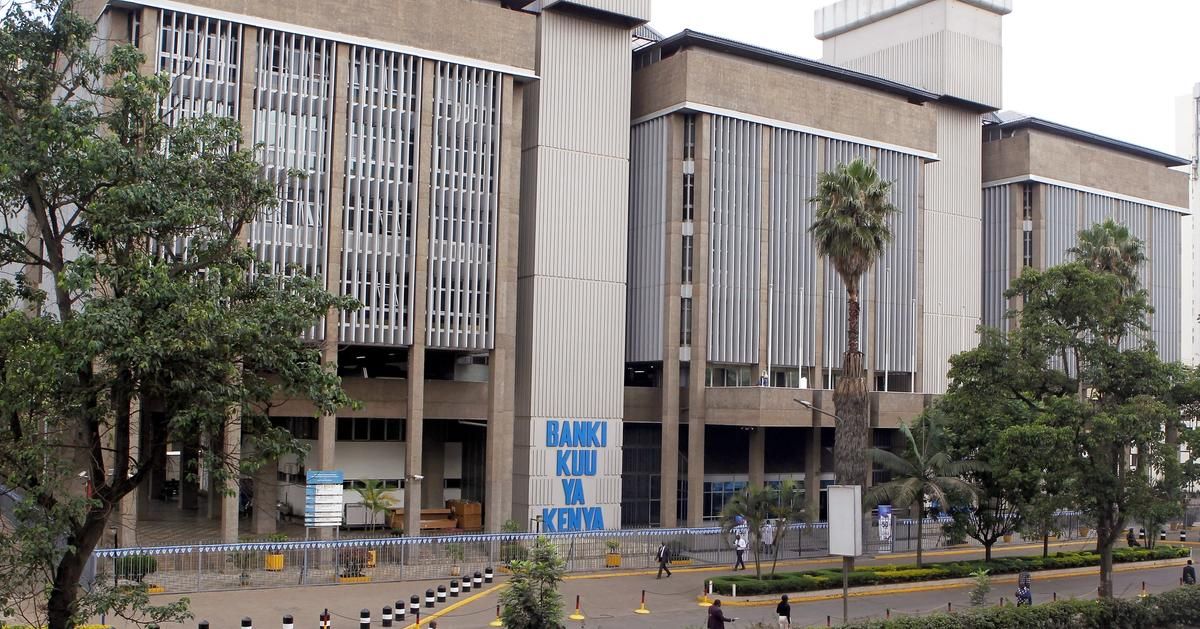
Kenya’s digital credit market nearly doubled in 2025, with outstanding loans reaching KSh110.1 billion as regulated lenders expanded beyond small mobile loans into business, education, development and asset financing. The Central Bank of Kenya (CBK) said gross outstanding loans held by licensed Digital Credit Providers (DCPs) rose 99.6 percent from KSh55.2 billion in December 2024 to KSh110.1 billion a year later.
The market has continued expanding in 2026. CBK said on September 30 that it had licensed another 29 digital credit providers, taking the total to 281, while licensed DCPs had granted 9.6 million loans worth KSh165.1 billion by August. The figures point to a digital lending market that is becoming broader and more established, even as the regulator maintains a close focus on how providers price loans, assess customers and handle personal information.
More lenders are entering a regulated market
The number of licensed DCPs more than doubled during 2025, rising from 85 at the end of 2024 to 195 by December. CBK licensed 110 providers during the year, with 41 approved in June, 27 in September and 42 in December.
The expansion continued through 2026. CBK announced 25 additional providers in July, taking the number to 252, before the latest 29 brought the total to 281 on September 30.

The licensing pipeline is also larger than previously reported. CBK said it has now received more than 900 applications since March 2022, when the licensing framework for digital credit providers became operational.
The regulator says its review process examines applicants’ business models, consumer-protection arrangements and the fitness and propriety of proposed shareholders, directors and management. That makes the growth in licensed providers more than a simple count of new lending apps; it reflects the expansion of a formal regulatory framework around a market that had previously operated with significant gaps in oversight.

The loan book grew faster than the number of accounts
The scale of the market was already evident in the 2025 annual figures. DCP outstanding loans rose from KSh55.2 billion in December 2024 to KSh110.1 billion a year later, with the loan book reaching KSh76.8 billion in June, KSh86.8 billion in August and KSh102.2 billion in September.
The number of loan accounts also increased sharply, rising 71 percent from 3.9 million to 6.74 million over the same period. The average loan size increased more modestly, reaching about KSh16,341 at the end of 2025 compared with roughly KSh14,000 a year earlier.
That combination matters when interpreting the growth. The near-doubling of outstanding credit was accompanied by a substantial increase in loan accounts and licensed providers rather than a comparable increase in the amount attached to each account.
The 6.74 million loan accounts should also not be treated as 6.74 million individual borrowers. One customer can have multiple loan accounts or borrow from more than one provider.
The latest CBK data provides a separate measure of how activity has continued in 2026. By August, licensed DCPs had granted 9,596,509 loans valued at KSh165.1 billion. That is cumulative lending during the period, however, rather than the amount of credit outstanding at a particular date, so it should not be directly compared with the KSh110.1 billion year-end loan book.
Mobile money has created the distribution layer
Digital lenders are operating within a financial system where mobile phones are already central to everyday transactions. The 2024 FinAccess Household Survey found that 23.2 million adults used mobile money, making it the country’s most widely used financial service.
FinAccess also recorded an increase in the share of adults using microfinance institutions, including digital credit providers, from 1.7 percent in 2021 to 8.8 percent in 2024. That provides important context for the growth of digital lending because customers already accustomed to making payments, receiving money and managing financial services through their phones can access credit through the same channels.
CBK says DCPs predominantly conduct their lending digitally, including through USSD codes. That keeps the products accessible beyond smartphone applications and allows providers to reach customers through channels that are already familiar in Kenya’s financial system.
The expansion does not mean all digital borrowing is being used for business or investment. FinAccess data shows that Kenyans also use credit for consumption and emergencies, leaving digital lenders serving different forms of demand, from short-term household liquidity to business and asset financing.
Digital credit is moving beyond emergency cash
The product mix has broadened considerably since digital lending first became associated with small, short-term mobile loans. CBK now identifies education loans, development loans, short-term personal loans, asset financing and business loans among the products offered by licensed providers.
Business lending is particularly significant because small enterprises often have regular financial activity without the formal records or collateral traditionally expected by banks. Digital lenders can use information generated through transactions and other financial activity to build alternative assessments of a customer’s ability to repay.
The same principle is appearing in asset financing, where digital lenders can structure credit around purchases such as motorcycles, smartphones and other assets. The result is a wider credit market in which digital platforms are financing specific needs rather than simply providing unrestricted short-term cash.
That diversification also means digital credit is becoming harder to define as a single product category. A customer borrowing for an emergency, a trader seeking working capital and someone financing an asset may all access credit through a similar digital interface while representing very different types of borrowing.
Banks are adopting the same data-driven approach
The expansion of digital credit is also blurring the boundary between specialist digital lenders and traditional banks. I&M Group said in September that its Kenyan digital short-term loan had disbursed close to KSh700 million, with the bank adapting the product into a working-capital facility for small traders.
Its lending assessment uses income proxies, Credit Reference Bureau history and in-app behaviour, including payments for electricity, water and Zuku. The approach illustrates how banks are applying information generated through everyday financial activity to assess customers beyond conventional income and collateral measures.
Absa Bank Kenya has taken a similar direction with Absa Next, which offers instant loans ranging from KSh500 to KSh1 million for personal and business needs. Its alternative credit-scoring approach and open-banking functionality allow the bank to incorporate a broader view of a customer’s financial position.
This convergence matters because the growth of digital credit is no longer confined to standalone fintech companies. Banks, mobile-money platforms and DCPs are increasingly using digital channels and financial data to distribute and assess credit.
Consumer protection is central to the licensing regime
CBK’s latest licensing announcement also provides important context for why the regulator has focused so heavily on consumer protection.
The central bank said the licensing and oversight of DCPs was prompted by public concerns about the practices of unregulated digital lenders, particularly high costs, unethical debt-collection practices and the abuse of personal information.
Those concerns help explain the regulatory emphasis on pricing, lending practices and customer data. As digital credit expands, the same technology that allows a lender to assess and serve customers quickly can also give providers access to large amounts of personal and financial information.
CBK says consumer protection forms part of its assessment of new DCP applicants, alongside their business models and the fitness and propriety of their shareholders, directors and management.
The regulator’s approach therefore extends beyond determining whether a company is legally allowed to lend. It also involves examining how the provider intends to operate and whether its structure and practices meet the requirements of the regulatory framework.
The market has continued growing through 2026
The latest numbers put the 2025 expansion into a broader timeline. Licensed DCPs increased from 85 at the end of 2024 to 195 at the end of 2025, then to 252 in July 2026 and 281 by September 30.
Over the same period, lending activity continued to accumulate. The 8.4 million loans worth KSh150.56 billion recorded by May had risen to 9.6 million loans valued at KSh165.1 billion by August.
Again, those figures describe loans granted rather than outstanding credit. The distinction is important because a cumulative lending figure can include loans that have already been repaid, while an outstanding balance captures credit still on lenders’ books at a particular point.
Taken together, however, the data shows a market that has continued adding providers and loan activity after the sharp increase recorded in the 2025 loan book.
Kenya’s digital credit market is becoming part of mainstream finance
The jump from KSh55.2 billion to KSh110.1 billion in outstanding digital credit during 2025 captures the scale of the market’s expansion, but the more significant shift is happening across several measures at once.
There are more licensed providers, more loan accounts and a wider range of products. Business, education, development and asset financing now sit alongside the short-term personal loans that helped define digital lending in its earlier years.
The market is also becoming more connected to the rest of the financial system. Banks are adopting alternative credit scoring, mobile-money platforms remain a major distribution channel and regulators are building a framework around providers that increasingly rely on digital customer data.
For CBK, that means the regulatory challenge is expanding alongside the market itself. Licensing has brought hundreds of providers into a formal framework, but oversight still has to address pricing, debt collection, responsible lending and the handling of personal information.
The KSh110.1 billion outstanding at the end of 2025 was therefore a major measure of how far digital credit had grown. By September 2026, the more current picture is of a regulated market with 281 licensed providers, millions of loans being issued and an expanding range of uses for digital credit across Kenya’s financial system.
Real ESG impact doesn’t happen in panels alone, it happens in the rooms where financiers, operators, and policymakers actually align. Our GreenShift Forum 2026 cuts the noise, bringing together the people rewiring Africa’s sustainability and energy frameworks for one focused day in Nairobi. Secure your seat.
Go to TECHTRENDSKE.co.ke for more tech and business news from the African continent and across the world.
Follow us on WhatsApp, Telegram, Twitter, and Facebook, or subscribe to our weekly newsletter to ensure you don’t miss out on any future updates. Send tips to info@techtrendsmedia.co.ke


