Tomiwa Aladekomo: African Tech’s Next Chapter: From Survival to Scale

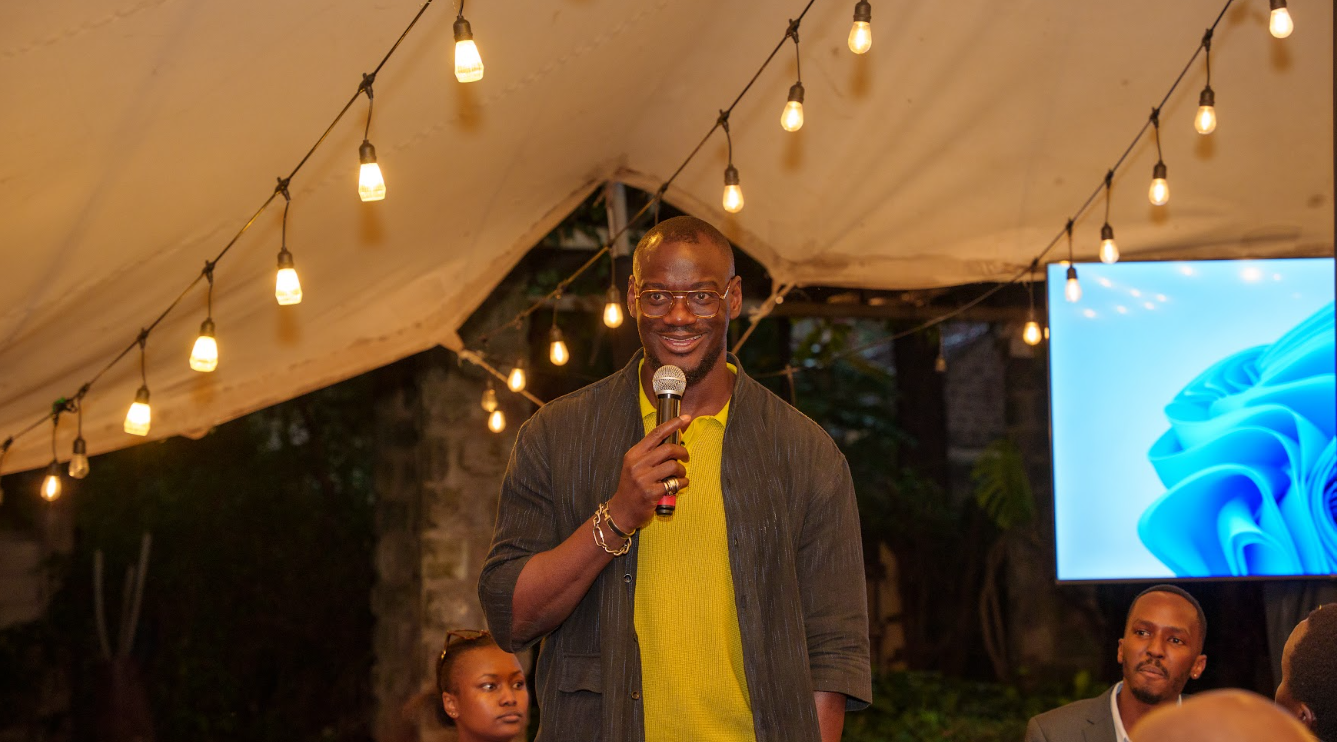
Earlier this year, I pondered what the African tech industry would look like in the next 10 years.
For much of the past decade, the story was about possibility. Could Africa really become a serious player in the global tech ecosystem? Could African founders build companies that travelled beyond the continent’s borders? Was there enough talent to sustain it all?
Today, the story reads differently. Africa’s startup ecosystem has matured significantly, with companies serving millions of customers, expanding across borders and increasingly building products and services that compete in global markets. That progress has not come without turbulence. The funding landscape has moved through its own seasons: a boom when capital was abundant, followed by a correction that tested which businesses were building for the long haul.
The market has not returned to the highs of 2021 and 2022, but there is now a degree of stability. African startups raised $1.44 billion in the first half of 2026. At the same time, Africa recorded 63 mergers and acquisitions in just six months–a 91% increase year-on-year, signalling a maturing ecosystem with more routes to liquidity.


So, I personally asked some of the boldest and most ambitious business leaders shaping the ecosystem: what must African tech do by 2030 if it is serious about winning the next decade? I spoke with leaders spanning technology, investment, and the creative economy, including Nikolai Barnwell, CEO of PawaPay; Sim Shagaya, Founder of uLesson; Omobola Johnson, Senior Partner at TLcom; and Kola Aina, Founding Partner at Ventures Platform; Marcia Ashong-Sam, Founder and CEO, TheBoardroom Africa; Maxime Bayern, Founding Partner, Catalyst Fund; David Adeleke, Founder, Communique, among others.
Though their answers differed, they all pointed to the same conclusion: Africa’s next decade will not be defined by the momentum it has built, but by the depth, infrastructure, and institutions it builds to sustain it.

What follows are their perspectives, lightly edited for length and clarity.
We need to build for mastery, not simply access
Africa’s education challenge is not only about getting more young people into classrooms. It is about ensuring they leave with the skills their economies actually need.
Sim Shagaya of uLesson sees emerging technology as an opportunity to fundamentally rethink how Africa approaches education:
“AI tutors, adaptive simulations, and micro-school networks make it possible, for the first time in human history, to deliver personalised mastery learning to tens of millions of learners at a fraction of the per-pupil cost of traditional schooling.”
The next challenge is leadership
The ecosystem has become good at producing ambitious founders and building companies. The next challenge is developing the leadership depth to ensure those companies endure. That means treating leadership development, succession planning, executive assessment and board capability with the same seriousness we give product development and fundraising.
As Marcia Ashong-Sam, founder and CEO of TheBoardroom Africa, a leadership advisory and executive search firm, puts it, the question is whether African tech can “build the leadership depth required to turn that momentum into enduring institutions.”
The companies that shape Africa’s next decade will need to outlast individual founders and build the institutional capacity to navigate whatever comes next.
Then there is climate
Africa is often framed as one of the regions most vulnerable to climate change. But that same reality makes it one of the world’s most important testing grounds for climate solutions, and investors are beginning to recognise the opportunity.
According to TechCabal Insights’ State of Tech in Africa report, climate tech attracted $688 million in the first half of 2026, overtaking fintech as Africa’s biggest investment theme for the first time. That shift suggests investors are increasingly looking towards businesses solving some of the continent’s most fundamental infrastructure and resilience challenges.
Maxime Bayern, founding partner at Catalyst Fund, a pan-African venture fund investing in startups building climate adaptation and resilience solutions, believes Africa should do more than adapt to climate change:
“By 2030, Africa should be exporting climate solutions, not importing them.”
From regenerative agriculture and climate insurance to distributed energy and water innovation, African entrepreneurs are already developing solutions to challenges that other markets will increasingly face. The opportunity now is to back them early enough to build globally competitive businesses.
Capital will be critical to all of this
International development finance institutions (DFIs) and foreign investors have played an important role in catalysing and validating Africa’s technology ecosystem. But if the next decade is going to look different, African institutional capital needs to play a much greater role.
Omobola Johnson, senior partner at TLcom, an Africa-focused venture capital (VC) firm, argues that the next step is “deploying capital to venture funds that are patient, conviction-driven, and fully understand the nuances of the market.”
This is about more than capital. Governments also need to create the regulatory and policy environments that allow that capital to flow, while investors need to recognise that some of Africa’s biggest opportunities will come from companies solving for affordability, access and distribution at scale.
The same principle applies to Africa’s creative economy
Africa has no shortage of culture, talent or global influence. What it lacks is often the infrastructure that turns that influence into economic value.
David Adeleke, Founder of Communiqué, a media platform focused on Africa’s creative economy, describes the challenge simply:
“We are rich in culture, but poor in structure.”
The next few years, he argues, should be about building the infrastructure that enables African creators to create, distribute and monetise locally while exporting globally, from intellectual property frameworks and valuation standards to payment rails and ownership records.
And if African ideas are going to cross borders, our financial infrastructure needs to keep pace.
Nikolai Barnwell, CEO of PawaPay, a UK-based fintech, points to cross-border payments as one of the continent’s most obvious gaps:
“Grey routes built African remittances. They won’t build the next decade.”
The informal routes exist for a reason: formal systems can still be too slow, expensive, and fragmented. Mobile money succeeded because it solved problems traditional banking could not. The next generation of financial infrastructure needs to do the same across borders.
Courage and conviction will shape what comes next
Bringing all these pieces together requires courage and conviction. Courage means backing solutions before the rest of the world sees their value. Conviction means building them for the long term.
Africa does not need to wait for permission to build its next chapter. The ambition for 2030 and beyond is clear: let us build the companies, infrastructure and institutions that allow African innovation to shape the world, not merely respond to it.
Tomiwa Aladekomo, CEO, Big Cabal Media
Real ESG impact doesn’t happen in panels alone, it happens in the rooms where financiers, operators, and policymakers actually align. Our GreenShift Forum 2026 cuts the noise, bringing together the people rewiring Africa’s sustainability and energy frameworks for one focused day in Nairobi. Secure your seat.
Go to TECHTRENDSKE.co.ke for more tech and business news from the African continent and across the world.
Follow us on WhatsApp, Telegram, Twitter, and Facebook, or subscribe to our weekly newsletter to ensure you don’t miss out on any future updates. Send tips to editorial@techtrendsmedia.co.ke