Adil El Youssefi: How next-generation intelligent infrastructure is powering Africa’s data centre revolution

Africa’s data centres are changing fast. As the continent’s demand for digital services grows, facilities from Johannesburg to Lagos to Nairobi are being reimagined in ways that were unheard of a decade ago. Automation, IoT sensors, and AI-driven analytics are redefining what resilience and efficiency look like in markets that have historically been underserved by investment in global infrastructure.
At Africa Data Centres, our facilities are evolving into smart hubs equipped with advanced AI computing infrastructure, helping drive the continent’s digital transformation. These upgrades are the foundations on which Africa’s AI revolution will be built.
So what does that actually look like in practice?
- AI-driven energy management cuts costs and carbon footprints
Data centres already account for roughly 1% of global electricity consumption, and large hyperscale facilities can draw 100 MW or more. Those numbers will only climb. AI platforms help soften the blow by using historical and real-time energy data to continuously fine-tune cooling systems, power distribution, and workload scheduling in ways that manual management simply can’t match at scale. But intelligent energy management is about more than operational efficiency, and needs to be treated as both a financial and an environmental responsibility. For instance, in markets where a significant proportion of electricity is generated from renewable sources, AI-driven optimisation can further enhance the sustainability benefits of efficient operations. This highlights the importance of considering both technology and energy ecosystems when building the next generation of digital infrastructure.
- IoT-enabled real-time monitoring drives operational precision
Walk through a modern data centre, and you’re walking through a dense web of sensors tracking temperature, humidity, airflow, power usage, and equipment health, around the clock. Unlike periodic human checks, these systems generate thousands of data points every second, catching anomalies before they become issues. In African markets where grid instability is often an operational reality rather than an isolated occurrence, continuous visibility is a necessity. What was once a competitive differentiator has become the baseline expectation. Clients no longer ask whether you have real-time monitoring; they assume it.
- Predictive maintenance eliminates unplanned downtime
Traditional maintenance runs on fixed schedules, regardless of whether the equipment needs it. That approach either wastes resources on over-servicing or, worse, misses the early warning signs that precede failure. Predictive maintenance takes a different approach entirely. By applying machine learning to sensor data from UPS systems, generators, and cooling units, operators can spot degradation patterns and intervene before something actually breaks. In Nigeria, where backup power infrastructure carries an enormous operational burden, this capability is critical. Keeping generators and systems under continuous watch isn’t just good practice at our Lagos facility; it’s the difference between meeting client commitments and not.

- Smart infrastructure enables flexible, scalable service delivery
The commercial argument for intelligent infrastructure ultimately comes down to one thing: flexibility. Automation and real-time data intelligence allow operators to offer everything from small-footprint colocation to hyperscale capacity, all managed through unified platforms that respond instantly to shifting requirements. For clients, this changes the relationship entirely. You can grow at your own pace, from modest beginnings to full hyperscale deployments, without having to switch operators or start from scratch with an unfamiliar environment. Operators grow with their clients, rather than eventually outgrowing each other.
- Automation bridges Africa’s skills gap
Another benefit of intelligent infrastructure is how it addresses the talent problem. The shortage of specialised technical expertise is one of the most pressing challenges facing Africa’s data centre industry. Intelligent platforms can handle many routine operational tasks, such as provisioning, load balancing, capacity planning, and incident ticketing, that would otherwise require dedicated senior engineers. That doesn’t mean replacing people. It means giving smaller teams the tools to manage infrastructure that would previously have required far larger ones. And when data centre builds are standardised, the operational systems and processes that work at one site can be replicated at the next. The learning compounds.
Operators like Africa Data Centres, which are investing in intelligent infrastructure today, aren’t just solving today’s problems. They’re investing in the architecture of a digital economy that will demand greater resilience, efficiency, and adaptability for decades to come. Those who build these capabilities in from the start are the ones best positioned for the next stage of Africa’s AI journey.
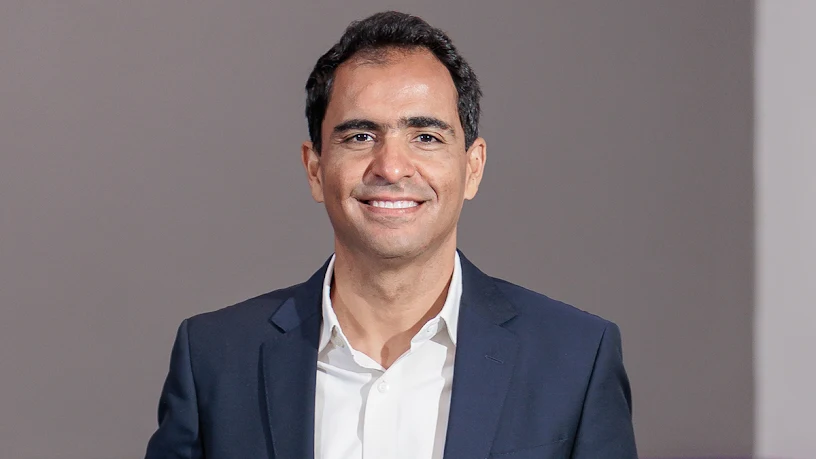
Adil El Youssefi is the Chief Executive Officer at Africa Data Centres.
Real ESG impact doesn’t happen in panels alone, it happens in the rooms where financiers, operators, and policymakers actually align. Our GreenShift Forum 2026 cuts the noise, bringing together the people rewiring Africa’s sustainability and energy frameworks for one focused day in Nairobi. Secure your seat.
Go to TECHTRENDSKE.co.ke for more tech and business news from the African continent and across the world.
Follow us on WhatsApp, Telegram, Twitter, and Facebook, or subscribe to our weekly newsletter to ensure you don’t miss out on any future updates. Send tips to info@techtrendsmedia.co.ke


