ZiiDi Trader opens NSE investing to foreign passport holders as M-PESA expands access

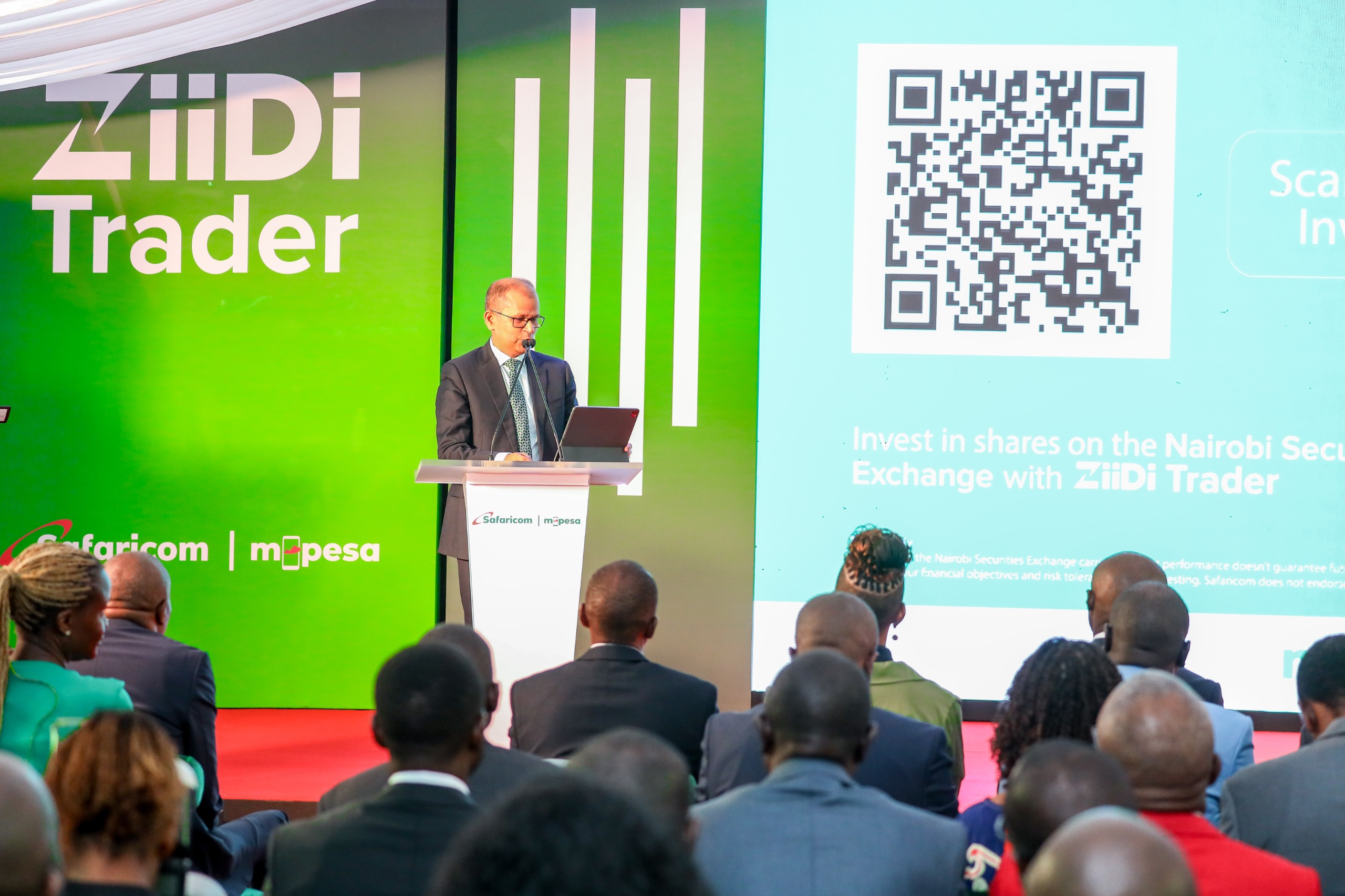
ZiiDi Trader now accepts foreign passports, Kenyan passports and Military IDs, expanding who can open an account on the M-PESA-based investing platform without going through the traditional brokerage process.
The update widens access to Nairobi Securities Exchange (NSE) investing by allowing more people to register through My OneApp using alternative government-issued identification, including foreign nationals who qualify to use the service in Kenya.
The change arrives after the platform has already established itself as a meaningful entry point for mobile investing. Rather than introducing a new trading feature, it removes another hurdle from the account-opening process, extending eligibility beyond the Kenyan National ID that had previously formed the standard route into the service.
Why the eligibility change matters
The revised requirements now allow account registration using four forms of identification: a Kenyan National ID, a Kenyan passport, a Military ID for Kenya Defence Forces personnel, and a foreign passport.


That matters because the original onboarding process assumed users already had a national ID linked to their M-PESA profile. While that remains the most common route, it excluded groups who relied on other government-issued documents, particularly foreign residents who already use M-PESA for everyday transactions.
For expatriates, international workers, diplomats and other eligible foreign passport holders, the update creates a more direct path into Kenya’s listed equity market through a mobile platform many already use for payments.

The practical experience remains familiar. Investors can buy and sell NSE-listed shares through My OneApp, with M-PESA handling payments while Kestrel Capital manages the underlying investment infrastructure.
The platform already has traction
The eligibility expansion carries more weight because it builds on a platform that has already attracted substantial retail activity.
Within its first four and a half months, ZiiDi Trader processed more than 351,000 transactions worth KSh1.08 billion, with the average trade standing at just over KSh3,000. Those figures point to frequent low-value purchases by individual investors rather than large institutional trades.
Earlier adoption figures also showed 511,000 registrations, although 84,000 accounts had actively purchased shares during the early launch period. That gap mirrors a broader challenge within Kenya’s capital markets: opening an account is one step, becoming a regular investor is another.
The platform has also demonstrated its usefulness during large public offerings. During the Kenya Pipeline IPO, roughly 36,000 of the 73,000 retail applications came through ZiiDi Trader, showing that mobile onboarding can influence participation when major investment opportunities emerge.
Another step in the NSE’s retail investor strategy
The passport update fits into a wider effort by the Nairobi Securities Exchange to make investing easier to access through digital channels.
NSE Chairman Tom Mulwa has argued that growing Kenya’s domestic investor base requires reducing friction wherever possible, particularly for younger and mobile-first users who expect financial services to work from their phones rather than through paperwork and branch visits.
That objective sits alongside the exchange’s ambition to reach nine million retail investors by 2029, a target that depends as much on simplifying access as it does on launching new investment products.
The exchange has already introduced measures such as single-share trading and digital investment pathways through ZiiDi Trader. Expanding accepted identification documents extends that same approach into customer verification, removing another administrative step that could discourage first-time investors.
The bigger challenge comes after sign-up
The update does not change how trading works once an account is active, but it does raise a more important question about participation.
Kenya already has around three million retail investor accounts, yet fewer than 200,000 trade regularly. That gap suggests the next stage of growth depends on turning registration into sustained investing rather than simply increasing the number of accounts.
ZiiDi Trader has shown that mobile infrastructure can bring new participants into the market, particularly when investments can begin with as little as a single share and payments move through M-PESA. The broader eligibility rules give that model a larger audience, especially among passport holders who previously faced unnecessary friction during registration.
Whether that translates into more active investors will become clearer over time. For now, the platform has taken another step toward making Kenya’s stock market easier to reach through the device many users already carry in their pocket.
Download the FREE Kaspersky Next Enterprise Security Guide here to explore the complete framework for simplifying security operations and building cyber resilience.
Go to TECHTRENDSKE.co.ke for more tech and business news from the African continent and across the world.
Follow us on WhatsApp, Telegram, Twitter, and Facebook, or subscribe to our weekly newsletter to ensure you don’t miss out on any future updates. Send tips to editorial@techtrendsmedia.co.ke