CBK wants stronger powers to inspect, remove executives and intervene in payment firms

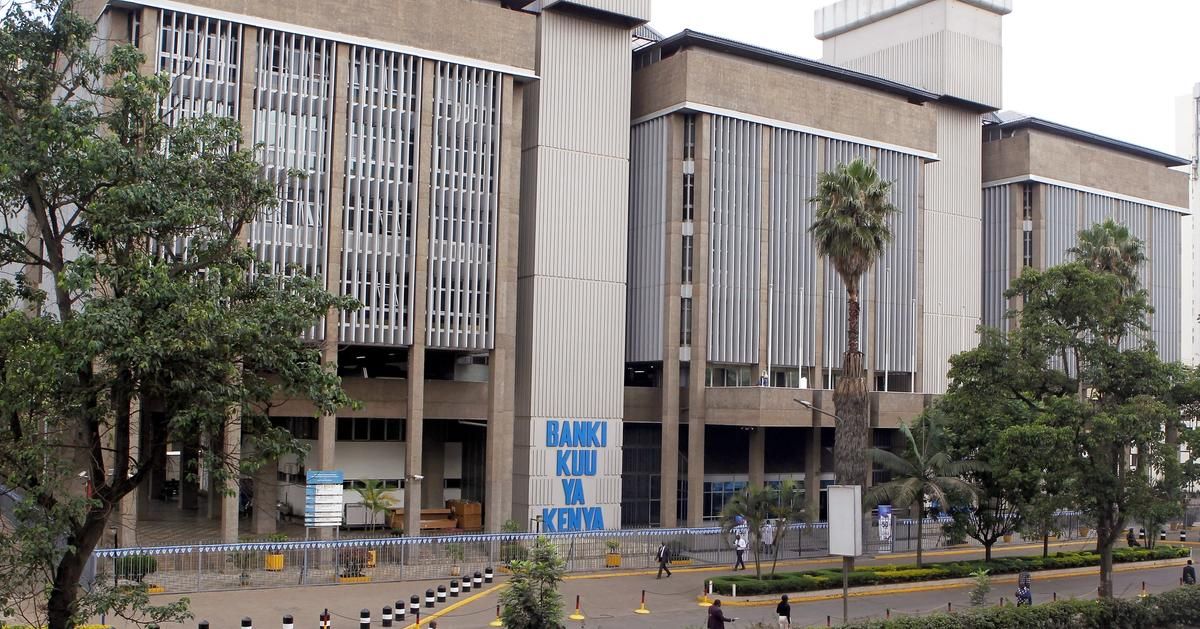
Kenya’s proposed National Payment System Bill, 2026 would give the Central Bank of Kenya (CBK) wider powers over payment firms, including authority to enter their premises with or without notice, inspect records and equipment, remove officers it considers responsible for breaches, and intervene directly when a provider poses a risk to customers or financial stability.
The Bill, prepared by the National Treasury and CBK, is intended to replace the National Payment System Act, 2011 and create a broader framework for supervision, consumer protection, interoperability and financial stability.
The proposed powers come as Kenya’s payment market handles a much larger and more interconnected flow of money than the framework established under the 2011 law. Mobile-money subscriptions reached 54.01 million by June 2026, while Safaricom’s M-Pesa processed 46.4 billion transactions worth KSh41.7 trillion in the financial year ended March 2026.
The transaction figure measures money moving through the platform rather than customer funds held at any one point, but it illustrates the scale of the infrastructure CBK is seeking to supervise.

CBK wants direct access to payment firms
The draft Bill gives authorised CBK officers the power to enter and inspect the premises of a payment service provider or payment system operator with or without notice. The authority would extend to their agents, while the regulator could also conduct off-site surveillance and, where a provider belongs to a wider group, carry out consolidated supervision of the provider and its parent or related companies.
During an inspection, an authorised officer could inspect and retain books, accounts, documents, equipment, machinery and other records. The Bill also places obligations on providers and their personnel to cooperate, answer questions, provide reasonable facilities and assistance, and supply information requested by the regulator.
Refusing to answer a lawful question, withholding assistance, providing false or misleading information, tampering with seized records or obstructing an authorised officer would constitute an offence.
The distinction between a payment service provider and a payment system operator is important. PSPs include businesses that issue or process electronic money, facilitate merchant payments or provide other customer-facing payment services, while PSOs operate infrastructure through which payment transactions are processed, cleared or settled.
The proposed inspection regime therefore covers more than consumer wallets. It reaches parts of the infrastructure that connect banks, mobile-money platforms, merchants, fintechs and other financial institutions.
The regulator could intervene in troubled providers
The most consequential provision sits beyond ordinary supervision. The Bill would allow CBK to intervene in the management of a payment service provider or payment system operator if it fails to meet obligations to customers, defaults on financial obligations to other payment providers or settlement systems, ignores a CBK directive, or breaches the proposed law.
CBK could also intervene during a crisis where it considers action necessary to safeguard financial stability, protect customers and preserve confidence in the financial system.
The intervention tools are broad. CBK could appoint a statutory manager, direct the removal of an officer or employee it considers to have caused or contributed to a breach or deterioration in the provider’s stability, appoint a suitably qualified person to the board, revoke or cancel certain mandates or authorities, restrict the provider from taking on new payment business, or prevent it from appointing new agents.
The proposed statutory-management regime would give the manager an initial term of up to 12 months. The High Court could approve a further term of up to 12 months, while the manager would take control of assets where necessary to safeguard customer money and oversee the settlement of funds belonging to customers.
That makes the proposal materially different from a framework based solely on licensing and routine compliance checks. It would give CBK a formal mechanism for dealing with a payment provider whose problems have progressed far enough to threaten customer obligations or the wider payment system.
Why the powers matter as payments become more connected
The case for stronger supervision becomes clearer when Kenya’s payment infrastructure is viewed as a network rather than a collection of separate products.
Kenya’s payments market has moved well beyond mobile money, with contactless cards, QR payments, instant bank transfers, APIs and growing interoperability between banks, SACCOs and mobile wallets. PesaLink, for example, connects financial institutions for instant account-to-account transfers, while banks have been reducing fees as they compete for everyday digital payment activity.
That connectivity creates benefits for consumers and businesses, but it also means that operational or financial problems at one provider can have consequences outside the company’s own customer base. A payment processor can connect merchants to wallets and banks; a payment infrastructure operator can sit between financial institutions; a mobile-money provider can handle payments for businesses that depend on several other financial services.
The proposed Bill reflects that reality through its consolidated-supervision provision. Where a PSP or PSO belongs to a group, CBK would be able to supervise the provider together with the wider group, giving the regulator a clearer view of risks that may sit outside the regulated payment company itself.
Recent developments in Kenya’s payments market illustrate how quickly those connections are developing. M-Pesa and Pesapal are expanding tap-to-pay and QR merchant payments, while SACCOs are building deeper relationships with banks and fintechs around payment infrastructure. PesaLink is also being positioned as an increasingly interoperable rail connecting banks, SACCOs and other financial institutions.
The proposed supervisory powers should therefore be understood against a payment market in which a failure is no longer necessarily contained within one company’s app or wallet.
The Bill also tightens licensing and compliance
The intervention provisions sit alongside a wider licensing regime. The Bill sets out requirements covering authorisation, governance, market conduct, interoperability, open finance, outsourcing, agents, system audits, trust arrangements, clearing and settlement, cross-border payments and payment transparency.
Customer funds are a major part of that framework. The draft Bill retains provisions requiring funds to be held in trust and addresses commingling, protection of trust-account balances, insolvency and income earned from trust funds.
About KSh250 billion in M-Pesa customer funds was held in trust accounts as of the latest figures cited by CBK, underlining the scale of the money that sits behind Kenya’s mobile-money infrastructure.
That KSh250 billion should not be confused with M-Pesa’s KSh41.7 trillion annual transaction value. The latter represents the value of transactions processed during the year and can count the same money multiple times as it moves through the system. The trust balance is a measure of customer funds held at a particular point, making it more relevant when discussing safeguarding and insolvency.
The Bill also provides CBK with stronger licence-enforcement options. Failure to meet requirements, implement corrective measures or manage agents in accordance with the law could expose a provider to regulatory action, while unauthorised amalgamation or transfer of a licence could also lead to suspension or revocation.
For payment companies, the proposed framework therefore links ordinary compliance to a much wider range of consequences. A provider that cannot meet regulatory requirements could face restrictions on its business, management intervention or ultimately loss of its licence.
A bigger regulatory perimeter for digital payments
The proposal also fits within a wider expansion of financial regulation in Kenya. CBK has been reviewing the legal framework governing banking and fintech activity as digital financial businesses expand into payments, cross-border transfers, payroll and other services that do not always fit neatly within older regulatory categories.
The payments framework now being proposed comes alongside regulation of other digital financial activities. CBK has expanded supervision of digital credit providers, while Kenya’s 2026 virtual-asset framework gives the central bank and Capital Markets Authority responsibilities over different parts of the virtual-asset market.
The common issue is regulatory visibility. Money can move through a consumer wallet, a bank account, a payment gateway, a merchant platform or a cross-border service without the customer thinking about which institution sits behind each step.
The proposed National Payment System Bill gives CBK more information-gathering, inspection and intervention tools across the parts of that chain that fall within the payment system.
For consumers, the practical objective is straightforward: a payment provider should be able to meet its obligations even when something goes wrong. For the regulator, that means being able to identify problems, demand information and act before a company’s failure leaves customers or connected institutions carrying the consequences.
Public participation remains open
The National Payment System Bill, 2026 is still a proposal. CBK and the National Treasury published the draft alongside a National Payment System Policy that seeks a modern, secure, affordable and inclusive payments framework, with interoperability, innovation, financial inclusion and financial stability among its stated objectives.
Public participation on the Bill is running until October 9, 2026, leaving room for payment companies, banks, fintechs, consumer groups and other stakeholders to comment on the proposed powers before the legislation progresses.
The most consequential question is therefore not whether CBK should supervise Kenya’s payment infrastructure. It is how far that supervision should extend when a provider fails, who should bear responsibility for a regulatory breach, and what safeguards should apply when the regulator moves from oversight into the management of a private payment company.
Kenya’s payment system now carries enough consumer money, commercial activity and institutional connections that those questions have consequences well beyond the companies named in a licence. The proposed Bill is an attempt to give the regulator powers that match that reality.
Real ESG impact doesn’t happen in panels alone, it happens in the rooms where financiers, operators, and policymakers actually align. Our GreenShift Forum 2026 cuts the noise, bringing together the people rewiring Africa’s sustainability and energy frameworks for one focused day in Nairobi. Secure your seat.
Go to TECHTRENDSKE.co.ke for more tech and business news from the African continent and across the world.
Follow us on WhatsApp, Telegram, Twitter, and Facebook, or subscribe to our weekly newsletter to ensure you don’t miss out on any future updates. Send tips to info@techtrendsmedia.co.ke


