Sitoyo Lopokoiyit sees Tanzania’s mobile money innovation as a wider opportunity for African finance

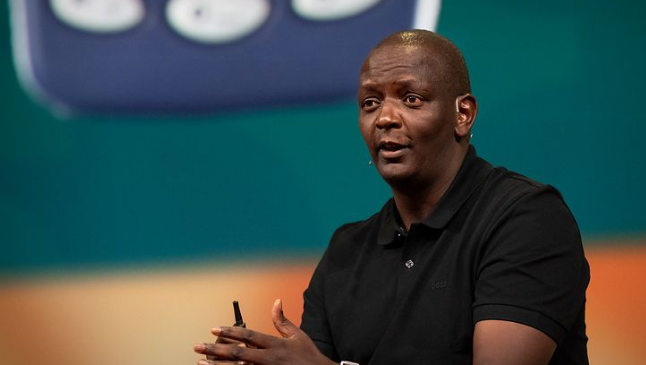
Tanzania’s mobile money market has drawn an unusually strong endorsement from Sitoyo Lopokoiyit, Absa’s chief executive for personal and private banking, who describes the country as the world’s most innovative mobile money market.
Speaking to The Citizen Digital, Lopokoiyit pointed to Tanzania’s large population, economic growth and fintech activity, but his comments went beyond the size of the opportunity. He also highlighted a problem that continues to complicate African commerce: moving money between African countries can cost more than moving money outside the continent.
For an executive who previously led M-Pesa Africa, the assessment carries useful context. Lopokoiyit spent much of his career around one of Africa’s most successful mobile-money platforms, and he now sits inside a banking group looking for ways to deepen its digital financial services across multiple markets. His view of Tanzania therefore offers a window into how Absa sees the relationship between mobile money, fintech and conventional banking.
Tanzania’s mobile money market stands out to Sitoyo Lopokoiyit
Lopokoiyit describes Tanzania as a priority market for Absa, citing GDP growth of about 6.3%, inflation of roughly 4.2% to 4.3%, a population of about 70 million and an economy anchored by sectors such as agriculture and mining. Those figures were presented during the interview and refer to the conditions Lopokoiyit was using to explain Absa’s interest in the country.


The mobile-money argument is more distinctive. Kenya has long been associated with M-Pesa and the development of mobile financial services, a point Lopokoiyit acknowledged during the interview. His assessment is that Tanzania has taken mobile-money innovation further than any other market in the world.
That is Lopokoiyit’s characterization rather than an independently measured global ranking, but his background gives the observation particular weight. Before joining Absa, he led M-Pesa Africa across multiple African markets. TechTrendsKE reported in February that the platform had expanded to eight countries, more than 60 million customers and over five million businesses during his tenure.

His experience also puts Tanzania in a wider regional frame. A mobile-money market can be large because it has millions of registered users, but the more important measure for financial institutions is what those users can actually do through the system: receive money, pay merchants, access credit, save, invest, transact with businesses and connect to international services.
Tanzania is already showing some of that breadth. TechTrendsKE reported in May that Vodacom M-Pesa Tanzania had integrated PayPal, allowing eligible users to move money between PayPal accounts and M-Pesa wallets through the M-Pesa Super App. That places a Tanzanian mobile wallet inside a wider digital payments ecosystem rather than leaving it as a domestic transfer tool.
Why Tanzania matters to Absa
Absa’s interest also needs to be understood against the bank’s broader effort to combine conventional banking capabilities with digital financial behaviour.
When Absa appointed Lopokoiyit to lead personal and private banking across Africa, the move brought a mobile-money executive into a business responsible for deposits, lending, investments and other financial products. TechTrendsKE reported at the time that his appointment reflected the growing overlap between telecom-led financial services and traditional banking.
That overlap is visible in Absa’s approach to fintech partnerships. In August, TechTrendsKE reported that the bank was using partnerships to place financial services inside platforms customers already use, with the EasyEquities integration providing one example. Rather than attempting to recreate every service internally, Absa can combine its regulated banking infrastructure and customer base with capabilities developed by fintech companies.
Tanzania gives that strategy an interesting environment in which to operate. The country has a large consumer base, an established mobile-money culture and a growing ecosystem of payment service providers. It also sits within the East African commercial network, where businesses and individuals routinely deal across national borders.
That combination matters because mobile money has changed what customers expect from financial services. People who can send money instantly from a phone do not necessarily accept lengthy processes when they need to make a business payment, receive funds from another country or access a financial product.
From M-Pesa to banking
Lopokoiyit’s move from M-Pesa Africa to Absa is therefore more than a change of employer. His previous role exposed him to the mechanics of scaling digital financial services across markets with different regulators, currencies, consumer habits and banking systems.
TechTrendsKE’s reporting on his appointment described the underlying challenge for Absa: a traditional bank has to manage capital, liquidity, credit risk and regulatory requirements while competing for customers whose everyday financial behaviour is increasingly shaped by mobile platforms.
That helps explain his emphasis on solving problems rather than becoming absorbed by technology itself. In the Tanzania interview, Lopokoiyit argues that financial institutions and technology companies can become fascinated by the tools they are building while losing sight of the problem those tools should solve.
For fintech, that problem can be simple in theory and difficult in practice: make payments cheaper, make settlement predictable, help businesses reach customers in other markets and make financial services accessible without adding unnecessary friction.
Absa’s own digital strategy reflects part of that thinking. In September, Absa Bank Kenya launched Absa Next, a platform combining banking, savings, investments, loans and other services in one digital environment. The platform was built in Kenya and is intended to provide a model for digital banking across the wider Absa Group. Lopokoiyit said Kenya had demonstrated an ability to develop innovations that address real customer problems and influence financial services across Africa.
The Tanzania opportunity fits that philosophy from another direction. The question is whether Absa can take lessons from a market where mobile money has developed in distinctive ways and translate them into banking products, partnerships and payment services that work across its wider African footprint.
The cross-border payments problem
This is where Lopokoiyit’s comments become more significant than the headline about Tanzania’s mobile-money innovation.
He points to an African payments paradox: people can move between countries more freely through regional integration arrangements, yet moving money between those same countries remains expensive and complicated. He argues that the cost of moving money within Africa can exceed the cost of moving it outside the continent.
The problem involves more than technology. Different currencies, regulatory regimes, payment systems, settlement arrangements and foreign-exchange processes all sit between the sender and recipient. A payment can be technically digital while still carrying costs and delays that make cross-border commerce difficult.
That creates space for banks, fintechs and payment networks to compete over the infrastructure underneath the customer experience.
Absa and DHL are already pursuing one piece of this through GoTrade. In September, TechTrendsKE reported that the two companies had agreed to expand the programme across Sub-Saharan Africa, with Tanzania and Mozambique next in line after Uganda. The programme combines trade training, logistics support and financial services to help SMEs reach international markets.
The connection with Lopokoiyit’s comments is direct. He identifies access to markets and access to capital as recurring barriers for innovators, while GoTrade addresses both the commercial and financial obstacles that can prevent smaller businesses from trading across borders.
Absa’s wider African strategy
Absa’s recent moves also show why Tanzania cannot be viewed separately from the bank’s wider African strategy.
The group has been building digital products, working with fintechs and looking for ways to use existing customer behaviour rather than forcing consumers into entirely new financial routines. The appointment of a former M-Pesa Africa chief executive to lead personal and private banking sits squarely within that approach.
The bank’s interest in Kenya provides another example. Absa Group has committed additional capital to its Kenyan subsidiary, while Absa Next is being positioned as a digital model that could have applications elsewhere in the group. TechTrendsKE reported that the group views Kenya’s digital finance ecosystem as a source of innovations that can influence its wider operations.
Tanzania presents a different set of strengths. Its population provides scale, its economy has a substantial agricultural and mining base, and its mobile-money ecosystem gives financial institutions a large pool of established digital behaviour to build around.
That makes the country relevant to Absa’s search for financial services that sit closer to everyday transactions. It also explains why Lopokoiyit places so much emphasis on the problem being solved rather than the technology being deployed.
What Tanzania offers Absa
The most revealing line in the interview may ultimately be Lopokoiyit’s statement that Absa has to “play differently” from other banks.
His comments suggest that difference will have to involve more than putting traditional banking products on a mobile interface. The bank already has access to regulated financial infrastructure, capital, customers and regional operations. Its challenge is connecting those assets to the kinds of digital ecosystems that have made mobile money useful at scale.
Tanzania offers a particularly useful environment for that approach because mobile money is already deeply embedded in financial activity. The opportunity for a bank is therefore less about introducing the basic concept of digital payments and more about finding where banking capabilities can add value around an existing digital financial culture.
That could involve partnerships with fintechs and PSPs, support for SMEs, digital lending and savings, merchant services, international payments or trade finance. The exact mix will depend on what Absa chooses to build or partner on in Tanzania, but Lopokoiyit’s comments make clear that the bank sees the market as more than another country in its African branch network.
His description of Tanzania as the world’s most innovative mobile-money market should therefore be read alongside his broader argument about African finance. A market can develop sophisticated domestic payment behaviour while the continent around it remains difficult to navigate financially. The opportunity for Absa is to connect those two realities, using Tanzania’s mobile-money ecosystem as part of a broader strategy around digital banking, business finance and cross-border commerce.
That is also where Lopokoiyit’s M-Pesa background becomes relevant. He has moved from leading a platform that helped make mobile money part of everyday financial life into a banking group that wants to compete for a much broader share of the customer’s financial relationship. Tanzania, in his telling, is one of the markets where those two worlds are already meeting.
Real ESG impact doesn’t happen in panels alone, it happens in the rooms where financiers, operators, and policymakers actually align. Our GreenShift Forum 2026 cuts the noise, bringing together the people rewiring Africa’s sustainability and energy frameworks for one focused day in Nairobi. Secure your seat.
Go to TECHTRENDSKE.co.ke for more tech and business news from the African continent and across the world.
Follow us on WhatsApp, Telegram, Twitter, and Facebook, or subscribe to our weekly newsletter to ensure you don’t miss out on any future updates. Send tips to info@techtrendsmedia.co.ke


