
Africa’s investment opportunity is moving up the value chain through technology, manufacturing and finance

Africa’s investment opportunities are moving beyond the traditional story of extracting natural resources and exporting them in raw form.
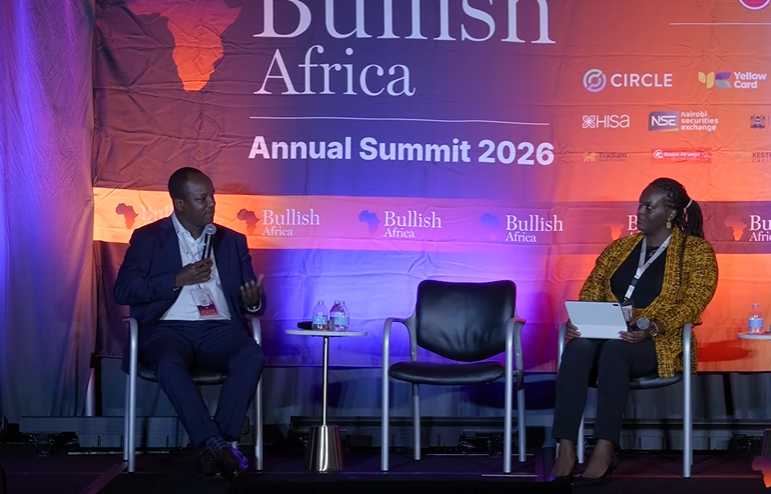
At Bullish Africa 2026, Yusuf Omari, Managing Director and CEO of Absa Kenya, described a broader opportunity built around value creation, processing, manufacturing and the financial instruments that can support higher-value economic activity. His argument points to a question that is becoming harder to separate from the continent’s technology story: how much more value can African economies create around what they already produce?
“Opportunities that are there in the country, it’s no longer an issue of just getting resources from the ground,” Omari said. “But right now, it is actually thinking about value creation. It’s thinking about processing, manufacturing, and then through the complex instruments that have already been mentioned, you see the financial sectors and the high returns that you’re getting. That’s us differentiating the continent.”
The distinction is important because processing and manufacturing require a different economic architecture from resource extraction. A country needs reliable power, logistics, skilled workers, industrial equipment, financing, market access and increasingly sophisticated digital systems. The opportunity therefore extends beyond what sits beneath the ground; it includes the companies, infrastructure and financial markets built around turning those resources into products and services with greater economic value.


From resources to value creation
Omari’s comments fit into a wider conversation about how African economies can capture more value within their own markets. A resource can leave a country as an unprocessed commodity, or it can become an input into a longer domestic and regional production chain involving processors, manufacturers, technology providers, logistics companies, financial institutions and exporters.
That distinction is already visible in parts of Kenya’s financial sector. Recent TechTrendsKE reporting on Equity Bank’s SME strategy showed a greater emphasis on connecting businesses to value-added production and global supply chains, including examples such as moving from primary production toward processed leather. The logic is straightforward: financing becomes more consequential when it helps a business participate further up a supply chain rather than simply fund the production of an undifferentiated raw material.
Technology is part of that equation because modern production increasingly depends on software that sits between a physical asset and the people operating it. Siemens Digital Industries Software and Redington, for example, have been expanding access to Siemens Xcelerator across several African markets, including Kenya, Ethiopia, Nigeria, Morocco, Egypt and Tanzania. The portfolio includes product lifecycle management, design, simulation, digital twins and industrial AI, bringing tools associated with advanced manufacturing closer to companies operating in African markets.
That changes the meaning of manufacturing capacity. A factory equipped with modern design, simulation and production-management systems can approach product development and industrial operations differently from one relying solely on physical machinery and manual processes. The technology does not create the industrial base on its own, but it can become part of the infrastructure through which African companies design products, manage assets, improve production and compete in wider markets.
Technology is becoming part of the production chain
The same pattern is visible in digital infrastructure. Kenya’s growing data-centre capacity, cloud infrastructure and connectivity are increasingly relevant to enterprises that need to run demanding applications, store and analyse data, and deploy AI-enabled services.
The proposed expansion of the Konza National Data Centre illustrates the scale of that ambition, with the facility positioned around computing, storage, databases, analytics and networking services for government and private-sector users. At the other end of the infrastructure chain, Nairobi’s NBO2 data-centre development has been linked to cloud computing, AI workloads, financial services and enterprise demand.
These investments matter to the manufacturing and processing story because software and data infrastructure are becoming production inputs. A manufacturer can use cloud systems for engineering workloads, an agricultural processor can use data to manage supply and inventory, and a financial institution can build digital systems that provide working capital or payments to businesses participating in those supply chains.
AI sits within this broader infrastructure rather than existing separately from it. TechTrendsKE’s reporting from WSO2Con Africa 2026 highlighted a persistent challenge for enterprises trying to move AI applications into production: models and agents still need reliable data, system integration, security controls and access to existing business workflows. In financial services, the challenge is even more pronounced because probabilistic AI has to operate alongside deterministic systems responsible for identity, payments, APIs, compliance and settlement.
That puts AI in a more practical position within Africa’s investment story. Its value will often depend on whether it can improve an existing industrial, financial or commercial process rather than simply whether an organisation has deployed an AI model.
Finance is helping connect capital to productive activity
Omari’s reference to “complex instruments” is another important part of the argument. The financial sector’s role in Africa’s growth story is becoming broader than conventional lending, particularly as investors and businesses look for ways to connect capital with infrastructure, enterprises and longer-term productive activity.
Kenya’s investment industry provides one indication of this expansion. TechTrendsKE reported in September that collective investment schemes had reached about KSh948.7 billion by June 2026, with money-market funds still accounting for the largest share while fixed-income, special and foreign-currency funds broadened the range of available investment products.
Capital-market development provides another route. Recent discussions around MSME financing have focused on ways of aggregating smaller loans into structures that could connect SME debt with institutional investors such as pension funds. Such structures matter because many businesses that contribute to production and employment are too small to access capital markets directly, while institutional investors require instruments that fit their risk, liquidity and return requirements.
That is the practical connection between finance and Omari’s value-creation argument. If processing plants, manufacturers, technology companies and supply-chain businesses require capital at different stages of development, the financial system needs instruments capable of matching different types of capital with different types of economic activity.
Regional markets are widening the opportunity
The scale of the opportunity also depends on whether businesses can operate beyond their home markets. African companies often face fragmented payment systems, regulatory regimes, currencies and financial infrastructure, making regional expansion more complicated than simply finding customers in another country.
That is where developments in cross-border payments and capital-market connectivity become relevant. The Pan-African Payment and Settlement System, or PAPSS, is seeking to make intra-African transactions easier by providing infrastructure for cross-border payments in African currencies. Meanwhile, the Nairobi Securities Exchange has been exploring deeper links with international markets and products that could broaden access to investors and create additional routes for African companies and securities.
Banking expansion points in the same direction. NCBA’s plans to enter the Democratic Republic of Congo and Ethiopia build on its existing regional presence in Kenya, Uganda, Tanzania and Rwanda, while Equity Bank has continued to build a substantial regional business across East and Central Africa.
These developments create a technology question alongside the financial one. Regional businesses need interoperable payment systems, digital onboarding, data infrastructure, cybersecurity, cloud services and platforms that can operate across different markets. The more connected those systems become, the easier it becomes for a manufacturer, processor or technology company to build a regional customer base rather than treating every national market as an entirely separate operation.
Infrastructure and skills remain the constraints
There is a risk in viewing the opportunity only through the lens of capital and technology. The recent TechTrendsKE reporting also shows where the constraints remain.
A September report on Kenya’s technology workforce found that 73% of surveyed organisations were still at the Early or Developing stages of technology workforce capability maturity, while AI engineering was identified by executives as one of the most difficult capabilities to develop. That matters because data centres, industrial software, AI systems and digital financial infrastructure all require people who can implement, integrate and maintain them.
Research commercialisation presents another constraint. Work produced by universities and research institutions can generate potentially useful technologies, but moving from research to a commercially viable product requires staged funding, certification, industry partnerships, testing and access to markets. Without those links, investment in research does not automatically become investment in businesses.
The same principle applies to industrialisation. A country can attract a data centre or acquire advanced manufacturing software, but the wider economic impact depends on the businesses and workers able to use that infrastructure productively. Capital expenditure therefore needs to be considered alongside skills, power, connectivity, regulation and market access.
Africa’s next investment story is about value capture
Omari’s remarks at Bullish Africa 2026 provide a useful way to connect these developments. Africa’s resource base remains important, but the investment question is becoming broader: what businesses, technologies, infrastructure and financial structures can be built around those resources?
The recent technology landscape in Kenya and across the region offers several examples. Industrial software is reaching more markets, data-centre capacity is expanding, digital banking is moving deeper into enterprise operations, payment systems are becoming more interconnected, capital-market products are broadening and banks are looking at ways to finance businesses further along supply chains.
Taken together, those developments point to an economy in which technology and finance increasingly sit alongside processing and manufacturing as mechanisms for capturing value. The opportunity Omari described therefore extends well beyond extracting resources. It is about building the systems that allow African companies to process what they produce, manufacture more sophisticated products, reach regional and international markets, and attract different forms of capital to support that activity.
The difficult part is execution. Turning resources into higher-value industries requires infrastructure, technical skills, reliable financing, market access and businesses capable of operating at scale. But that is precisely why the technology landscape matters to the investment conversation: the contest is increasingly about the capacity to build and connect the systems that turn Africa’s existing resources into more valuable economic activity.
Real ESG impact doesn’t happen in panels alone, it happens in the rooms where financiers, operators, and policymakers actually align. Our GreenShift Forum 2026 cuts the noise, bringing together the people rewiring Africa’s sustainability and energy frameworks for one focused day in Nairobi. Secure your seat.
Go to TECHTRENDSKE.co.ke for more tech and business news from the African continent and across the world.
Follow us on WhatsApp, Telegram, Twitter, and Facebook, or subscribe to our weekly newsletter to ensure you don’t miss out on any future updates. Send tips to info@techtrendsmedia.co.ke


