

CBK's proposed capital rules put new limits on how Kenyan banks return profits to shareholders

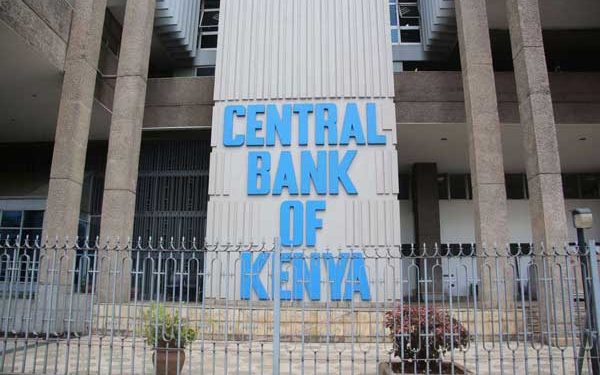
Kenya’s new bank capital proposals could change how CBK controls bank dividend payouts by tying the amount lenders can return to shareholders to the strength of their Common Equity Tier 1 (CET1) capital.
Under the proposed framework, a bank with CET1 below 8.625% of its risk-weighted assets would have to retain all of its earnings, while lenders with stronger capital positions would face progressively lighter restrictions.
The proposal comes as Kenyan banks are reporting stronger profits and raising dividends, creating a direct connection between the industry’s earnings cycle and the regulator’s push for larger capital buffers. Twelve listed banks paid Sh117.2 billion in dividends for the financial years ended December 2025, almost half of the Sh245.9 billion paid by all publicly traded companies in their latest financial years. The proposed rules would therefore affect an important part of how bank profits are divided between shareholders and the balance sheets needed to support future lending.
How the proposed CBK dividend rules would work
The proposed framework establishes a capital ladder that determines how much of a bank’s earnings can be distributed. Banks with CET1 capital below 8.625% would be required to retain 100% of their earnings. Those between 8.625% and 9.25% would have to retain at least 80%, allowing no more than 20% to be distributed.


The retention requirement would fall to at least 60% for banks with CET1 above 9.25% and up to 9.875%, while lenders above 9.875% and up to 10.5% would have to retain at least 40%. Once CET1 rises above 10.5%, the proposed conservation ladder would no longer impose a retention requirement, subject to the other capital rules that apply to the institution.
The restriction also covers more than ordinary dividends. The proposed conservation standard would apply to dividends, share buybacks and discretionary bonus payments, and the calculation would be made at each distribution date. That means a bank’s permitted payout could change between distribution periods if its capital position changes.
A lender that wants to distribute more than the applicable conservation limit could also raise private-sector capital equivalent to the amount above the permitted payout that it wishes to distribute. For banking groups operating through a holding company, the ratios would be assessed at the consolidated level.
Why CET1 capital will determine payout capacity
CET1 is the highest-quality form of bank capital and consists primarily of ordinary shareholder capital and retained earnings. Retained profit therefore has a dual role: it can be distributed to shareholders, or it can remain on the balance sheet and strengthen the capital available to support lending and absorb losses.
That relationship explains why the proposed rules matter beyond the dividend cheque. A bank that retains more of its earnings has more capital available against its risk-weighted assets, while a bank that distributes a larger share of profit has less internally generated capital available for balance-sheet growth.
The proposed framework therefore links three decisions that investors normally examine separately: how much profit a bank generates, how much of its balance sheet carries risk, and how much cash it can return to shareholders. A lender expanding its loan book rapidly may need more capital even when its profits are rising, because risk-weighted assets also affect its capital ratios.
This is particularly relevant as credit conditions improve. TechTrendsKE’s earlier banking coverage found private-sector credit growth recovering strongly after a period of contraction, while commercial lending rates declined and bank earnings strengthened. Faster lending growth can support profits, but it also increases the capital required to support the additional risk on a bank’s balance sheet.
Kenya’s banks are raising dividends as profits grow
The timing of the proposal is important because several large Kenyan banks have recently raised shareholder distributions.
KCB Group increased its interim dividend by 50% to Sh3 per share in the first half of 2026, while Equity Group increased its FY2025 dividend per share by 35.2% to Sh5.75. Co-operative Bank raised its FY2025 dividend per share by 66.6% to Sh2.50, and NCBA increased its interim dividend by 50% to Sh3.75 per share. Absa Bank Kenya also raised its interim dividend sharply during the period.
KCB’s first-half figures provide a useful illustration of why the new framework should not be read as an automatic dividend-cutting rule. The bank reported core capital of Sh331.92 billion and a core capital ratio of 18.6%, substantially above the existing 10.5% regulatory minimum, while its balance sheet and loan book continued to expand. It also raised the interim dividend to Sh3 per share as profit before tax increased.
The numbers show why the eventual effect of the proposed framework will vary between lenders. A bank with substantial capital headroom may have considerable room to distribute earnings while remaining above the relevant thresholds, whereas a lender with a thinner buffer may need to retain a larger share of profit to strengthen its capital position.
The proposed rules therefore make each bank’s capital ratio more important to shareholders assessing future dividends. Profit growth alone would no longer provide the complete picture of a lender’s distribution capacity.
Capital requirements extend beyond dividend restrictions
The dividend conservation framework forms part of a broader capital regime being developed by CBK. The proposed rules introduce additional requirements around CET1 capital, including buffers intended to give banks greater capacity to absorb losses and maintain lending during periods of financial stress.
CBK is also proposing a countercyclical capital buffer ranging from 0.5% to 2.5% of risk-weighted assets. The regulator would determine the applicable level periodically when it considers credit-risk accumulation capable of creating wider financial-system stress.
Domestic systemically important banks would face another layer of capital requirements. CBK has proposed additional capital buffers of between 0.5% and 2.5%, depending on factors including a bank’s size, interconnectedness, complexity, substitutability and importance to the domestic economy. The regulator could also impose a higher loss-absorbency surcharge, which would have to be met exclusively with CET1 capital.
These requirements matter because they can compound the amount of capital a bank needs to retain. A lender that falls under additional systemic or countercyclical requirements could have less room for shareholder distributions even if its underlying profitability remains strong.
The wider capital programme also includes the long-term requirement for banks to build their core capital toward Sh10 billion by December 31, 2032. The Finance Act 2026 removed the earlier annual capital milestones while retaining the 2032 deadline, giving smaller lenders a longer path to the minimum.
What the new framework could mean for shareholders
The immediate question for investors is how much of a bank’s earnings will remain available for distribution after the lender accounts for its capital requirements. The proposed framework makes that calculation more explicit by connecting payout capacity to CET1 rather than treating dividends as a decision based mainly on annual profit.
For income-focused investors, that could make capital ratios a more important part of assessing the sustainability of bank dividends. An institution can report strong earnings and still have to retain a significant portion of those earnings if its capital buffer falls within one of the conservation bands.
Melodie Ndanu, an analyst at Standard Investment Bank, said tighter capital requirements in the United States initially caused investors to move away from banking counters, although she expected the longer-term view of stronger capitalisation to be more positive. She also noted that income-focused investors could have short-term reservations where earnings retention reduces payout flexibility during periods of financial stress.
The proposed Kenyan framework follows the same basic capital logic: banks need enough high-quality capital to absorb losses and support their lending activity, while shareholders want a return on the capital they have invested. The regulatory question is where CBK sets the point at which those competing demands require earnings to remain inside the bank.
That makes the 8.625% threshold particularly important. A bank below that level would have to retain all earnings under the proposed conservation framework, while a lender above 10.5% would have considerably greater freedom to distribute profit, subject to the other capital requirements applicable to it.
For investors, the next useful piece of information will therefore be the capital position of individual banks under the proposed framework, including how the CET1 conservation bands interact with D-SIB and countercyclical buffers. Until that mapping is available, the proposals establish the rules governing future dividend capacity without showing exactly which listed lenders would face the greatest constraints.
Kenya’s banks are entering this regulatory discussion from a position of stronger earnings and rising shareholder payouts. CBK’s proposed capital regime would place a larger part of that equation on the strength of each bank’s balance sheet, making retained earnings an increasingly important source of capital for supporting the next round of lending as well as determining how much profit can reach shareholders.
Real ESG impact doesn’t happen in panels alone, it happens in the rooms where financiers, operators, and policymakers actually align. Our GreenShift Forum 2026 cuts the noise, bringing together the people rewiring Africa’s sustainability and energy frameworks for one focused day in Nairobi. Secure your seat.
Go to TECHTRENDSKE.co.ke for more tech and business news from the African continent and across the world.
Follow us on WhatsApp, Telegram, Twitter, and Facebook, or subscribe to our weekly newsletter to ensure you don’t miss out on any future updates. Send tips to info@techtrendsmedia.co.ke


