Airtel Money makes its London debut with a $7 billion valuation

Airtel Money has begun trading on the London Stock Exchange after an initial public offering that valued the African digital payments business at about $7 billion, giving public-market investors a direct route into one of the continent’s largest mobile money networks.
The Airtel Money IPO was priced at £1.96 per share, with 270 million existing shares offered for sale to raise approximately £529 million. Shares opened around their offer price on Friday, 9 October, before rising to as much as £2 during the session, a gain of roughly 2%.
The debut brings a major African payments business to London at a time when the exchange is seeking to attract more companies to its public markets. Airtel Money’s scale provides the foundation for its valuation, but investors will also be looking at how effectively it can turn its large customer base and transaction volumes into sustainable earnings.
Airtel Money shares begin trading in London
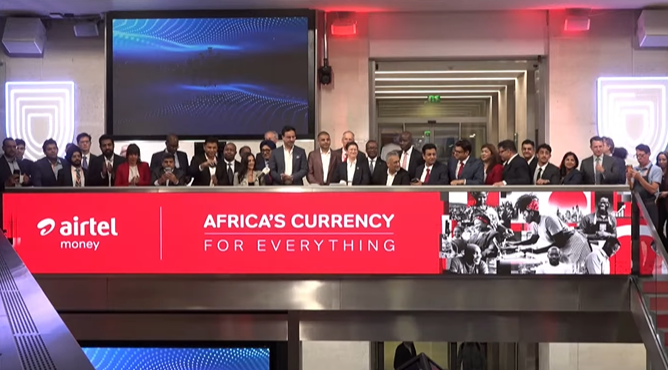
The listing was marked by a market-opening ceremony at the London Stock Exchange, attended by executives from Airtel Money and representatives of the exchange. London Stock Exchange chief executive Julia Hoggett welcomed the company, describing the transaction as a £529 million offering and highlighting the opportunity for public investors to participate in the business while Airtel Africa retains a controlling interest.
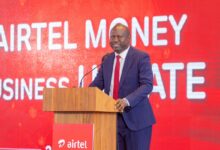
Airtel Money chief executive Ian Ferrao credited teams across the company’s African markets and its wider international operations for building the business. He described the listing as the beginning of a further growth opportunity, pointing to the potential of African markets and the work required to serve customers across them.
The shares’ early performance was measured rather than dramatic. Trading began around the £1.96 offer price before the price reached £2, suggesting that demand was sufficient to support the initial valuation without producing a sharp first-day jump. Reports indicated that the offering had attracted demand several times greater than the number of shares available, although strong demand at the IPO price does not by itself establish how the company will perform over the longer term.

The transaction also stands out in London’s recent IPO market. According to Dealogic data, it was the exchange’s largest initial public offering since Fermi Inc’s dual listing in September 2025. That gives the deal significance beyond Airtel Money itself, although one successful listing is not enough to establish a broader recovery in London’s market for new share offerings.
A $529 million sale gives existing investors an exit route
The structure of the transaction is important when assessing what the IPO means for Airtel Money’s finances. The 270 million shares were existing shares sold at £1.96 each, making the approximately £529 million in gross proceeds primarily a return for shareholders selling their holdings rather than fresh equity capital paid directly into the business.
That distinction separates a public listing from a conventional fundraising round in which a company issues new shares to finance expansion. Airtel Money gains a public share price, a wider pool of potential investors and a mechanism through which existing shareholders can sell shares, while the proceeds from the shares sold in this offering largely accrue to the selling investors.
The offering also provides a public-market reference point for valuing Airtel Money independently within the wider Airtel Africa group. That could make the business easier for investors to assess against other payments companies, although comparisons will depend on profitability, growth, risk and the mix of services each company provides.
A reported cornerstone investment of $90 million from the International Finance Corporation formed part of the IPO context. Cornerstone participation can provide support for an offering by committing capital ahead of trading, but it does not remove the commercial and market risks attached to the shares.
The listing process is also continuing beyond the first trading session. Conditional dealings began on 9 October, with unconditional dealings and formal admission scheduled for 14 October. Investors will therefore need to distinguish the start of conditional trading from the completion of the admission process.
A payments network spanning 13 African markets
Airtel Money’s valuation rests in part on the size of its existing network. Company figures presented during the listing put its monthly active users at approximately 53 million across 13 African countries. The same presentation cited 2.3 million agents and 490,000 merchants, giving a picture of the physical and commercial infrastructure through which customers can access services and businesses can receive payments.
The company also reported that it processed approximately $213 billion in payment value over the 12 months to 30 June 2026. That volume demonstrates the scale of activity moving through the platform, but it should not be confused with revenue. Payment value measures the money transferred through the network, while revenue depends on fees, transaction types, customer behaviour and the other services the business sells.
The distinction matters because a large mobile money operation needs to generate sufficient income from its activity to cover operating costs, agent distribution, technology, compliance and investment in new products. User numbers and payment volumes can support growth, but investors will want to understand how much revenue the company earns from each customer and transaction, and whether its margins can improve as the network expands.
Airtel Money’s position within Airtel Africa also gives it access to an established telecommunications customer base and distribution network. Its mobile money operations can connect airtime purchases, transfers, merchant payments and other financial services, creating opportunities to serve customers through a combination of mobile connectivity and digital transactions.
The opportunity varies by market. Mobile money adoption, banking access, regulation, agent economics and the competitive position of local providers differ across the 13 countries, so performance in one market will not necessarily translate directly to another.
Competition and monetisation will shape future growth
Airtel Money’s next challenge is to deepen the commercial value of its network while competing with established providers and newer payments businesses. In Kenya, Safaricom’s M-PESA remains a major force in mobile money, with a broad merchant ecosystem and a range of financial products. Other operators and payment companies are also competing for transfers, merchant acceptance and cross-border transactions.
Airtel Money has been developing services beyond basic person-to-person transfers. Its planned Mastercard virtual card, covered in TechTrendsKE’s earlier reporting, could help customers make online payments where card acceptance is available, extending the usefulness of mobile money balances beyond traditional transfers. The product’s commercial impact will depend on availability, customer adoption, fees and how it compares with existing payment options.
Lending, savings and insurance are additional ways to earn revenue from an established customer relationship. These products may deepen engagement and create income beyond transaction fees, but they also bring different requirements around credit risk, consumer protection, underwriting and regulation. Their contribution to the overall business will depend on how quickly they grow and whether they can be delivered profitably.
Merchant payments provide another potential growth area. A larger merchant network can make mobile money more useful to consumers while giving businesses another way to collect digital payments. However, merchants must see practical benefits in cost, reliability and settlement, and customers must be able to use the service across enough everyday transactions for the network to become more valuable.
Regulation will remain part of the commercial picture. In Kenya, the proposed National Payment System Bill 2026 could affect the supervision of payment service providers and the rules governing the sector if enacted. Airtel Money’s exposure is spread across several jurisdictions, however, so its compliance obligations and operating conditions must be assessed country by country rather than through Kenya alone.
What the listing means for African fintech
Airtel Money’s London debut gives investors a new way to gain exposure to an African digital payments business through a public share listing. It also gives the company a market-based valuation that can be followed as investors assess its financial results, growth plans and competitive position. For London, the transaction adds a sizeable African fintech business to a market looking to attract new issuers.
The wider significance will depend on what happens after the opening ceremony. The first-day share price offers an early indication of market reception, but it cannot establish whether the $7 billion valuation will hold or whether other African technology and financial services companies will follow with listings of their own. Continued trading, financial disclosures and the company’s ability to meet investor expectations will provide a clearer assessment.
For Airtel Money, the central business question is how it converts 53 million monthly active users and more than $200 billion in annual payment value into durable revenue and profits. Its distribution network gives it considerable reach, while merchant payments, online transactions and additional financial services offer routes to deeper monetisation. Delivering that growth will require competitive products, dependable infrastructure and compliance with the rules in each market it serves.
The IPO gives the business a public valuation and its existing shareholders a route to liquidity. The longer-term case for investors will rest on whether Airtel Money can expand the services customers use, increase the economic value of its network and sustain profitable growth across its African markets.
Real ESG impact doesn’t happen in panels alone, it happens in the rooms where financiers, operators, and policymakers actually align. Our GreenShift Forum 2026 cuts the noise, bringing together the people rewiring Africa’s sustainability and energy frameworks for one focused day in Nairobi. Secure your seat.
Go to TECHTRENDSKE.co.ke for more tech and business news from the African continent and across the world.
Follow us on WhatsApp, Telegram, Twitter, and Facebook, or subscribe to our weekly newsletter to ensure you don’t miss out on any future updates. Send tips to info@techtrendsmedia.co.ke