Airtel Money plans Mastercard virtual card as it takes on M-Pesa GlobalPay in Kenya

Kenya’s mobile-money competition is extending into international online shopping, with Airtel Money preparing to add a Mastercard-powered virtual card to its wallet. The service is expected to give Airtel customers access to a wider range of overseas websites and digital subscriptions using money held in their Airtel Money accounts.
The planned product, called the Airtel Money Global Pay Card, would give the operator a new entry point into international digital commerce, a space where Safaricom already offers M-Pesa GlobalPay. Airtel has yet to announce when the card will become available in Kenya, although the product is already operating in Uganda, Zambia and Tanzania.
Airtel Mobile Commerce N.V. has said it plans to introduce the service in Kenya, the Democratic Republic of Congo and Gabon. Airtel says more than 875,000 cards have been issued across the markets where the product is already available since its launch in 2025.
Airtel Money takes virtual card strategy to Kenya
The Airtel Money Global Pay Card is designed as a virtual card number that connects the customer’s mobile-money balance to international card payments. Once available in Kenya, customers should be able to use the card for online purchases and digital services where Mastercard is accepted, including services such as Netflix, Spotify, Amazon and other international platforms.

The appeal is the payment route. Rather than transferring money from a mobile wallet to a conventional bank account before making an online card payment, the product is intended to let customers use their Airtel Money balance through a virtual Mastercard credential.
That gives Airtel another way to increase the usefulness of its wallet. The company has been expanding its Kenyan operation beyond person-to-person transfers, with merchant payments, bank connectivity, business services and additional financial products becoming part of the strategy.

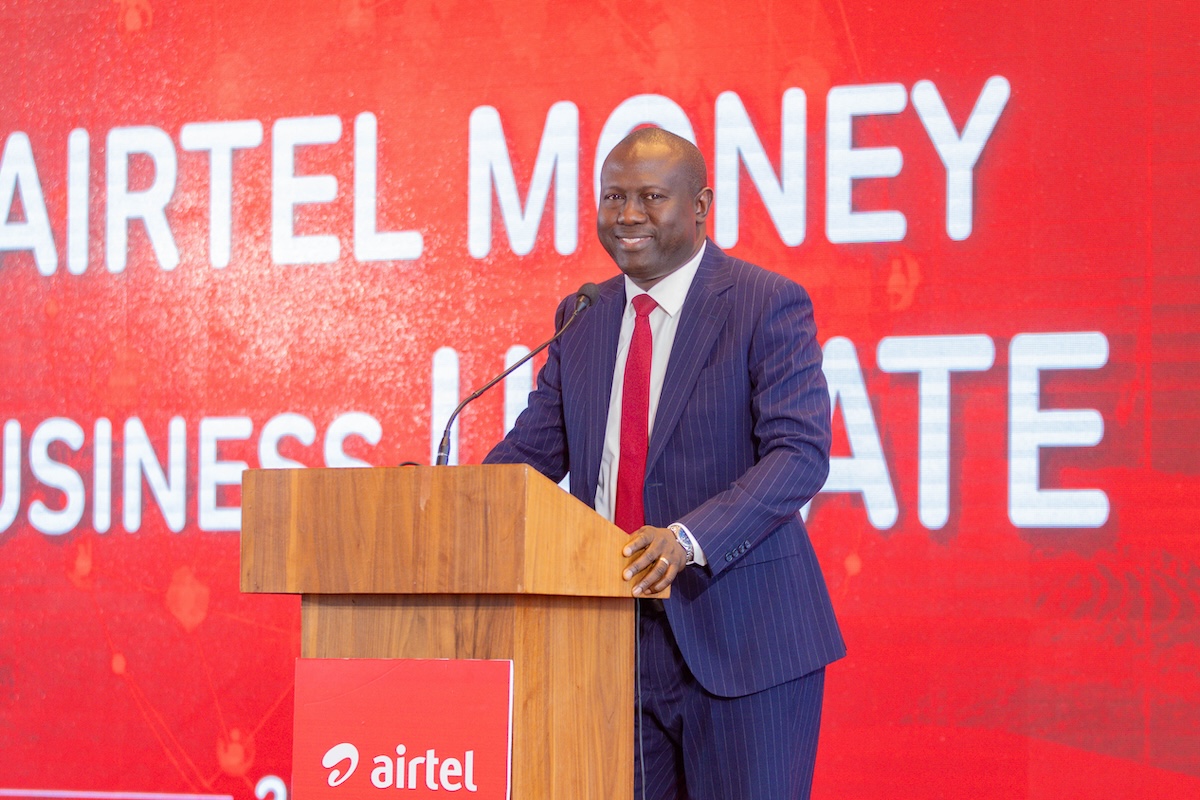
Airtel Money Kenya managing director Bonke Michael recently described the company’s growth in terms of products, use cases, customer experience, distribution and partnerships. Airtel’s share of Kenya’s mobile-money market has risen from below 2% about four years ago to roughly 11%, while the company says its agent network has grown from fewer than 20,000 to about 270,000.
The virtual card fits that trajectory because international online payments give customers another reason to transact from the same wallet.
Airtel enters a market already served by M-Pesa
Airtel will be entering a Kenyan market where Safaricom already has a virtual-card product. M-Pesa GlobalPay, introduced with Visa in 2022, allows M-Pesa customers to make payments to international online merchants using a virtual card linked to their M-Pesa wallet.
The two services are built around a similar customer need, although they use different card networks. Airtel’s Global Pay Card is being offered with Mastercard, while M-Pesa GlobalPay uses Visa.
That makes the Kenyan rollout more than another addition to Airtel Money’s product catalogue. It gives customers a choice between two mobile-money wallets that can both be used for international digital commerce.
The competition will come down to the details of the customer experience. Fees, foreign-exchange rates, transaction limits, merchant acceptance, ease of activation and the handling of failed or disputed transactions will all influence whether customers use the service regularly.
Safaricom’s existing scale gives M-Pesa GlobalPay an established customer base, while Airtel has been growing its own wallet usage and distribution. Airtel says it has about 24 million Airtel subscribers in Kenya, with around 6 million using Airtel Money.
The wider mobile-money market also provides room for additional use cases. The Communications Authority of Kenya reported 54.0 million mobile-money subscriptions in June 2026, equivalent to penetration of 101.3%, reflecting the fact that customers can maintain more than one mobile-money subscription. Airtel Money’s market share stood at 11.1%, up from 10.9% in the previous quarter.
The wallet is becoming a broader financial platform
The planned card comes at a time when Kenya’s digital financial services market is moving well beyond basic money transfers. Mobile-money operators, banks and fintech companies are building products around payments, credit, savings, merchant collections, investments and cross-border transactions.
Airtel Money’s own product strategy illustrates this expansion. The company has been building its merchant business while developing Bizna Wallet for businesses and strengthening links with banks including KCB, Absa Bank Kenya and I&M Bank. It also has merchant relationships that include Naivas.
Bizna Wallet gives businesses another way to receive payments and manage money within the Airtel ecosystem. Customers can pay into the wallet, while merchants can withdraw through agents, move funds between banks and wallets, and pay bills.
Airtel has also expanded its cashback programme, Rudisha, across several transaction categories. The company says customers can receive 50% of qualifying transaction fees back for services including transfers to other networks, bank-to-wallet transactions, wallet-to-bank transfers and bill payments.
These products matter because they increase the number of situations in which a customer can use the wallet. International online payments extend that reach from domestic transactions to overseas merchants and digital services.
Safaricom is pursuing a similarly broad payments strategy from its much larger M-Pesa base. Its global payments revenue rose 22.3% to KSh4.8 billion in the year ended March 2026, although that figure covers international transfers, virtual cards and Google Play Store payments rather than virtual cards alone. Total M-Pesa revenue reached KSh182.7 billion, up 13.4% during the year.
The physical payments side is also expanding. Safaricom and Pesapal recently introduced M-Pesa tap-to-pay capabilities on Pesapal tills using NFC and dynamic QR payments, with Safaricom targeting wider merchant acceptance.
Banks are competing for the same customer relationship. Absa Next, launched in Kenya in October, brings payments, savings, credit, investments and personal and business financial management into one digital platform. Its business offering includes a business wallet, QR payments, income and expense visibility and access to credit.
The result is a financial-services market where the boundaries between a bank account, mobile-money wallet and fintech platform are becoming harder to maintain.
Airtel is building more ways to use its wallet
Airtel’s Kenyan strategy provides a useful explanation for why international payments fit the company’s plans. The operator has been using a combination of distribution, pricing incentives, interoperability and partnerships to increase activity on its network.
Interoperability has also changed the competitive equation. Customers can maintain both M-Pesa and Airtel Money accounts and move money across networks, reducing the need to choose one wallet exclusively.
Airtel’s growth therefore depends on giving those customers more reasons to transact through Airtel Money. Its agent expansion provides physical access, while USSD, the Airtel Money app, bank links and other integrations provide digital routes.
The company has also indicated that it wants to add more products covering loans, savings, investments and overdrafts, alongside additional partnerships with banks and SACCOs. More Airtel Money shops are also planned.
The virtual card adds a different category to that mix. A customer could receive money into Airtel Money, retain the balance there and use it to pay an international merchant without relying on a separate bank-issued card.
That creates an additional transaction layer for Airtel and potentially makes the wallet more relevant to customers who buy digital products, pay subscriptions or shop on international websites.
The opportunity is particularly relevant as the value of mobile-money transactions grows. Airtel has reported that average transaction value in one of its operating companies increased from $20 in the year ended March 2022 to $74 in the year ended June 2026. The figure covers merchant payments generally rather than the virtual card, but it illustrates the broader expansion in the value of transactions moving through Airtel Money services.
International payments add another layer to the competition
International payments remain an important gap between local mobile-money systems and the global digital economy. Many overseas websites and subscription services are built around card networks, leaving customers without conventional cards to find another route to payment.
A virtual card provides that bridge. In the Airtel model, money remains within the mobile-money ecosystem while Mastercard provides the payment credentials that an international merchant can process.
The commercial details will determine how useful the product becomes in Kenya. Customers will need clear information about foreign-exchange conversion, transaction charges, limits, merchant restrictions and what happens when an international transaction fails.
Security will also be a central consideration because the product introduces card credentials into a mobile-money environment. Airtel says its products undergo regulatory review and internal checks, including security processes, before they are introduced.
The wider regulatory environment is also becoming more demanding. The proposed National Payment System Bill, 2026, would give the Central Bank of Kenya wider supervisory powers over payment service providers while covering areas such as consumer protection, interoperability, open finance, agents, cross-border payments and payment-system governance. Public participation on the Bill is scheduled to run until October 9, 2026.
Cross-border payments are receiving attention beyond Kenya as well. Fintech companies operating across Africa have pointed to the cost, speed and certainty of settlement as persistent problems for businesses moving money between countries. At the same time, mobile-money markets such as Tanzania are being cited as examples of how wallets can expand into merchant payments, credit, savings, investment and international services.
For Airtel Money, the planned Mastercard virtual card is therefore one part of a much wider attempt to increase the utility of its wallet. Its Kenyan business is already expanding through agents, merchants, businesses and bank connections, and international online payments add another category of spending to that ecosystem.
Airtel has not given a Kenyan launch date, so the immediate story is still about the company’s planned entry rather than an available service. Once it arrives, however, customers will have another mobile-money route into international digital commerce, putting Airtel Money and M-Pesa GlobalPay in direct competition for a growing category of wallet-based payments.
Real ESG impact doesn’t happen in panels alone, it happens in the rooms where financiers, operators, and policymakers actually align. Our GreenShift Forum 2026 cuts the noise, bringing together the people rewiring Africa’s sustainability and energy frameworks for one focused day in Nairobi. Secure your seat.
Go to TECHTRENDSKE.co.ke for more tech and business news from the African continent and across the world.
Follow us on WhatsApp, Telegram, Twitter, and Facebook, or subscribe to our weekly newsletter to ensure you don’t miss out on any future updates. Send tips to info@techtrendsmedia.co.ke


