When the government pays influencers, the line between public information and propaganda gets thinner

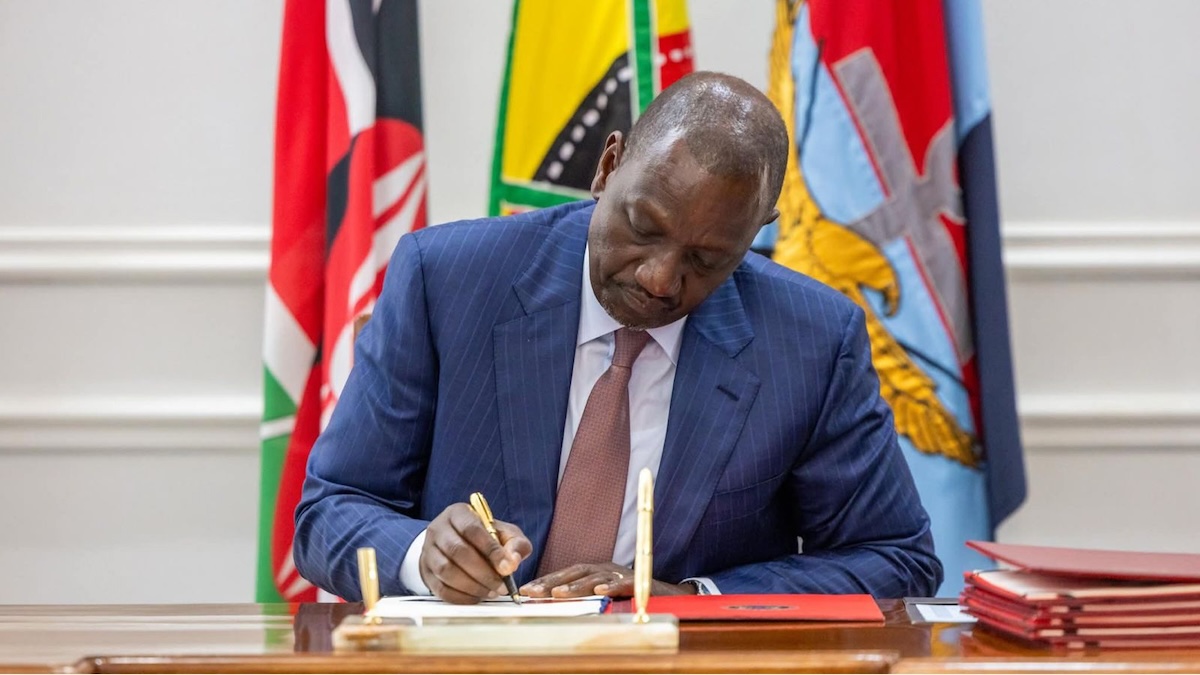
The plan to use government influencers in Kenya is no longer a quiet proposal in a strategy document.
Dennis Itumbi, Head of Presidential Special Projects and Creative Economy, has publicly confirmed that influencers are being folded into the government’s communication machinery to help “tell the government’s story,” defend its programmes and explain policies to digital audiences. His justification is straightforward: social media reaches large numbers of Kenyans, and the state already pays traditional media for messaging.
Yet the arrangement raises a sharper question than mere reach. When public money pays creators to present government programmes and counter criticism, the line between public information and political image management collapses.
Critics argue this is whitewashing: selective, favourable framing of contested performance, funded by taxpayers, distributed through personalities many audiences still treat as independent. That charge has force because the October confirmation follows a January strategy that already contemplated up to KSh100 million a year for influencers and bloggers, and because Kenya is moving toward the 2027 election amid ongoing disputes over service delivery.

Itumbi confirms influencers are part of the government communication plan
Itumbi presents influencer engagement as one of 43 systems the government is pursuing and links it to a UDA manifesto commitment. He cites a Media Council of Kenya study showing social media’s greater reach and urges creators to work “from a factual level,” reviewing official documents before translating programmes into accessible language.
On the surface this resembles ordinary public communication. Governments have long paid for advertising and campaigns. The problem lies in the purpose Itumbi himself names: creators are not merely distributing neutral notices; they are being recruited to tell the government’s story. His newspaper comparison establishes commercial logic but does nothing to answer the public-interest question of disclosure, independence or the risk that “factual” briefing simply means the administration’s preferred selection of facts.
The KSh100 million proposal came months earlier
Itumbi’s remarks must be read against the National Government Communication Strategy reported in January. That document proposed up to KSh100 million annually for influencer and blogger work as part of a wider effort to regain ground in a digital environment the state said it was struggling to manage. The reported structure included stipends for macro- and micro-influencers plus money for tools, training and engagement.
The strategy reveals intent: influencer engagement was designed as a structural response to fragmented online attention and competing voices, not a spontaneous reaction to the latest criticism. The January material concerned a proposal; Itumbi’s October statements show the idea is now being actively advanced. The public still lacks clear evidence of how much has actually been spent, but the direction is no longer ambiguous.
Government is buying into an established creator economy
Kenya already has a professional creator market. TikTok reported that more than 200 Kenyan creators earned over US$350,000 (roughly KSh47 million) through brand collaborations in the first year of TikTok for Business, spanning fintech, e-commerce, retail and consumer goods. Agencies, platforms and performance metrics already exist. The state is simply entering that marketplace.
Creators now also face data-protection rules and tax requirements. Formalisation of the industry makes the absence of equivalent transparency rules for government-sponsored political communication all the more glaring. Commercial brands must usually disclose sponsorship; the state, when paying for its own preferred narrative, has so far offered no comparable standard.
The problem is where public information ends and image management begins This is the core of the criticism, and it cannot be dismissed as mere partisanship.
On X, Kenyans have repeatedly asked why a government confident in its delivery needs paid creators to persuade the public that programmes are working. Others call the approach propaganda or public relations and demand the same clear sponsorship labels audiences expect for commercial content.
Those reactions are opinions, yet they identify a structural problem. A creator paid by government has a clear incentive to present supplied material favourably, even when every individual number is technically accurate. Factuality is not only about correct figures; it is also about omitted context, disputed results, implementation failures and competing interpretations. When creators receive official documents and are asked to explain them, the public needs to know whether they are expected to interrogate those documents or simply translate the government’s preferred account.
The risk, as critics frame it, is whitewashing: public funds underwriting a selectively positive presentation of performance. The structure of the arrangement—paid amplification of the administration’s story, timed against rising political stakes—makes that concern reasonable and urgent.
Disclosure becomes harder to ignore
The government has argued for reach and factual communication. It has not, in the material surrounding Itumbi’s latest remarks, published a clear framework for disclosure.
Will influencers have to identify government sponsorship prominently in every relevant post? Who selects them? Do contracts limit what they can say? Who independently verifies claims? Can a creator challenge an official figure after reviewing the documents? Do the same standards apply to routine public-service information and to claims about the administration’s political record?
These are not technical details. They determine whether audiences encounter government-funded content as a labelled campaign or as the apparent personal view of a trusted creator. With social media now a primary news source for many Kenyans, the distinction is decisive.
The 2027 election adds another layer to the debate
Timing matters. Kenya is approaching the 2027 general election and political messaging on digital platforms is intensifying. In September Anthropic disrupted a Kenyan operation that used Claude to generate batches of posts designed to look like spontaneous grassroots commentary; the content pushed pro-administration narratives and targeted opposition figures. Anthropic found no evidence of government involvement and rated the operation low-impact.
That episode must not be conflated with the influencer programme. Its relevance is environmental: Kenya’s digital political space already contains efforts to make coordinated messaging appear organic. In that climate, clear sponsorship of government-paid creators becomes more necessary, not less. Labelled campaigns allow audiences to weigh the message; undisclosed advocacy erodes the distinction between independent commentary and financed advocacy.
Government has a limited case for using creators
There is a legitimate argument for using creators. Digital platforms dominate information consumption for large parts of the population. Creators can translate complex policies into familiar language, reach audiences that ignore official statements, and respond quickly to false claims. Non-political uses—tourism promotion, for example—exist and are less contentious.
Those points do not resolve the problem. A tourism video is different from a creator explaining whether a health programme is functioning as promised or whether housing targets are being met. The closer the content moves to contested outcomes, public spending and political performance, the greater the requirement for transparent sponsorship and independent scrutiny.
Reach alone does not confer credibility; access to official documents does not guarantee critical examination.
The unanswered questions are about accountability
The government says social media reaches people, creators understand digital audiences, misinformation exists, and influencers should receive official information so they can explain it accurately. Those claims have a factual basis.
But reach is not the same as trust, and access is not the same as independence. If public money pays creators to amplify the administration’s preferred account of its programmes, audiences have a right to know the relationship before they judge the content in their feeds.
That is the real issue exposed by Itumbi’s confirmation. Kenya has a growing professional creator economy. The government wants to use its distribution power. The arrangement can function as legitimate public information only if sponsorship is transparent, claims remain independently verifiable, and creators retain enough editorial room to question the material they are given.
Without those safeguards, the same machinery becomes an efficient way of circulating government messaging through personalities whose audiences may still regard them as independent voices. Critics call that whitewashing. The government calls it modern communication. The evidence so far does not require accepting either description as settled fact. It does support a clear demand: when public funds are used to tell the government’s story, the public must be able to see who is paying, what is being said, and where accountability for the message ultimately rests.
Real ESG impact doesn’t happen in panels alone, it happens in the rooms where financiers, operators, and policymakers actually align. Our GreenShift Forum 2026 cuts the noise, bringing together the people rewiring Africa’s sustainability and energy frameworks for one focused day in Nairobi. Secure your seat.
Go to TECHTRENDSKE.co.ke for more tech and business news from the African continent and across the world.
Follow us on WhatsApp, Telegram, Twitter, and Facebook, or subscribe to our weekly newsletter to ensure you don’t miss out on any future updates. Send tips to info@techtrendsmedia.co.ke