Kenya’s KSh390 billion EV investment puts local manufacturing at the centre of its electric mobility push

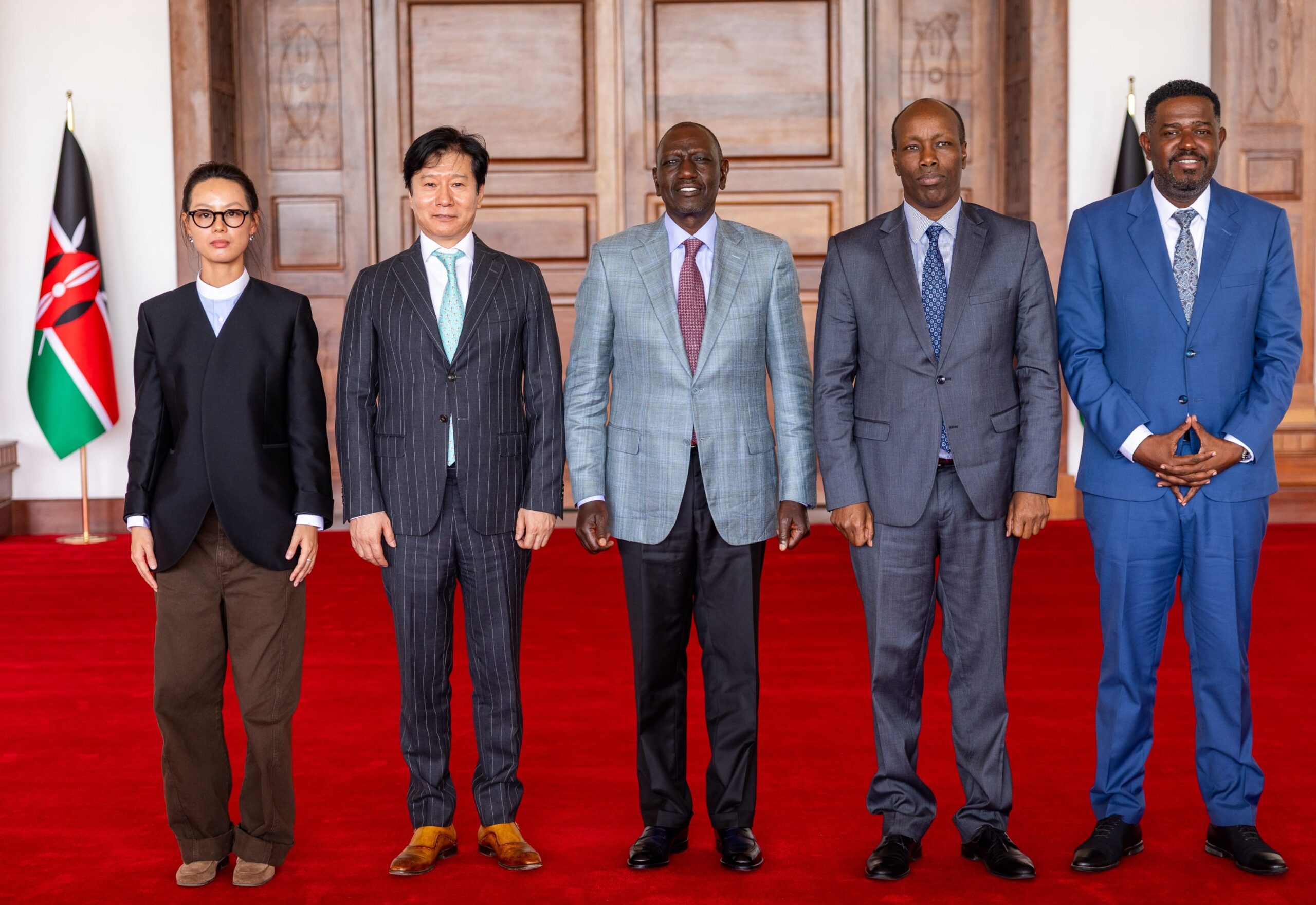
Kenya’s proposed KSh390 billion EV investment would give the country its most ambitious electric vehicle manufacturing plan yet, with two facilities planned to produce up to 150,000 vehicles annually.
The Government of Kenya and Endelevu Enterprise Corporation signed a memorandum of understanding on October 6 covering electric vehicle assembly, charging infrastructure and related mobility services, as Kenya tries to build more of the value chain around a market that has expanded rapidly over the past four years.
The proposal would give one plant capacity to assemble 50,000 four-wheel vehicles annually, while another would produce up to 100,000 two-wheelers and light-mobility vehicles. The project also includes 1,000 solar-powered charging hubs and a digital platform capable of supporting up to 100,000 electric vehicles. The government estimates that the programme could create about 2,000 direct jobs, more than 20,000 indirect opportunities and up to 80,000 additional opportunities in fleet management.
The announcement comes after a busy stretch for Kenya’s electric mobility industry. TechTrends’ reporting over the past month has documented the expansion of local assembly, battery swapping, charging infrastructure and EV financing, while a policy debate has emerged over whether Kenya’s incentives are doing enough to encourage local production rather than simply increasing the market for imported vehicles.

Kenya’s EV industry is building its industrial base
The proposed Endelevu project is therefore arriving into an industry that already has several pieces in place.
BasiGo is assembling electric buses and vans locally using completely knocked-down kits through Associated Vehicle Assemblers in Mombasa. Other companies are building electric motorcycle and battery-swapping networks, while financing institutions are developing products for commercial operators that cannot easily absorb the upfront cost of electric vehicles. TechTrends reported in September that more than $400 million had already been invested across vehicle assembly, batteries, charging infrastructure and related services, according to the Kenya Association of Manufacturers.

That development matters because Kenya’s electric mobility market is becoming less dependent on a single vehicle category. Electric motorcycles remain an important part of the market, but buses, vans, charging stations, battery services, software and fleet finance are creating a broader commercial ecosystem.
The country’s charging network is expanding at the same time. Kenya had 235 EV charging stations in 2025, according to a survey cited by TechTrends, putting it second in Africa behind Egypt, although coverage remains uneven. The expansion has also moved beyond Nairobi, with BasiGo and Rubis Energy Kenya developing fast-charging sites along transport corridors including Sabaki, Meru, Nanyuki and Nyeri.
The proposed project is significant because it attempts to connect these separate developments to a much larger manufacturing base.
Proposed plants would add 150,000 units of annual capacity
The 150,000-unit figure is the clearest indication of the project’s proposed scale.
The four-wheel facility would have annual capacity of 50,000 vehicles, while the two-wheeler and light-mobility plant would target 100,000 units. If fully developed and operating at the stated capacity, the two facilities would give Kenya a manufacturing base capable of producing far more vehicles than the country’s existing electric fleet.
That should not be confused with a forecast that 150,000 vehicles will be sold every year. The agreement is an MoU, and publicly available information does not yet establish the financing structure, factory locations, construction schedule or production start date. The Meridian 50’s transaction record describes the agreement as non-binding and notes that the text of the MoU has not been published.
Those details matter because manufacturing capacity only becomes an industrial asset when factories can operate at commercially viable utilisation levels. Vehicle assembly requires land, power, transport links, skilled workers, supplier networks, after-sales support and a market large enough to absorb production.
Kenya has been building several of those foundations. The National Electric Mobility Policy, launched in February, set out measures covering manufacturing, assembly, charging infrastructure, skills and EV adoption. The policy also introduced tax incentives, including zero-rated VAT on electric buses, bicycles, motorcycles and lithium-ion batteries.
The local-content question becomes harder to ignore
The biggest industrial question around the proposed investment is how much of the eventual vehicle value will actually be created in Kenya.
That issue was already at the centre of TechTrends’ September 30 reporting on Kenya’s EV manufacturing policy. KAM has argued that proposed duty-free treatment for more than 100,000 electric vehicles should be linked to local assembly, component production, investment and employment. The concern is straightforward: Kenya could grow its EV fleet rapidly while capturing relatively little manufacturing value if most vehicles and components continue to arrive from abroad.
The Endelevu proposal puts that question on a much larger scale.
A facility assembling imported components can create jobs and technical capability, but the economic impact becomes deeper when local companies begin supplying components, body parts, electronics, software, batteries and maintenance services. The eventual local-content ratio will therefore be more informative than the headline investment figure when assessing the project’s industrial contribution.
Battery production is another unresolved issue. Kenya has created incentives around lithium-ion batteries, and battery swapping is becoming an important part of the commercial motorcycle market. TechTrends reported in September that more than 10 electric motorcycle and three-wheeler manufacturers were preparing to enter Kenya as battery-swapping infrastructure expanded.
The proposed 100,000-unit two-wheeler and light-mobility facility could therefore enter a market where several competing manufacturers and energy-service models are already developing.
Charging is becoming part of the industrial equation
The proposed 1,000 charging hubs also need to be viewed against Kenya’s existing infrastructure.
BasiGo and Rubis are already extending charging along major transport corridors, while battery-swapping operators are building networks that allow commercial motorcycle riders to exchange depleted batteries rather than wait for vehicles to charge. ARC Ride, for example, raised $33.3 million in September to expand battery swapping across Kenya and other African markets, including Uganda, Tanzania, Ghana and South Africa.
Electricity regulation is evolving alongside that infrastructure.
On September 18, EPRA amended the e-mobility tariff framework, replacing the former 15,000 kWh monthly ceiling with an Energy Consumption Threshold mechanism. The change is relevant to charging operators, electric bus fleets and battery-swapping companies whose electricity consumption grows as their networks expand.
The change illustrates how electric mobility is becoming an electricity-market issue as well as a transport issue. More vehicles mean more charging demand, and larger commercial networks require tariffs and grid connections that can accommodate higher consumption without undermining the economics of charging.
The proposed charging network would add another layer to that system. The project’s reference to solar-powered hubs also creates a potential link between electric mobility and renewable energy, although the available information does not yet explain the technical configuration, storage arrangements or expected generation capacity of the proposed sites.
A regional market could determine whether the numbers work
The government is also presenting the project as a regional manufacturing opportunity.
President William Ruto said the ambition is to produce electric vehicles for East Africa and the wider African market, with locally manufactured vehicles potentially accessing regional markets where they meet applicable EAC Rules of Origin.
That regional strategy could be important because the proposed capacity is difficult to justify through Kenya’s passenger market alone. East Africa provides a larger addressable market, particularly for motorcycles, buses, vans and other commercial vehicles.
There are already signs that electric mobility companies are approaching the region this way. ARC Ride’s latest financing will support expansion in Kenya as well as Tanzania, Uganda, Ghana and South Africa, while battery-swapping companies are developing cross-border operating models.
Kenya’s existing automotive industry also provides a base of technical workers, suppliers and assembly expertise that could support deeper EV manufacturing if the right investment follows.
The regional opportunity will still depend on pricing, vehicle standards, customs arrangements, financing and infrastructure. Production capacity alone cannot create export demand.
The MoU still leaves important questions unanswered
The size of the announcement should not obscure its current status.
Kenya has signed an MoU for a proposed US$3 billion investment. It has not announced that KSh390 billion has already been deployed, nor has the government published a detailed implementation schedule showing when factories will be built and production will begin.
President Ruto acknowledged that gap during the signing and directed the investment ministry and Invest Kenya to facilitate approvals, land and infrastructure.
Those practical steps will determine whether the proposal becomes an operating manufacturing base.
The policy environment is already moving in that direction. The government and International Finance Corporation agreed in August to support development of an E-Mobility Bill and regulations, alongside work on fiscal and non-fiscal incentives. That comes as Kenya is simultaneously adjusting electricity tariffs, expanding charging networks and debating how much local value its EV incentives should generate.
The proposed Endelevu investment would bring those strands together at a much larger scale.
For Kenya, the real measure will eventually be more than the number of vehicles leaving the assembly line. It will be the share of components made locally, the businesses created around the factories, the technical skills transferred into the workforce, the charging infrastructure deployed and the extent to which Kenyan companies participate in the resulting supply chain.
If the project reaches production, it could give Kenya’s developing EV industry an industrial anchor. For now, the KSh390 billion figure represents the scale of what has been proposed, rather than the scale of what has already been built.
Real ESG impact doesn’t happen in panels alone, it happens in the rooms where financiers, operators, and policymakers actually align. Our GreenShift Forum 2026 cuts the noise, bringing together the people rewiring Africa’s sustainability and energy frameworks for one focused day in Nairobi. Secure your seat.
Go to TECHTRENDSKE.co.ke for more tech and business news from the African continent and across the world.
Follow us on WhatsApp, Telegram, Twitter, and Facebook, or subscribe to our weekly newsletter to ensure you don’t miss out on any future updates. Send tips to info@techtrendsmedia.co.ke