

I&M’s Kihara Maina on digital banking, thinner margins and the race for more volume

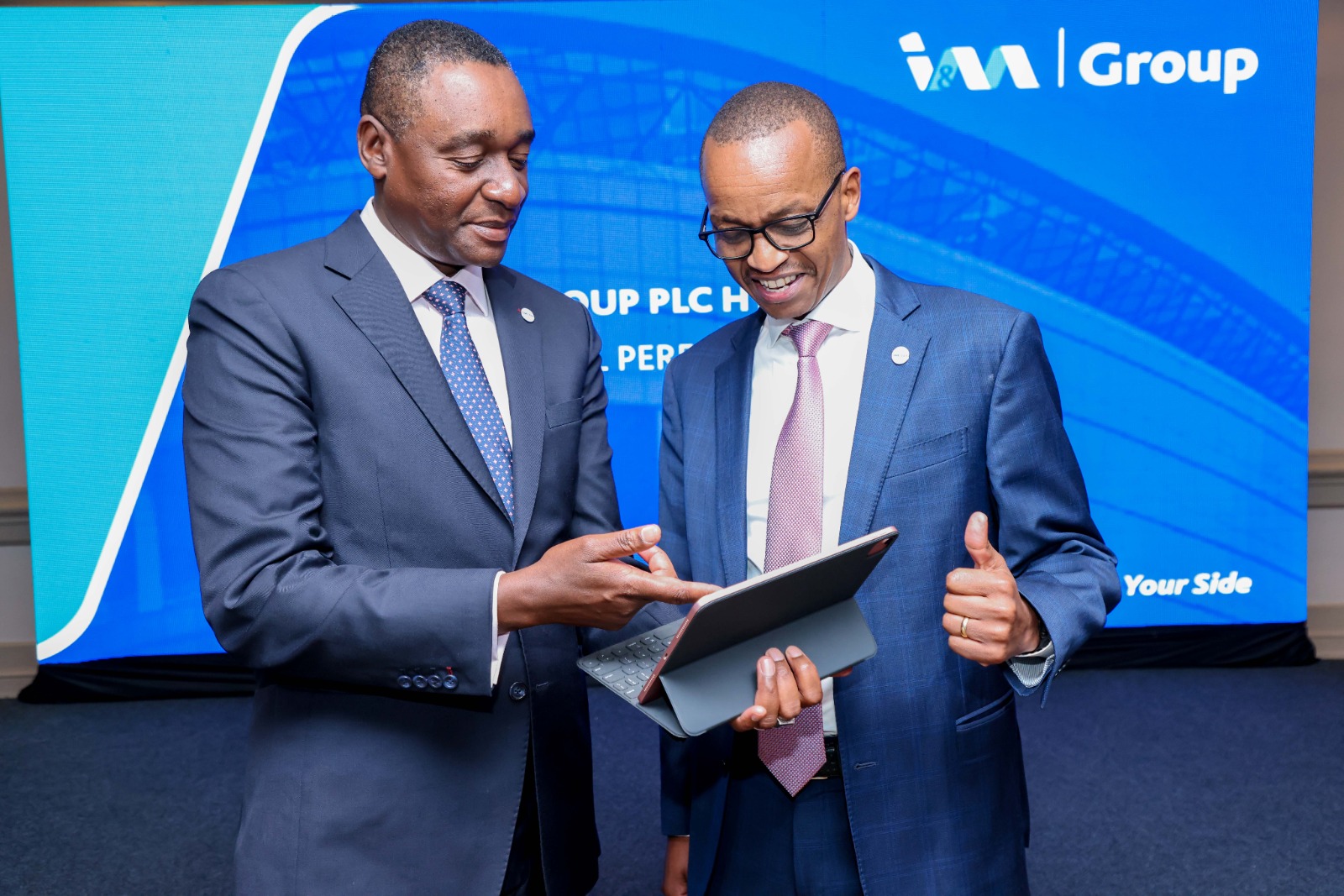
I&M Group’s Kihara Maina says the future of banking will depend less on protecting wide margins and more on generating enough business to make money from thinner ones.
That view sits behind much of I&M’s current strategy, from its push into retail and business banking to digital foreign-exchange platforms, remittance partnerships, AI-driven credit-risk models and the expansion of its regional businesses.
I&M has just reported a 22 percent rise in net profit to Sh10.2 billion for the first half of 2026, with operating income up 23 percent to Sh33.7 billion. But those numbers have already been reported as the headline financial story. In a conversation following the results, Maina offered a more revealing look at what the bank is trying to build and why the economics of banking are changing.
His central argument is straightforward: as financial markets mature, margins will come under pressure, and banks will have to compensate by doing more business.


Why Kihara Maina Thinks Banking Margins Will Keep Tightening
Maina describes the pressure on margins as part of the normal development of a financial market rather than a problem unique to I&M.
“This is a bit of the paradox that you get in our markets,” he said. As markets become more sophisticated, he argued, “the margins have to compress,” forcing banks to think much harder about how they generate sufficient volumes.
He pointed to Europe, where banks can generate substantial profits despite operating with much thinner margins, as an example of where more developed markets can eventually lead.
For East African banks, that has implications beyond loan pricing. Maina said Kenya and Tanzania are already seeing more retail savings being pooled into collective investment vehicles. As those pools become larger, they acquire greater negotiating power over where their money goes and the returns they expect.
That puts pressure on banks to find more efficient ways of gathering deposits, deploying capital and generating fee and transaction income. The strategic question therefore becomes less about preserving the economics of an individual transaction and more about how many transactions, customers and financial relationships a bank can build around it.
I&M Is Building For More Volume
That thinking is already visible in I&M’s approach to foreign exchange and remittances.
Maina said the bank has spent part of its current strategy cycle building partnerships with remittance companies, providing them with the liquidity needed to serve their customers. In Kenya, he said, about 25 percent of remittance flows are now coming through I&M.
The economics of that business illustrate his broader point. With the Kenyan shilling relatively stable, the opportunity is less about making large bets on currency movements and more about efficiently bringing in flows and deploying them.
“You get really sharp margins,” Maina said. “So you focus on how can you be efficient about bringing in the flows and then of course deploying them.”
Then came the line that perhaps best captures the strategy: “This is a volume game, right? Because when margins thin, you make it up using volumes.”
That philosophy also explains why I&M has been putting more of its banking infrastructure directly into the hands of customers. The bank has embedded foreign-exchange rates into its retail and corporate digital platforms, including I&M On-the-Go, while its FX Trader platform allows customers to see market prices and transact without having to call a bank employee and negotiate a rate manually.
The distinction matters. Digital banking here is not simply about replacing a branch visit with an app. It is about reducing friction so more transactions can happen, more frequently and across more markets, without requiring the same level of manual intervention.
That fits neatly with I&M’s wider strategy of building transaction relationships around corporate, institutional, retail and business customers.
The Retail Loan Book Is Becoming More Important
The volume strategy also depends on what happens on the lending side.
I&M has traditionally been strong in corporate and institutional banking, particularly in manufacturing and trade. Maina said the group is now putting more emphasis on personal, retail and business banking, where it has historically generated a large share of its deposits but had been less successful at deploying those funds back into the same customer base.
That is beginning to change. Maina said I&M has crossed the Sh100 billion mark in Kenya for its retail and business banking loan book.
The significance goes beyond the size of the portfolio. A stronger retail and business banking franchise gives I&M more opportunities to turn deposits into loans, payments, foreign-exchange transactions and other services, creating more activity around the same customer relationship.
That is especially important in a market where simply growing the balance sheet may not be enough to preserve returns.
The bank also appears to be getting more comfortable with the risks that come with expanding into higher-frequency retail lending. Maina said stronger collections across its markets have helped, while I&M has been paying more attention to preventing loans from deteriorating in the first place.
AI Is Moving Into Credit Risk Management
That prevention effort is where technology becomes particularly interesting.
Maina said I&M is investing in AI-driven models that can identify sectors and individual customers that warrant closer attention before problems develop into non-performing loans.
“We are very particular about collections,” he said, adding that the bank is now focusing on early intervention and using AI-driven models to identify sectors and customers that need to be watched.
The objective is not simply to automate lending decisions. It is to give the bank an earlier view of where stress may be developing so that it can engage customers before they reach the NPL stage.
That is becoming more important as I&M expands unsecured and higher-frequency lending through retail, business and ecosystem partnerships. Maina acknowledged that these models bring different kinds of risk because banks increasingly have to interpret information coming from partners and incorporate those trends into provisioning models.
The approach helps explain how I&M can simultaneously grow its loan book and improve the quality of that book. Its half-year results showed gross non-performing loans falling 12 percent to Sh30.1 billion even as net loans and advances grew 15 percent to Sh334 billion. The financial result is one thing; the risk-management infrastructure behind it is another.
I&M’s Regional Strategy Goes Beyond Profit Growth
The regional businesses are another part of the same strategy, but Maina’s comments suggest that I&M is thinking about them differently rather than applying one template across all five markets.
The group’s regional subsidiaries increased their contribution to pre-tax profit to 33 percent in the first half, up from 25 percent a year earlier. Rwanda has emerged as a particularly strong contributor, while Uganda and Tanzania are also becoming more meaningful parts of the group.
For Maina, the value of diversification is partly about having several markets contributing to the group at different points in their development.
Rwanda, for example, has a relatively small but developing capital market. I&M is the country’s fourth-largest bank, and Maina said the group wants to use that position to contribute to the development of the market rather than simply grow its own balance sheet.
“We want to say how do we also play our developmental role as a key player,” he said. “How do we use that pedigree to also help deepen the financial markets in Rwanda?”
Uganda presents a different problem. Maina said the business is still heavily equity-funded because of its stage of development and regulatory capital requirements. As returns improve and the operation grows, I&M expects to diversify its sources of funding and eventually introduce more debt capital.
He put the timing in practical terms: I&M’s Ugandan business has core capital of about 170 billion Ugandan shillings and an ROE of roughly 11 percent, which Maina said needs to improve before a larger move into debt capital makes sense.
The result is a regional strategy that is partly about earnings and partly about building financial businesses that can eventually support themselves through different forms of capital.
Why Kihara Wants Deeper Capital Markets
That thinking extends into the broader capital markets.
Maina argues that East Africa has substantial pools of savings, but not enough private-sector instruments through which those savings can be deployed. Government securities remain a major destination for excess liquidity because corporate issuance is still relatively limited.
I&M’s own Medium-Term Note issuance provides an example of what Maina wants to see more often. He described it as the first time a bank had entered the corporate debt market in Kenya with a 10-year instrument and argued that more such issuance would improve price discovery and diversification.
The issue, in his view, is ultimately one of deployment. Banks can continue mobilising deposits, but if private-sector credit is growing at roughly the same pace as the industry and deposit mobilisation is faster, the excess money has to find another home.
“If the loan book is growing at 9% and the industry’s credit to private sector is around the same level, then all of that surplus has to go somewhere,” Maina said. “It goes into government securities.”
A deeper corporate debt market would give banks, institutional investors and other pools of capital more options.
It would also fit I&M’s own strategy as its businesses mature. Instead of relying overwhelmingly on deposits and equity to fund expansion, its different subsidiaries can gradually develop more balanced capital structures suited to their respective markets.
The Next Test Is Making More Money From Thinner Margins
The bigger picture emerging from Maina’s comments is that I&M is preparing for a banking market in which the easy economics of high margins cannot be taken for granted.
That changes what management has to optimise. Customer numbers matter because they create deposits and lending opportunities. Digital activity matters because it makes transactions easier and potentially cheaper to serve. Remittances and FX matter because they generate flows. Retail and business banking matter because they allow I&M to deploy more of the deposits it already attracts. Regional subsidiaries matter because they diversify the earnings base. Capital markets matter because they create additional places for savings to be invested.
All of those pieces point back to the same underlying question: can the bank create enough activity around its customers to keep growing even when the margin on each individual transaction becomes smaller?
Maina’s answer is clear.
“As you become more sophisticated as a market, you’re going to see compression of margins,” he said. “The play then becomes one of saying, how do I actually drive volumes?”
For I&M, that makes the next stage of its strategy less about finding one breakthrough product and more about connecting the pieces it has already built: deposits, lending, payments, FX, remittances, digital platforms, risk technology and regional distribution.
The Sh10.2 billion half-year profit shows that the current strategy is producing results. Kihara Maina’s broader argument is about what I&M has to do when the market itself becomes more competitive: build enough scale and transaction depth to remain profitable even when banking margins inevitably become thinner.
Real ESG impact doesn’t happen in panels alone, it happens in the rooms where financiers, operators, and policymakers actually align. Our GreenShift Forum 2026 cuts the noise, bringing together the people rewiring Africa’s sustainability and energy frameworks for one focused day in Nairobi. Secure your seat.
Go to TECHTRENDSKE.co.ke for more tech and business news from the African continent and across the world.
Follow us on WhatsApp, Telegram, Twitter, and Facebook, or subscribe to our weekly newsletter to ensure you don’t miss out on any future updates. Send tips to editorial@techtrendsmedia.co.ke


