
The iPhone 18 is coming. Why is Android still trying to beat Apple on Apple’s terms?

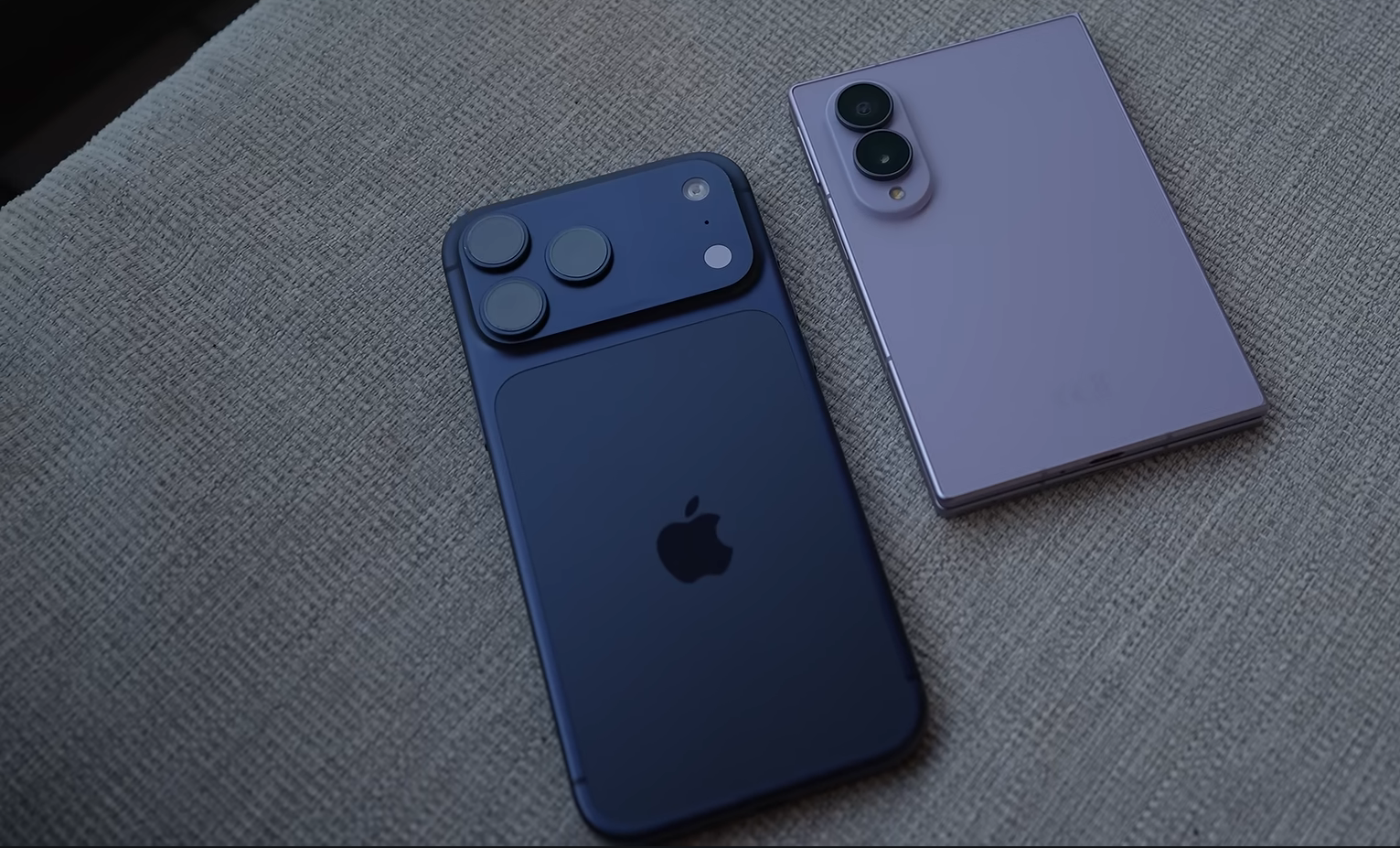
When the iPhone 18 series arrives, Apple will once again dominate the smartphone conversation.
The September launch is expected to focus on the iPhone 18 Pro, iPhone 18 Pro Max and Apple’s first foldable, with the standard iPhone 18 and other models following in spring 2027. The broader lineup is still based on reports rather than confirmed specifications, but the direction is already clear from the current rumor picture: Apple is preparing another premium push at exactly the moment Samsung, Google, Xiaomi and other Android manufacturers are trying to persuade consumers that there is a better alternative.
That makes the iPhone 18 cycle a useful moment to ask a question that goes beyond Apple’s next hardware release: why does so much of the Android industry remain obsessed with winning people who may be among the hardest smartphone customers to convert?
The answer is partly understandable. Apple has built an unusually sticky ecosystem, and the financial rewards for taking even a small number of high-value iPhone customers are substantial. But the strategy becomes questionable when Android companies spend heavily on iPhone-centric creators, design products around Apple’s reference points and build bridges into Apple’s ecosystem, while millions of Android users are already looking for their next phone.
The industry may be chasing the wrong customer.
The iPhone 18 launch will expose Android’s familiar problem
Apple does not need to convince everyone that the iPhone is a premium smartphone. The product already occupies that position in the minds of millions of consumers, particularly in markets such as the United States and parts of Western Europe. The iPhone 18 launch therefore begins from an unusual advantage: Apple is introducing another generation into an ecosystem that already has an enormous installed base.

The rumored lineup makes that advantage even more interesting. The iPhone 18 Pro and Pro Max are expected to bring a 2nm A20 Pro chip, 12GB of RAM, a variable-aperture main camera and a new C2 modem, while the rumored foldable iPhone Ultra could introduce a roughly 7.8-inch internal display and a completely different form factor. Much of that remains unconfirmed, but even the possibility of a foldable iPhone gives Apple another reason to dominate the conversation when the September launch arrives.
Samsung already knows this dynamic. Its Galaxy Z Fold8 arrived in London on July 22, ahead of Apple’s expected foldable iPhone, and Samsung’s own launch material positioned the device as an expansion of its foldable range rather than simply another conventional flagship. The timing makes sense commercially: Samsung has years of experience in foldables, and Apple’s reported entry into the category gives the market a powerful new reference point.
But there is a problem with making Apple the reference point for everything.
A company can benchmark its product against Apple without making Apple the center of its identity. The first is engineering. The second is positioning.
Samsung can buy attention without buying switching
This is where the Android industry’s creator strategy becomes uncomfortable.
Samsung can put a Galaxy phone in front of a creator with millions of followers, fly that creator to a launch, give them early access and generate an enormous amount of coverage. That coverage has real value. A major creator can demonstrate the Fold8’s form factor, multitasking, cameras and software to people who might never have walked into a Samsung store.
But there is a difference between getting someone to watch a Galaxy and getting someone to replace an iPhone with a Galaxy.
That distinction becomes particularly important when the creator is deeply associated with Apple.
If an iPhone-centric creator spends days with a Galaxy, praises the display and camera, produces a polished review and then returns to an iPhone as their everyday phone, the audience has received two messages. The first comes from the review: Samsung makes impressive hardware. The second comes from the creator’s subsequent behavior: this still isn’t the phone I chose to keep using.
For a consumer already inclined toward iPhone, the second message can be more powerful.
The creator’s daily driver is a form of revealed preference. A sponsored review tells viewers what the creator thinks about a product. Their everyday device tells viewers what they actually chose.
That doesn’t make the review dishonest. A reviewer can genuinely conclude that a Galaxy is excellent while preferring an iPhone for personal reasons. But Samsung’s commercial objective is not merely to establish that the Fold8 is good. If the objective is switching, it needs the audience to believe that leaving the iPhone is worth the trouble.
That is a much harder sale.
The creator’s daily driver may matter more than the review
This is also why the composition of a launch event can matter more than the number of cameras pointed at the stage.
Several creators who attended Samsung’s London foldable launch have discussed the conspicuous presence of iPhones among attendees. That observation is worth treating as an event-level indication rather than a quantified survey of the room, but it raises a useful question about what Samsung’s carefully assembled creator ecosystem is actually communicating.
Compare that with the experience at Apple’s Worldwide Developers Conference, where iPhones are naturally pervasive among attendees. The difference is subtle but important. At an Apple event, the audience itself provides evidence that the ecosystem is already deeply embedded in the people Apple wants to reach.
At a Samsung event, the presence of iPhones among influential creators can create the opposite visual impression. Samsung is presenting Galaxy as a premium alternative, while some of the people with the greatest influence over the technology audience continue to carry Apple’s product as their everyday device.
Samsung can manufacture Galaxy coverage. It cannot manufacture Galaxy adoption simply by putting Galaxy phones in the hands of creators.
That matters even more if an iPhone-heavy creator’s audience is primarily interested in Apple content. A creator may have millions of subscribers, but those subscribers are not automatically millions of potential Samsung customers. Some may barely watch the creator’s Android reviews at all.
A smaller creator with an audience that routinely compares Samsung, Xiaomi, Google Pixel, OPPO, Tecno and other Android phones can therefore be more commercially relevant than a much larger iPhone specialist.
The relevant question is not simply how many people can see the phone. It is how many of those people are genuinely movable.
Apple’s ecosystem changes the economics of conversion
This is where the argument needs to move beyond influencer marketing.
An Android user switching from Xiaomi to Samsung is still making a brand decision, but the underlying operating system remains familiar. The consumer keeps Google Photos, Gmail, Chrome, Google Maps, WhatsApp and most of the software habits that matter to everyday use.
An iPhone user moving to Samsung crosses a much larger boundary.
The phone may be connected to an Apple Watch. AirPods may already be part of the user’s routine. Photos and files may sit inside iCloud. Messages, FaceTime and AirDrop may be woven into relationships and workplaces. Years of purchases and habits can reinforce the decision to stay.
That means Samsung isn’t competing only against the hardware in someone’s hand. It is competing against the accumulated convenience surrounding that hardware.
The same applies to Google’s Pixel strategy. Google can make an excellent Android phone and still face the fact that an iPhone user doesn’t wake up one morning with a blank slate. There is already a working system around that person.
This is why the idea that Android needs to capture a small percentage of iPhone users can be misleading when it becomes the basis for marketing allocation. A small pool of highly valuable customers can certainly justify investment, but the acquisition cost and switching friction have to be considered alongside the theoretical size of the opportunity.
Google and Xiaomi reveal the same strategic tension
The issue becomes more interesting when it extends beyond Samsung.
At Google I/O, Google has also shown how difficult it can be to separate Android’s ambitions from Apple’s enormous installed base. Google’s interest in making its AI services useful to iPhone owners is commercially logical because the opportunity is too large to ignore. But every time a Google service is presented as something that works beautifully on an iPhone, Google is also accepting the reality that the iPhone is where a huge portion of its potential users already live.
That is excellent platform strategy for Google.
It is not necessarily evidence that Pixel is winning the smartphone battle.
Xiaomi presents another version of the problem. Its flagship hardware can offer characteristics that are genuinely different from Apple’s approach, yet its products are routinely discussed through the iPhone comparison frame. The Xiaomi 17 Pro Max, for example, attracted coverage explicitly comparing its name and design with Apple’s Pro Max line, even as the device offered its own hardware story, including a large battery and fast charging.
That is the trap.
Once the iPhone becomes the reference model, the Android product is constantly being evaluated as a variation on something Apple already owns.
The more useful question for Xiaomi is not whether its phone resembles an iPhone closely enough. It is whether the phone gives a consumer a reason to say, “I want this particular Xiaomi.”
That is a much harder brand-building exercise, but it is also the one that can create durable differentiation.
Compatibility with Apple can solve a problem without winning a customer
The latest Quick Share developments make this tension particularly clear.
Google has expanded Quick Share with features designed to make Android-to-Apple sharing more seamless, while Samsung has brought the capability into supported Galaxy devices. The underlying consumer problem is real: people increasingly live in mixed-device groups, and nobody wants file sharing to become an argument about which phone their friends own.
From a product perspective, this is sensible.
From a switching perspective, however, the result is more complicated.
Suppose an iPhone user has always considered Android inconvenient because friends use AirDrop. If a Galaxy user can now share files with that iPhone more easily, one obstacle to Android has disappeared. But the iPhone owner does not necessarily gain a reason to switch.
The barrier has been removed, but the destination has not become more compelling.
That distinction matters. Removing friction is not the same as creating demand.
There is also a broader psychological effect. When Android products are marketed around compatibility with Apple’s established behavior, Apple remains the reference point. Quick Share can be a perfectly capable Android feature in its own right, but the moment the consumer conversation becomes “Android can now work with AirDrop,” the market is once again talking about Android in relation to an Apple standard.
There is nothing wrong with interoperability. In fact, consumers benefit from it. The strategic question is what Android companies want interoperability to accomplish: make Android easier to live with, or make consumers want to move to Android.
Those are different objectives.
Android has a much easier market to win
This is where the industry’s obsession with the iPhone user starts to look strange.
Consider an Android owner in Nairobi, Lagos, Mumbai or Warsaw who is preparing to replace a Xiaomi, OPPO, Tecno, Infinix or another Android handset. That customer already understands Android. Their apps, accounts and many of their habits can move to another Android device without forcing them to rebuild their digital life around a new operating system.
The decision can therefore come down to things manufacturers can directly influence: battery life, charging, cameras, displays, performance, design, software support, price, financing and after-sales service.
Samsung doesn’t have to convince that person that Android is viable.
It has to convince them that Galaxy is the Android phone they should buy next.
That is a much cleaner proposition.
The same applies to Xiaomi trying to move a Redmi or POCO customer into a more expensive flagship, or Samsung trying to move an existing Galaxy A-series owner into an S-series device. There is an upgrade ladder already in place.
In many markets across Africa, Asia, Latin America and Eastern Europe, the smartphone decision is not primarily an ecosystem migration from iOS. It is an upgrade decision within Android.
That doesn’t mean Western iPhone users are unimportant. They are valuable customers, and some will switch. But treating them as the central prize can cause manufacturers to overlook the enormous pool of consumers who are already standing on the platform they are trying to sell.
The industry needs to stop treating Apple as the only premium benchmark
There is nothing wrong with comparing a Galaxy camera with an iPhone camera. Consumers will do it anyway.
The problem starts when the comparison becomes the product’s identity.
Engineering should ask whether a sensor performs better, whether a chip consumes less power, whether a hinge survives more cycles or whether a display reaches a particular brightness level. Marketing should then explain why those characteristics matter to the customer.
That creates a distinction between engineering against Apple and positioning against Apple.
The first is unavoidable.
The second can become a trap.
If Xiaomi says its phone has an excellent camera, enormous battery and extremely fast charging, those are product attributes that can stand on their own. If it spends the launch telling consumers how closely the phone resembles an iPhone, the implicit hierarchy is already established: Apple is the original, Xiaomi is the alternative.
The same applies to Samsung.
A Galaxy Z Fold8 does not need to win because it is the closest thing to a foldable iPhone. Samsung has been building foldables long before Apple’s rumored entry into the category, and the Fold’s strongest argument should be what Samsung has learned about large-screen mobile computing, multitasking and foldable hardware.
Apple’s reported foldable iPhone could be excellent. That should make Samsung work harder on its own product, not make Samsung’s identity more dependent on Apple.
What the iPhone 18 cycle should force Android makers to reconsider
The iPhone 18 generation is likely to give Apple another enormous burst of attention. The Pro models are expected to introduce major internal upgrades, while the rumored iPhone Ultra could bring Apple’s ecosystem into the foldable category for the first time. The standard iPhone 18 and other spring models would then extend that product story into 2027.
Android manufacturers will respond, as they should.
They will compare cameras. They will benchmark processors. They will talk about battery life, AI, displays and foldables. Creators will publish comparison videos, and consumers will search for the differences.
But the smarter question for each manufacturer is what happens after the comparison ends.
If the viewer is already an Android user, does your phone give them a compelling reason to upgrade?
If the viewer is an iPhone user, have you given them a compelling reason to tolerate the cost of leaving Apple’s ecosystem?
If the creator reviewing your phone goes back to an iPhone, what does that communicate to the audience?
If your accessory makes an iPhone easier to live with, are you monetizing Apple’s ecosystem or weakening it?
And if your product is constantly described as an “iPhone alternative,” when does it become a product people choose because they actually prefer what your platform offers?
Those are harder questions than how many views a launch video generated.
They are also closer to the question that matters at the end of a smartphone sales cycle: who actually changed what they were going to buy?
Apple’s strength makes that question unavoidable. The company has built an ecosystem strong enough that competitors can profit from its users, build compatible products for them, target their creators and even design bridges into their platform without necessarily moving those users out of it.
That is a remarkable position for Apple.
For Android, the answer cannot simply be to build better bridges.
The bigger opportunity is to build a platform and product identity that makes consumers on either side of the ecosystem look at a Galaxy, Pixel or Xiaomi flagship and think about what they gain by choosing it.
The iPhone 18 will give Apple another chance to define the premium smartphone conversation. Android manufacturers do not need to stop listening. They need to stop assuming that winning that conversation requires speaking Apple’s language.
The most valuable customer may not be the person trying to escape Apple.
It may be the Android user who is already ready for an upgrade and simply needs a reason to choose your phone.
Download the FREE Kaspersky Next Enterprise Security Guide here to explore the complete framework for simplifying security operations and building cyber resilience.
Go to TECHTRENDSKE.co.ke for more tech and business news from the African continent and across the world.
Follow us on WhatsApp, Telegram, Twitter, and Facebook, or subscribe to our weekly newsletter to ensure you don’t miss out on any future updates. Send tips to editorial@techtrendsmedia.co.ke


