
Safaricom Ethiopia generates KSh10.6 billion as customer growth begins to change its economics

Safaricom Ethiopia narrowed its EBITDA loss by 96.5% to KSh434.4 million in the six months ended September 2026, as service revenue rose 71.6% to KSh10.6 billion. The improvement brings the operation closer to its target of achieving EBITDA breakeven by the end of FY27, following several years of network investment, customer acquisition and the establishment of its telecommunications and mobile financial services business.
The operation had 15.4 million three-month active customers at the end of the reporting period, with revenue growth in Ethiopian birr reaching 102.1%. Safaricom Group CEO Peter Ndegwa said the business was approaching the customer and network scale identified by management as important to its commercial progress. The company has previously pointed to a customer base of between 15 million and 20 million and a network approaching 4,000 sites as important operating thresholds.
The financial improvement reflects a combination of customer growth, higher usage and changes in pricing. Management said monthly data consumption had increased from approximately 6GB to between 7.5GB and 8GB per customer. Higher consumption has supported data revenue, while changes in the price charged per unit of data have also contributed to the growth in service revenue.
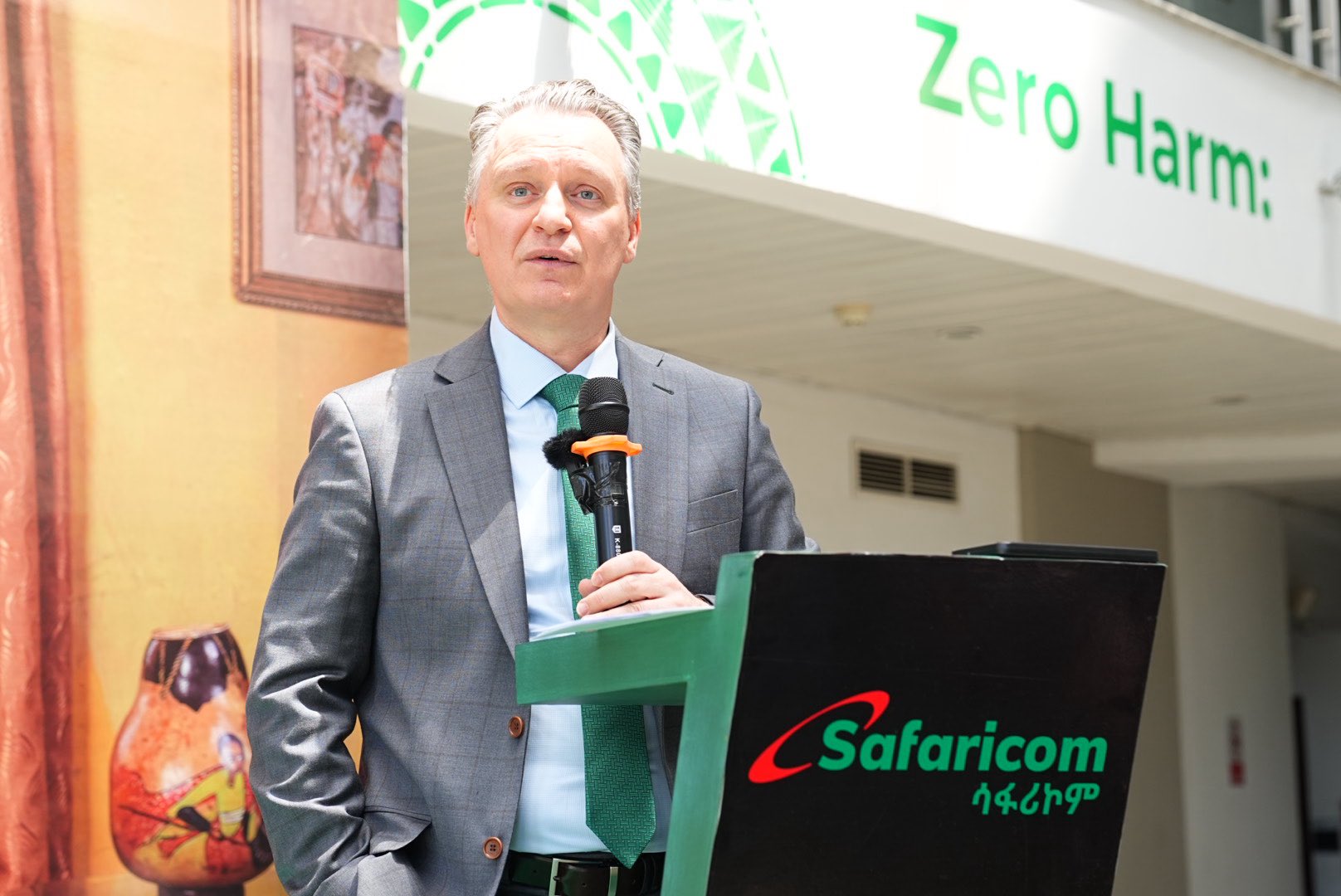
Ndegwa and Safaricom Ethiopia CEO Wim Vanhelleputte also discussed the role of pricing in the operation’s commercial progress. Vanhelleputte said the company had been working to improve the relationship between network usage, customer demand and the revenue generated from services. Management indicated that further price rationalisation could be considered through engagement with the regulator, as the company works towards a more sustainable commercial model.



The improvement in revenue and EBITDA has also changed the company’s funding requirements. Vanhelleputte explained that the initial investment phase involved spending on network assets as well as operating costs associated with establishing the business. He illustrated the difference using an example in which part of a funding allocation went towards building assets while another portion covered operating expenses. As the business approaches EBITDA breakeven, he said, additional funding can support a more established operation rather than covering the same level of startup losses.
Safaricom Ethiopia’s capital expenditure was approximately KSh5 billion in the first half of FY27, compared with KSh18.7 billion in the corresponding period a year earlier. The company’s full-year Ethiopia capital expenditure guidance stands between KSh6 billion and KSh9 billion. Management said the major initial funding requirement was largely behind the operation, although further investment would be necessary to expand and maintain the network.
The funding discussion also covered the role of borrowing in Ethiopia. Management said the operation was working towards a more sustainable funding structure that would include greater use of local borrowing rather than relying solely on shareholder equity. Safaricom Ethiopia’s debt-to-equity ratio stood at 20%, compared with 16.9% in March 2026.
The remaining financial figures show why EBITDA breakeven is an important milestone, but not the end of the company’s profitability journey. Safaricom Ethiopia recorded an EBIT loss of KSh11.4 billion and a net income loss of KSh8.8 billion during the six months. Operating free cash flow was negative KSh10.9 billion, although the deficit narrowed by 55.8%. The operation therefore continues to carry significant costs below EBITDA as it builds its business.
For Safaricom, the Ethiopian operation has become an important contributor to group revenue growth. The business accounted for approximately 17% of the group’s service revenue growth during the period, according to management. Its contribution is also becoming more visible in the group’s earnings performance as the EBITDA loss narrows.
Safaricom retained its FY27 Ethiopia EBIT guidance at a loss of between KSh12 billion and KSh15 billion, alongside a capital expenditure range of KSh6 billion to KSh9 billion. The company’s stated priority is to achieve EBITDA breakeven by the end of the financial year, while continuing to grow its customer base, network usage and M-PESA adoption. The next stage of the operation will depend on its ability to convert a larger customer base and stronger data consumption into a business capable of sustaining its operating and investment requirements.
Go to TECHTRENDSKE.co.ke for more tech and business news from the African continent and across the world.
Follow us on WhatsApp, Telegram, Twitter, and Facebook, or subscribe to our weekly newsletter to ensure you don’t miss out on any future updates. Send tips to info@techtrendsmedia.co.ke

