iPhone 18 Pro and the foldable Ultra could make Apple’s 2026 lineup unusually ambitious

Apple’s iPhone 18 series is shaping up to be one of the company’s most unusual iPhone generations, not because every model is getting a radical redesign, but because Apple is reportedly changing when and how the lineup reaches customers.
The iPhone 18 Pro and iPhone 18 Pro Max are expected to arrive in September 2026 alongside Apple’s first foldable iPhone, while the standard iPhone 18, iPhone 18e and second-generation iPhone Air are expected to follow in spring 2027. That would leave Apple’s premium phones carrying the attention of the traditional September launch, while the rest of the lineup arrives several months later.
The result is a lineup that is easier to understand if the iPhone 18 generation is treated as three separate stories: the conventional Pro phones, the spring 2027 mainstream models and the much more experimental foldable Ultra. Much of what has been reported remains unconfirmed, but the volume of supply-chain, analyst and software evidence now paints a fairly detailed picture of what Apple may be preparing.
Apple is splitting the iPhone 18 launch
The biggest change is the calendar itself. Apple is expected to introduce the iPhone 18 Pro and Pro Max in September 2026, with the foldable iPhone joining them. The regular iPhone 18 is expected to wait until spring 2027, when it could arrive alongside the iPhone 18e and iPhone Air 2.

That matters because it changes what the September iPhone event represents. Someone looking for the newest conventional iPhone in the autumn may have to choose between the iPhone 18 Pro and Pro Max rather than picking up a cheaper standard iPhone 18. The spring models would then give Apple another major iPhone release window several months later, extending the product cycle without putting all of the new devices on sale at once.
The exact September date remains uncertain. Current reporting has pointed to early September, although Apple has not announced an event yet.

iPhone 18 Pro and Pro Max: familiar design, major internal upgrades
The iPhone 18 Pro and Pro Max are not expected to look dramatically different from the iPhone 17 Pro generation. The display sizes are expected to remain at 6.3 inches for the Pro and 6.9 inches for the Pro Max, while the rear camera arrangement is expected to retain the familiar triple-camera layout and large camera plateau.
That does not mean the Pro models are simply cosmetic refreshes. The reported component changes touch almost every important part of the phone, from the processor and modem to the display, camera system, thermal management and battery.
A20 Pro, 2nm and faster memory
At the centre of the upgrade is Apple’s A20 generation of chips. The Pro models are expected to use an A20 Pro built on TSMC’s 2nm process, a move that should improve both performance and power efficiency compared with the current 3nm generation.
The more interesting part of the silicon story may be how Apple packages the chip with memory. Reports point to Wafer-Level Multi-Chip Module, or WMCM, packaging, which could place the processor and memory in a tighter configuration. That matters for power efficiency and data movement, particularly as Apple asks its chips to handle more demanding on-device AI workloads.
The Pro models are also expected to retain 12GB of RAM. The memory upgrade is important for more than benchmark numbers because AI features, advanced photography and multitasking all benefit from additional working memory.
Smaller Dynamic Island and new display technology
The front of the iPhone 18 Pro could receive one of the few obvious visual changes. Apple is reportedly working on a smaller Dynamic Island by moving at least some Face ID components beneath the display.
The display itself is also expected to move to LTPO+, which could improve OLED power management and low-brightness behaviour. The screen sizes are not expected to change, so the upgrade is more about efficiency and reclaiming a little more usable display space around the front-facing hardware.
Variable aperture and more serious camera controls
The camera system could deliver one of the most noticeable practical upgrades. Apple is reportedly preparing a variable-aperture main camera for at least one iPhone 18 Pro model. Instead of relying on a fixed aperture, the lens would be able to regulate how much light reaches the sensor, giving the camera greater control over exposure and depth of field.
That could make Portrait photography more flexible, reduce overexposure in bright scenes and improve low-light performance. A wider-aperture Telephoto lens is also reportedly under consideration, which would allow more light into the zoom camera in darker environments.
Apple may also give the Camera app more advanced controls aimed at photographers who want more manual adjustment. At the same time, the Camera Control button introduced in earlier iPhones is reportedly being simplified, potentially moving toward a more straightforward pressure-sensitive implementation.
C2 modem and next-generation connectivity
The iPhone 18 Pro is expected to mark another step in Apple’s effort to reduce its dependence on Qualcomm for cellular hardware. Apple’s C2 modem is widely expected to debut in the Pro models, bringing improvements in power efficiency and connectivity while giving Apple greater control over the cellular platform.
The exact regional configuration remains uncertain, particularly in markets where carrier requirements have historically complicated modem deployments. Reports have also suggested that Apple could expand satellite connectivity beyond emergency communication, although the final capabilities remain unclear.
The iPhone 18 Pro Max could trade thinness for battery life
The Pro Max could be the model where Apple’s priorities become most obvious. Reports point to a substantially larger battery, with leaked capacities around 5,391mAh for a physical-SIM version and 5,567mAh for an eSIM configuration. Those figures would represent a sizeable increase over the iPhone 17 Pro Max.
The trade-off is physical size. The iPhone 18 Pro Max is rumoured to be thicker than its predecessor, while separate reports have put its weight around 240 grams. A larger thermal system, including a more substantial vapor chamber, would also make sense if Apple wants the A20 Pro to sustain high performance during gaming, video processing and AI workloads.
This could produce a Pro Max that feels less obsessed with thinness and more focused on endurance and sustained performance. A larger battery takes up space, while a more powerful chip and higher sustained workloads require better cooling.
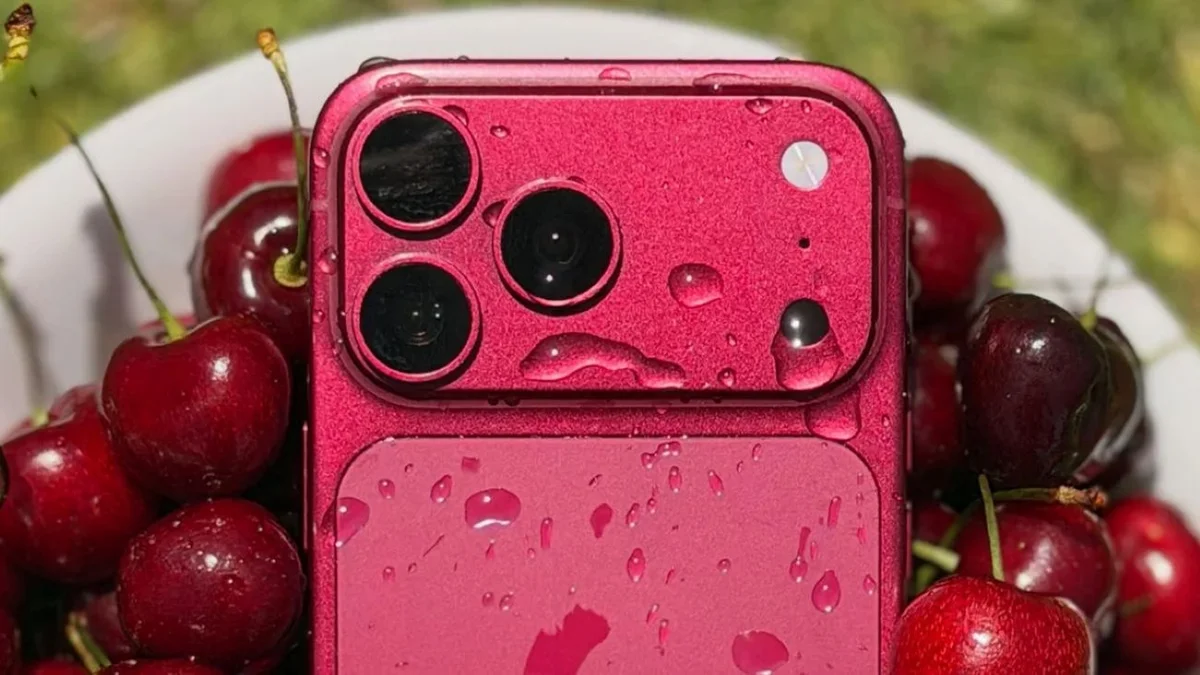
The colour palette is also expected to change. Dark Cherry has emerged as the standout new option, joined by Light Blue, Silver and possibly Dark Gray.
iPhone 18, iPhone 18e and Air 2 are coming later
The spring 2027 models are much less clearly defined, but the broad lineup is becoming easier to map. The standard iPhone 18 is expected to retain a 6.3-inch display and a broadly familiar exterior, while the iPhone 18e is expected to occupy the entry-level position with a smaller 6.1-inch screen. Apple is also expected to introduce the second-generation iPhone Air around the same period.
The split gives Apple room to differentiate these phones without forcing every model to arrive with the same component bill. Reports suggest Apple is also looking at ways to manage rising component costs across the lineup, although those details remain less certain than the launch schedule itself.
The standard iPhone 18 could get 12GB of RAM
One of the more interesting developments concerns memory. Earlier reports pointed toward a lower RAM configuration for the standard iPhone 18, but a newer analyst report suggests the figure could rise to 12GB, bringing the regular model much closer to the Pro tier.
That contradiction is worth preserving rather than smoothing over. Until Apple’s component suppliers or a more consistent stream of leaks settles the question, 12GB should be treated as the latest reported configuration rather than a confirmed specification.
The standard model is also expected to use Apple’s A20 chip, built on the same 2nm process, although it would not receive the full A20 Pro configuration reserved for the premium models.
Air 2 could become a much stronger proposition
The second-generation iPhone Air is shaping up as one of the more interesting spring models. Reports point to a second rear camera, likely an Ultra Wide, addressing one of the biggest compromises of the first Air. The device could also receive the A20 Pro, 12GB of RAM, a larger battery and a vapor chamber.
That combination would make Air 2 unusual because it could pair the thin, lightweight identity of the Air line with silicon and cooling hardware associated with Apple’s more expensive models. A reported battery capacity of roughly 3,500mAh would also represent a healthy improvement over the first-generation Air.
Some reports have also suggested that Air 2 could receive the smaller Dynamic Island and Apple’s C2 modem. Those details are less established than the basic spring 2027 launch plan.
iPhone Ultra is the biggest change in the lineup
The most dramatic product in the iPhone 18 generation is the foldable. Reports increasingly refer to it as the iPhone Ultra, although Apple’s final retail branding remains unconfirmed. The device is expected to use a book-style folding design, with a roughly 5.5-inch cover display and an internal screen around 7.8 inches.
Unlike the Pro models, the Ultra is a completely different proposition. Folded, it would behave like a conventional phone. Opened, it would offer a screen approaching iPad mini territory.
A foldable with an iPad-like screen
The internal display is expected to measure between 7.6 and 7.8 inches, while the external display could sit between 5.3 and 5.5 inches. The device is also expected to be remarkably thin when unfolded, with some reports putting it below 5mm.
Apple’s challenge is not simply making a large folding OLED. It has to make the hinge, display, battery and internal components fit into a package that still feels like an iPhone when closed. Reports of a titanium frame and a very thin construction point to just how ambitious the engineering target may be.
The display crease is another important part of the story. Apple is reportedly pursuing a design with a minimal or nearly invisible crease, although only the finished hardware will reveal how successful that effort has been.
Touch ID, cameras and iOS 27
The Ultra may also abandon Face ID. Reports suggest Apple is instead placing Touch ID in the power button, a decision that would make sense if the company cannot fit the necessary Face ID hardware into the extremely thin foldable chassis.
The camera system is expected to consist of a 48MP Main camera and a 48MP Ultra Wide camera, without the dedicated Telephoto lens found on the Pro models. That would make the Ultra’s camera system less ambitious than the Pro Max, but its screen and form factor would become the main reasons to buy it.
The software could be just as important. Reports suggest iOS 27 will include foldable-specific functionality, including side-by-side applications and other multitasking features designed around the larger internal screen. The Ultra is also expected to use the A20 Pro and C2 modem, placing it alongside the Pro models at the top of Apple’s silicon hierarchy.
Pricing, however, could make it a very different kind of iPhone. Current reports put the starting price somewhere around $2,000, with some estimates reaching $2,500.
Availability could also become a challenge. Supply-chain reports suggest Apple may struggle to produce enough foldable units for a conventional launch, raising the possibility of a September announcement followed by a later retail release.
What the iPhone 18 series means for buyers
The most important thing to understand about the iPhone 18 generation is that there may no longer be one obvious “best iPhone” for everyone. The September models are expected to occupy the premium end of the market, with the iPhone 18 Pro and Pro Max receiving the new silicon, camera technology, modem and display improvements, while the Ultra introduces Apple’s first foldable form factor.
The standard iPhone 18 then arrives several months later, potentially with 12GB of RAM and the A20 chip, while the iPhone 18e gives Apple a lower-cost option and Air 2 tries to turn the thin-phone concept into something with fewer compromises.
For buyers who care most about photography, the iPhone 18 Pro and Pro Max look like the safest bets, particularly if the variable-aperture Main camera and wider Telephoto aperture make it into the final hardware. The Pro Max should appeal to people willing to carry a heavier phone in exchange for more battery capacity, while the Ultra will be aimed at buyers who value a large foldable display and multitasking more than having Apple’s most complete conventional camera system.
The biggest uncertainties are concentrated around price, exact RAM configurations on the spring models, regional modem variants, the final name of the foldable and how much of Apple’s reported camera and display technology will actually make it into production. The broad outline, however, is consistent: Apple is preparing a six-device iPhone generation spread across two launch windows, with the September 2026 models doing most of the high-end hardware work and the spring 2027 models filling out the wider market.
That makes the iPhone 18 generation less about a single annual upgrade and more about Apple testing several different ideas at once: a more capable conventional iPhone, a thinner but better-equipped Air, a cheaper standard model and a foldable that could finally give the iPhone a form factor beyond the familiar rectangular slab.
Download the FREE Kaspersky Next Enterprise Security Guide here to explore the complete framework for simplifying security operations and building cyber resilience.
Go to TECHTRENDSKE.co.ke for more tech and business news from the African continent and across the world.
Follow us on WhatsApp, Telegram, Twitter, and Facebook, or subscribe to our weekly newsletter to ensure you don’t miss out on any future updates. Send tips to editorial@techtrendsmedia.co.ke