
Safaricom crosses KSh100 billion in Kenya half-year operating profit as group income grows

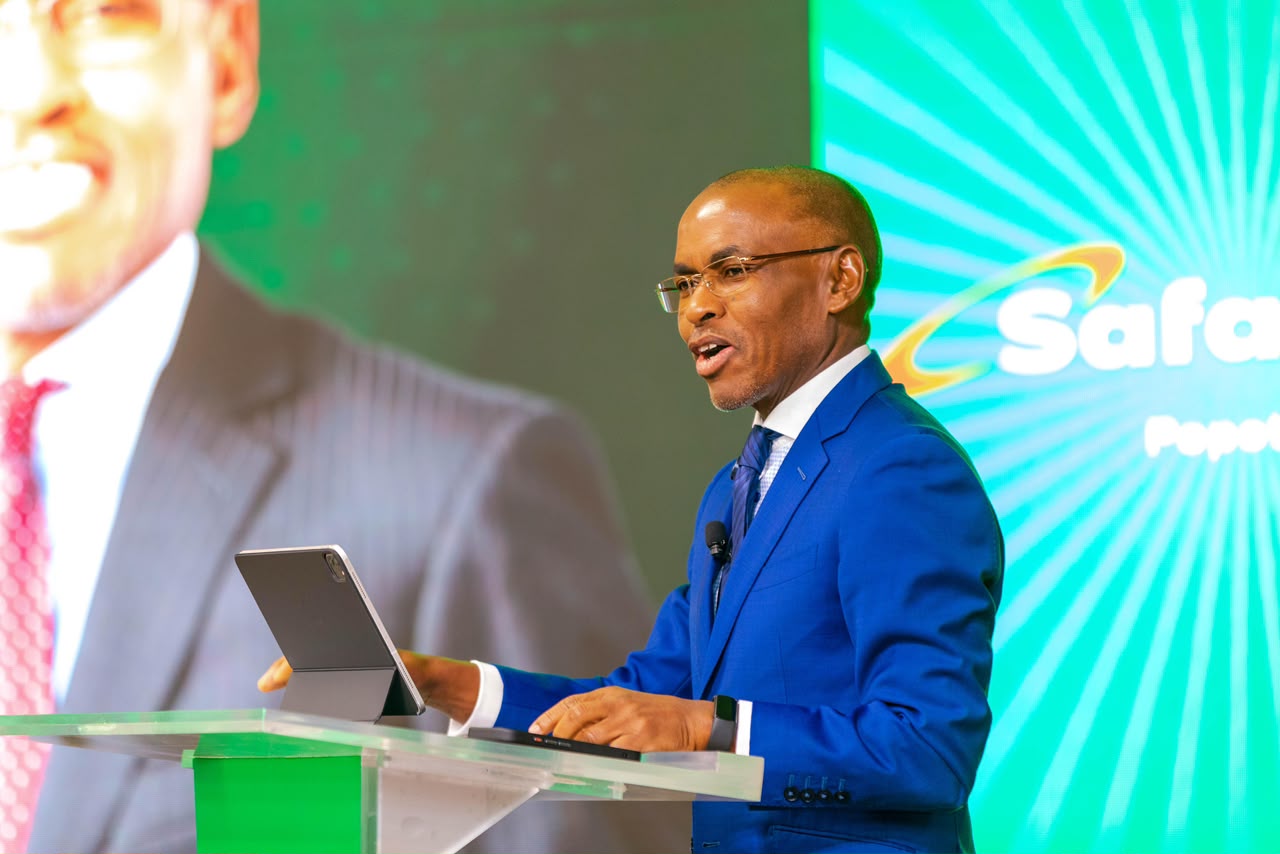
Safaricom reported a 35.9% increase in net income to KSh58.2 billion for the six months ended September 30, 2026, as stronger earnings in Kenya and a sharp reduction in losses at its Ethiopian operation lifted the group’s financial performance. The Safaricom HY27 results show service revenue rising 13.1% to KSh226.1 billion, while earnings before interest, tax, depreciation and amortisation (EBITDA) increased 27.5% to KSh129.2 billion.
Operating profit, measured as earnings before interest and tax (EBIT), grew 39.8% to KSh91.1 billion. Operating free cash flow increased 59.1% to KSh74.5 billion, while the group’s EBITDA margin improved from 49.5% to 55.3%. The stronger growth in profitability compared with revenue reflects the performance of the Kenyan business and the reduced financial burden from Safaricom Ethiopia as the operation approaches its targeted EBITDA breakeven point.
Kenya remained the group’s main source of revenue and earnings, generating KSh216 billion in service revenue, an 11.3% increase from the corresponding period. Its EBIT rose 13.7% to KSh101.8 billion, crossing the KSh100 billion mark for the first time in a six-month reporting period. EBITDA increased 13.3% to KSh128.9 billion, while net income grew 13.8% to approximately KSh66.3 billion.
The Kenyan operation recorded growth across connectivity and financial services. Connectivity revenue increased 7.7% to KSh103.4 billion, with mobile data revenue rising 12.2% to KSh45.2 billion and voice revenue growing 6.2% to KSh42.2 billion. Average monthly data consumption reached 5.3GB per customer, up 9.4%, while monthly voice usage rose 11.9% to 231.8 minutes. Safaricom CEO Peter Ndegwa said the business was on course for a fourth consecutive year of double-digit growth in Kenya, supported by customer growth, higher usage, affordability and expansion across its services.



M-PESA also crossed a major revenue milestone, generating KSh100.1 billion during the half-year, a 13.6% increase. The financial services business recorded revenue growth of 55.3% to KSh7.1 billion, supported by demand for credit, savings, investment and insurance products. Safaricom reported 17.5 million credit customers, 3.4 million money market fund customers and KSh25.6 billion in assets under management through Ziidi. The company also reported growth in merchant payments and business services, reflecting the wider role of M-PESA in Kenya’s commercial activity.
Safaricom Ethiopia recorded service revenue growth of 71.6% in Kenyan shillings to KSh10.6 billion, while its customer base reached 15.4 million three-month active users. The operation’s EBITDA loss narrowed by 96.5% to KSh434.4 million, a substantial improvement from the previous comparable period. Revenue growth in Ethiopian birr was 102.1%, reflecting customer additions, higher usage and changes in data pricing.
The improvement at EBITDA level has not yet translated into overall profitability. Safaricom Ethiopia recorded an EBIT loss of KSh11.4 billion and a net income loss of KSh8.8 billion during the six months. Its operating free cash flow remained negative at KSh10.9 billion. Ndegwa said the company remained focused on achieving EBITDA breakeven by the end of FY27, with customer growth, network utilisation and the expansion of M-PESA supporting the operation’s commercial progress.
Safaricom’s investment programme continued across its businesses. Group net debt stood at KSh193.4 billion, compared with KSh140.9 billion in the corresponding period, while total borrowings increased to KSh139.1 billion. The company reported Kenya capital expenditure of approximately KSh35 billion and Ethiopia capital expenditure of about KSh5 billion during the first half. Its full-year capital expenditure guidance remains between KSh64 billion and KSh70 billion, comprising KSh58 billion to KSh61 billion for Kenya and KSh6 billion to KSh9 billion for Ethiopia.
The company also reported growth in fixed connectivity and Internet of Things services. Fixed service and IoT revenue rose 25.5% to KSh12.5 billion, while fixed customers increased 31.8% to 569,900. Safaricom had passed 907,600 homes with its fixed network and said it expected to reach one million by the end of FY27. Its IoT customer base reached 2.4 million, while public-sector revenue grew 331.8%.
Safaricom retained its full-year guidance, projecting Kenya EBIT of KSh195 billion to KSh199 billion and an Ethiopia EBIT loss of between KSh12 billion and KSh15 billion. Group EBIT guidance remains KSh180 billion to KSh187 billion. The company said its priorities for the second half include expanding financial services, growing merchant solutions, improving digital customer experiences, developing enterprise services and pursuing EBITDA breakeven in Ethiopia.
Chairman Adil Khawaja said the results reflected the company’s execution of its strategy while it continued to operate in an environment shaped by cost-of-living pressures, competition, technological change and different regulatory conditions in Kenya and Ethiopia. Ndegwa said Safaricom’s Vision 2030 ambition is to become Africa’s leading purpose-led technology company, with technology playing a greater role in financial services, education, public services and the wider economy.
Go to TECHTRENDSKE.co.ke for more tech and business news from the African continent and across the world.
Follow us on WhatsApp, Telegram, Twitter, and Facebook, or subscribe to our weekly newsletter to ensure you don’t miss out on any future updates. Send tips to info@techtrendsmedia.co.ke

