
Safaricom, NCBA and KPC transactions deliver a multibillion-shilling windfall for Kenya's investment banks

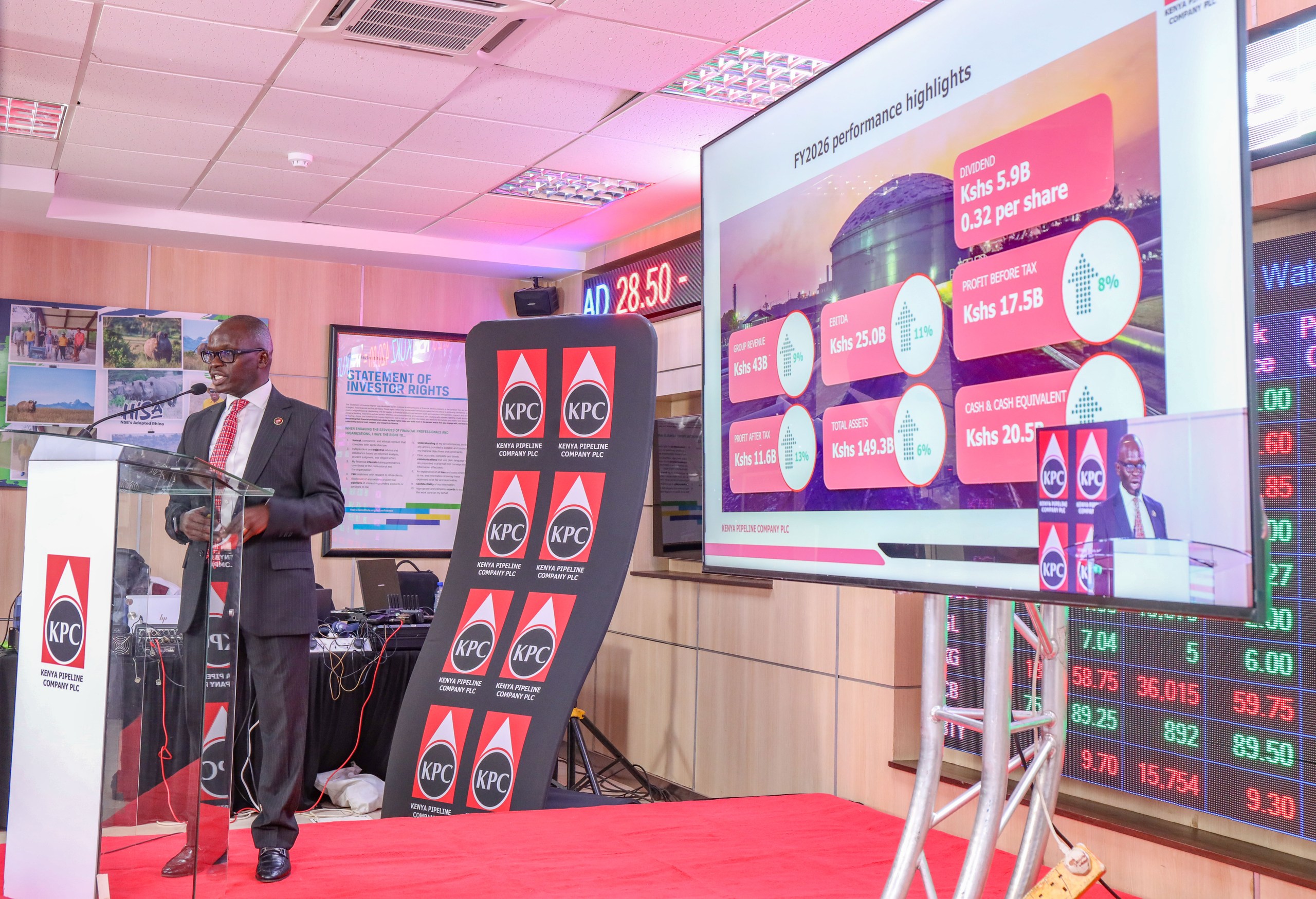
Kenya’s investment banking industry generated KSh9.88 billion in revenue during the first half of 2026, as rising equity turnover, corporate transactions and capital-raising assignments revived business for stockbrokers and financial advisers. The recovery has been accompanied by a series of major ownership changes at the Nairobi Securities Exchange (NSE), with transactions involving Safaricom, NCBA Group and Kenya Pipeline Company (KPC) creating an estimated KSh7 billion commission opportunity for intermediaries.
The three transactions, valued at a combined KSh356.5 billion, involved the transfer of substantial shareholdings to Vodacom, Nedbank and Nigerian businessman Aliko Dangote. Investment banks represented buyers and sellers, earning fees calculated against the value of shares changing hands.
The market activity extends beyond these transactions. NSE equity turnover reached KSh395 billion in the nine months to September 2026, compared with KSh145 billion recorded throughout 2025. More than 11.4 billion shares were traded during the nine-month period, according to figures reported by TechTrendsKE.
Large share transfers create a multibillion-shilling fee opportunity
The government’s sale of a 15% stake in Safaricom to Vodacom was the largest of the three transactions, involving approximately six billion shares valued at KSh204 billion on June 30.
SBG Securities, a Stanbic subsidiary, represented Vodacom, while KCB Investment Bank acted for the National Treasury. With investment banks reportedly negotiating commissions of about 1% for transactions of this size, each intermediary stood to earn approximately KSh2 billion from its respective client.
The acquisition of a controlling interest in NCBA by South Africa’s Nedbank generated another substantial fee opportunity. Nedbank completed its acquisition of a 66% stake valued at KSh110 billion on November 3, with Dyer & Blair Investment Bank handling the transaction for the buyer. NCBA Investment Bank represented most of the selling shareholders, alongside other brokers involved in the transaction.
Reported commission rates of between 1% and 1.1% could translate into at least KSh1.1 billion for each side of the transaction at the lower rate.
The third major transaction involved Dangote’s purchase of a 24.76% stake in KPC for KSh42.5 billion on October 21. The Nigerian businessman acquired approximately 4.5 billion shares from a group of state-linked shareholders, with Rock Investment Bank representing him and KCB Investment Bank acting for the sellers.
The intermediaries negotiated a discounted commission of approximately 1%, equivalent to KSh425 million for each side.
Combined, the three transactions represent KSh356.5 billion in share transfers. Applying a 1% commission to both the buying and selling sides produces an estimated KSh7.13 billion in gross fees.
The transactions form the bulk of the KSh367 billion in block trades reported at the exchange.
The NSE’s trading structure accommodates institutional transactions
The concentration of large share transfers has given greater importance to the NSE’s block-trading facility, which was introduced in 2023.
The facility handles transactions exceeding KSh3 billion and representing at least 5% of an issuer’s total issued shares. It provides an exchange-based mechanism for substantial ownership changes, including the transactions involving Safaricom, NCBA and KPC.
The exchange has also attracted investment from other African market institutions. On October 26, Nigeria Exchange Group acquired a 10% stake in the NSE from foreign investors in a transaction estimated at KSh900 million.
NSE chief executive Frank Mwiti told Business Daily that the shares were purchased through three transactions in the open market. The sellers held their shares through nominee accounts.
The exchange is also preparing to extend its trading hours to 4pm from January 2027, according to its November announcement. The adjustment is intended to improve access for international investors and accommodate activity across different markets.
IPOs are opening another revenue stream for investment banks
Share transfers account for only part of the business available to investment banks. Public offers, acquisitions and capital-raising assignments also generate advisory and placement fees, which companies negotiate with their appointed advisers.
The KPC initial public offering illustrates the value of securing these mandates. Faida Investment Bank negotiated a success fee equivalent to 1% of the offer’s KSh106 billion gross proceeds, translating into approximately KSh1.06 billion at the agreed rate.
The IPO also established the shareholder base from which the subsequent Dangote acquisition emerged. The National Social Security Fund (NSSF), Public Service Superannuation Fund (PSSF) and County Pension Fund (CPF) sold portions of their KPC holdings, while smaller schemes, including Lapfund, Laptrust, Kenya Power Pension Scheme and Kenya Ports Authority Pension Scheme, made full exits.
The financial returns from these assignments vary depending on the transaction and the agreement between the contracting parties. Investment banks can negotiate fixed advisory payments or fees calculated as a percentage of funds raised or transaction proceeds.
This business has become an important component of industry earnings. Combined advisory fees reached KSh2.54 billion in the first half of 2026, compared with KSh292,031 reported in the corresponding period of 2025, according to the industry figures.
Investment-bank earnings recover after years of weak trading
The industry’s first-half financial results show the extent of the recovery. Combined revenue increased from KSh3.7 billion in the first half of 2025 to KSh9.88 billion in the corresponding period of 2026, while net profit climbed from KSh1.15 billion to KSh3.59 billion.
Brokerage commissions rose to KSh2.8 billion from KSh1.6 billion, representing a 75% increase. Fund management also emerged as an important source of revenue for several firms, adding to income from securities trading and corporate advisory assignments.
Faida Investment Bank generated KSh2.69 billion in revenue, while Standard Investment Bank recorded KSh2.07 billion. Their combined KSh4.76 billion represented nearly half of the industry’s reported top-line revenue.
Other leading firms included NCBA Investment Bank, with KSh830 million, Dry Associates Investment Bank at KSh663.3 million and Dyer & Blair Investment Bank at KSh649.4 million.
The financial performance marks a recovery from the first half of 2023, when investment banks and stockbrokers collectively generated KSh2 billion in revenue and KSh365 million in net profit following a prolonged period of weak equity trading and limited deal-making activity.
The strong performance of Faida and Standard Investment Bank also demonstrates the continued earnings capacity of independent investment banks alongside intermediaries backed by commercial banking groups.
Retail trading is expanding alongside institutional dealmaking
The growth in institutional transactions is occurring alongside a separate expansion in retail participation through mobile investment platforms.
Safaricom’s Ziidi Trader accounted for 54.21% of equity transactions recorded by the NSE between its launch in March and October 31, according to the latest platform figures. It processed 1,318,851 transactions out of the 2,432,819 equity deals recorded by the exchange.
The platform had 1.1 million registered users by October 31, although 176,477 had purchased at least one share. Its transaction count included 866,405 purchases and 452,416 sales, with an average ticket size of KSh3,349.65 on October 30, down from KSh4,818 in August.
Ziidi has also become a distribution channel for public share offers. During the KPC IPO in March, it facilitated approximately 36,000 of the 73,000 retail orders. For the Quickmart IPO, the platform received 12,426 applications covering 22.73 million shares valued at KSh170.54 million.
The service is jointly offered by Safaricom, the NSE and Kestrel Capital, allowing M-Pesa customers to buy and sell listed shares through their mobile phones without opening a conventional brokerage account. Kestrel manages the omnibus account through which the shares are held.
Safaricom’s HY27 results also reported KSh23.36 billion in Ziidi assets under management, up 82.9%, as part of a wider wealth-management business with 3.4 million active customers and KSh25.56 billion in total assets under management.
The exchange is targeting nine million active retail investors by the end of 2029. Its planned Wall Street Africa Banking Index exchange-traded fund, which is expected to provide exposure to 12 banking stocks through a single product, adds another investment option to the market.
The expansion of mobile trading, public offers and institutional transactions is giving investment intermediaries a wider range of business across Kenya’s securities market, from individual share purchases to multibillion-shilling acquisitions and capital-raising assignments.
Visit TECHTRENDSKE.co.ke for more tech and business news from across Africa and the world.
Follow us on WhatsApp, Telegram, Twitter, and Facebook, or subscribe to our weekly newsletter so you don’t miss future updates. Send tips to info@techtrendsmedia.co.ke

