
Kenya’s largest lenders push back against new CBK capital requirements ahead of 2027 elections

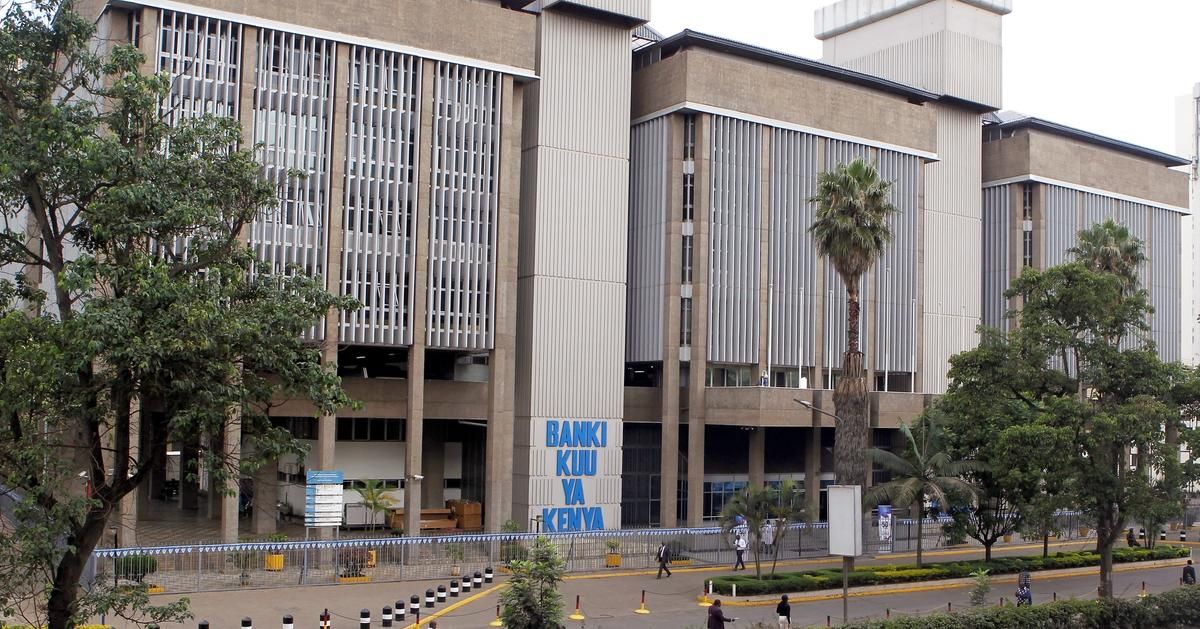
Kenya’s commercial banks are recovering from a prolonged period of weak private-sector lending, with credit growth reaching 10.6% in September 2026. The Central Bank of Kenya (CBK) is preparing to introduce additional capital requirements for the country’s largest lenders in January, a regulatory change that the banking industry wants postponed until after the 2027 general elections.
The Kenya Bankers Association (KBA) is seeking a one-year suspension of the new prudential guidelines covering Domestic Systemically Important Banks (D-SIBs). Chief executives of large banks made the proposal during a meeting organised by the industry lobby last week, arguing that implementation could interfere with lending to businesses and households during an election year.
KBA chief executive Raimond Molenje said the requirements could reverse the recovery in private-sector credit, particularly financing for micro, small and medium enterprises (MSMEs) and agriculture. The association wants CBK to allow more time for consultations on how the rules could affect lending, dividends and banks’ capital-raising plans.
The proposed delay comes as lenders rebuild their loan portfolios following a contraction earlier in the year. Private-sector credit growth moved from a 2.9% contraction in January 2026 to expansion of 10.6% in September, according to figures cited in the latest reporting. CBK attributed the improvement to stronger borrowing demand across trade, building and construction, agriculture finance, insurance and consumer durables.



Average commercial bank lending rates fell to 14.4% in September 2026 from a peak of 17.2% in November 2025, according to TechTrendsKE’s earlier reporting. Lower borrowing costs and the revised risk-based credit pricing framework have supported the recovery, giving banks a stronger lending environment heading into 2027.
What the new CBK capital framework requires
CBK’s proposed framework introduces additional capital requirements for banks whose financial distress could disrupt the wider economy or other institutions in the domestic financial system.
The regulator will classify lenders according to their systemic importance, assessing their size, interconnectedness, substitutability, importance to the domestic economy and operational complexity. The assessment assigns weights of 40%, 30%, 15%, 10% and 5% to these respective indicators.
Banks placed in the three systemic-importance categories would face additional Common Equity Tier 1 (CET1) capital buffers of 0.5%, 1.5% and 2.5% of risk-weighted assets, depending on their classification. CET1 capital consists primarily of ordinary shares and retained earnings and provides banks with a buffer against losses.
The requirements form part of CBK’s effort to impose higher supervisory standards on institutions whose failure could affect the financial system beyond their own operations. The regulator’s proposed framework also provides for additional oversight of designated banks and capital planning obligations.
The implementation timetable is particularly relevant to lenders approaching the January 2027 commencement date. Under the proposed designation process, CBK would assess banks annually, notify institutions of their classifications and publish the list of systemically important lenders. Banks newly designated or moved into a higher category would have up to 12 months to meet the corresponding additional capital requirements.
Dividend restrictions add pressure on bank capital
The D-SIB framework is accompanied by proposed restrictions on distributions to shareholders, linking dividend payments to the amount of high-quality capital banks maintain against their risk-weighted assets.
Under the capital conservation framework reported by TechTrendsKE in September, banks with a CET1 ratio below 8.625% would be required to retain all their earnings. Those with ratios between 8.625% and 9.25% would retain 80%, while institutions between 9.25% and 9.875% would retain 60%.
The retention requirement falls to 40% for banks with CET1 ratios between 9.875% and 10.5%, with no additional earnings-retention requirement under this particular conservation ladder once the ratio exceeds 10.5%.
The proposed restrictions also cover share buybacks and discretionary bonus payments. Banks would therefore need to consider how much of their earnings can be distributed while maintaining the capital levels required under the framework.
Molenje’s request for further engagement specifically includes the impact of the reforms on dividends and capital raising, indicating that the industry wants CBK to consider these requirements alongside their implications for credit expansion.
The separate KSh10 billion capital transition
The proposed D-SIB requirements are emerging as CBK and the National Treasury continue discussions over a separate increase in minimum core capital for commercial banks to KSh10 billion.
CBK’s existing transition framework requires lenders to increase their core capital progressively, reaching KSh5 billion by December 2026, KSh7 billion by December 2027, KSh8 billion by December 2028 and KSh10 billion by December 2029.
The National Treasury favours a different timetable, proposing that banks receive until December 2032 to meet the KSh10 billion threshold through a single compliance deadline rather than the regulator’s staged milestones.
The disagreement has exposed differences over how quickly banks should strengthen their balance sheets. In October, CBK Governor Kamau Thugge defended the higher capital target, while subsequent discussions with Treasury Cabinet Secretary John Mbadi focused on finding an acceptable transition period.
Fourteen commercial banks had core capital below the KSh5 billion threshold scheduled for December 2026 as at June 2026, according to figures reported earlier by TechTrendsKE. Seven were also below the previous KSh3 billion requirement.
Mbadi has said the Treasury and CBK would reach an agreement after discussions, with the final decision guided by what is best for the economy.
Banks want more time before the 2027 election cycle
KBA’s latest request adds another point of negotiation between the banking industry and CBK as lenders prepare for the next election cycle. The association has previously warned that implementing higher core capital requirements alongside other prudential reforms could affect private-sector financing.
Molenje wants the regulator to reconsider the January 2027 timetable, arguing that additional capital obligations could weaken lending momentum during a period when businesses and households are returning to the credit market.
“2027 must be different! We must reverse the previous cycles of economic slowdown during general elections and sustain credit flows to the private sector,” Molenje said.
The proposed one-year suspension would give CBK and commercial banks additional time to examine the effect of the new requirements on lending, retained earnings and capital raising, while leaving the regulator to determine whether the January 2027 implementation timetable should change.
Visit TECHTRENDSKE.co.ke for more tech and business news from across Africa and the world.
Follow us on WhatsApp, Telegram, Twitter, and Facebook, or subscribe to our weekly newsletter so you don’t miss future updates. Send tips to info@techtrendsmedia.co.ke

