
Absa takes on established investment firms with new global multi-asset fund
Kenya's special funds market attracts another major player

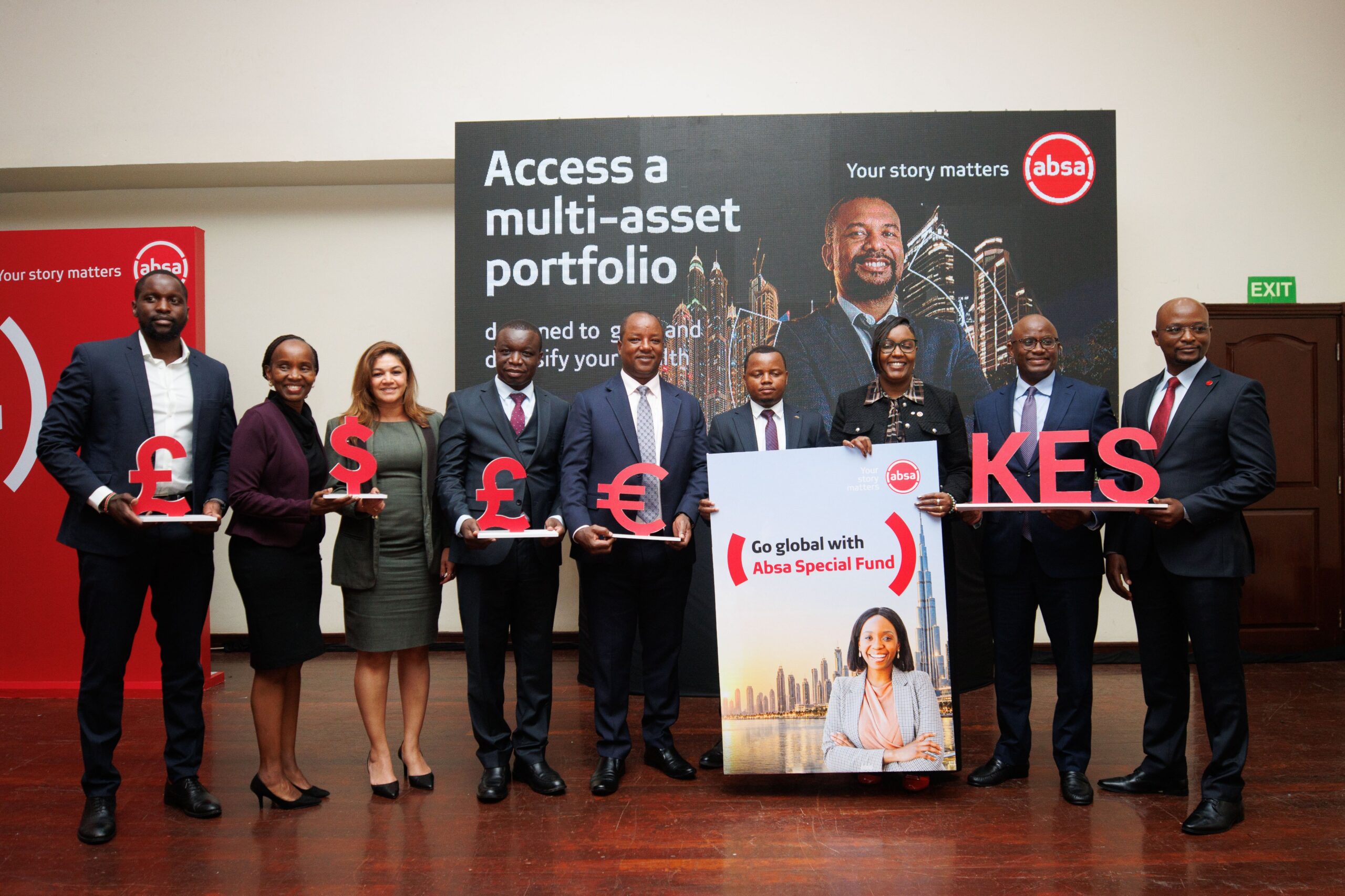
Absa has entered Kenya’s global investment market with a multi-asset fund targeting investors seeking exposure to international securities without having to open and manage offshore brokerage accounts.
The Absa Global Multi-Asset Special Fund, launched on November 19 through Absa Asset Management Limited (AAML), is available in Kenya shillings and US dollars. It gives the bank-backed asset manager a position in a special funds segment where investment banks and independent fund managers have built sizeable portfolios around alternative investment strategies and international markets.
The launch comes as Kenya’s collective investment schemes (CIS) market moves beyond KSh1 trillion in assets under management. Special funds account for KSh252.8 billion of that market, according to figures provided in the launch announcement. Capital Markets Authority data placed total CIS assets at KSh948.7 billion at the end of June 2026, with special funds representing 26.6 percent.
The segment had expanded from KSh203.5 billion in March to KSh252.8 billion in June, a quarterly increase of about 24 percent. The growth has attracted more fund managers seeking investors interested in strategies beyond conventional money market and fixed-income products.



The market, however, remains concentrated around a handful of established providers. Standard Investment Bank’s Kenya shilling-denominated Mansa-X fund held KSh163.8 billion in June, equivalent to 64.8 percent of special funds assets. Its dollar-denominated counterpart held another KSh20.5 billion, or 8.1 percent, while Faida Investment Bank’s Oak Multi Asset Fund had KSh19 billion, representing 7.5 percent.
Together, the two Mansa-X funds accounted for approximately 72.9 percent of the segment at the time. Absa is entering a market where established managers already command substantial investor capital, even as demand for offshore exposure creates room for additional products.
Absa’s strategy centres on global equities and precious metals
The fund’s investment approach is built around international market exposure, with global equities forming the largest allocation.
Elizabeth Irungu, Chief Executive Officer of Absa Asset Management Limited, said customers had been asking for investment opportunities beyond the Kenyan market. The fund’s allocation strategy responds to that demand by committing at least 60 percent of its portfolio to global equities and approximately 10 percent to precious metals.
Its geographical exposure covers the United States, Europe and emerging markets. Irungu said the manager did not intend to overlook emerging economies when selecting international investment opportunities.
Absa plans to access global equities through a curated selection of exchange-traded funds (ETFs), working with international partners and fund managers. The structure allows the fund to gain exposure to a wider universe of securities through investment vehicles that track selected markets, indices or asset classes.
The broader multi-asset mandate also covers bonds, cash, commodities and fixed deposits. These investments give the manager additional asset classes through which to construct the portfolio, although the precise allocation beyond the equity and precious-metals portions has not been disclosed in the available interview material.
The fund’s reported seed capital is KSh230 million. Absa Bank Kenya Chief Executive Yusuf Omari said the commitment reflected the bank’s confidence in the product and its intention to provide investment options for customers seeking long-term wealth creation.
Banks and specialist managers compete for global investment flows
Absa’s entry adds a bank-backed asset manager to a market that has attracted investment banks, wealth managers and other fund providers.
NCBA entered the offshore investment segment with its Global Equity and Global Fixed Income Special Funds, giving investors access to international markets through ETFs and mutual funds. Ndovu Wealth’s Kibaba Multi-Asset Special Fund also offers exposure to global equities, bonds, real estate investment trusts and commodities through shilling and dollar options.
Other providers have expanded their international investment offerings. Britam introduced its Enhanced Global Equities Special Fund and Multi Asset Special Fund in October 2026, while CIC has a Global Balanced Special Fund. Faida’s Oak Multi Asset and Standard Investment Bank’s Mansa-X products remain among the established funds in the wider special funds market.
The competing products differ in their investment mandates, asset allocations, minimum contributions and risk profiles. Some concentrate on equities or fixed income, while multi-asset funds combine several categories of investments within one portfolio.
For Absa, the opportunity lies in attracting investors who want international diversification through a locally managed product. Its use of ETFs also gives the fund a route into markets and securities that would otherwise require investors to select and manage offshore investments independently.
The presence of several providers means investors have more products to compare, but the size of the existing funds shows that new entrants must compete for capital in a segment with established managers and large asset bases.
Minimum investment, lock-in period and withdrawal costs
The Absa Global Multi-Asset Special Fund has a minimum initial investment of KSh250,000 for the shilling option and US$2,500 for the dollar option. Subsequent contributions start at KSh100,000 or US$1,000, respectively.
Investments are subject to a six-month lock-in period, while Absa recommends a holding period of three to five years. Investors withdrawing before the recommended investment horizon should also account for a five percent early withdrawal penalty. The fund does not charge an entry fee.
The previously published fund fact sheet lists an average expense ratio of 3.5 percent. The absence of an entry fee therefore does not mean the investment has no ongoing costs. Investors need to consider the expense ratio alongside the early withdrawal penalty and the period for which they intend to remain invested.
The fund carries a high-risk classification, consistent with its substantial allocation to international equities and exposure to global markets. Its performance will depend on the underlying investments, market movements and the performance of the currencies and asset classes to which the portfolio is exposed.
The recommended three-to-five-year holding period gives the manager time to invest across market cycles, but it also means the product is not designed as a substitute for savings that investors may need to access at short notice.
Absa’s entry expands the range of locally managed products offering access to international investments. Its ability to attract capital will depend on how investors assess its portfolio strategy, costs, risk profile and performance against the established global and multi-asset funds already operating in Kenya.
Visit TECHTRENDSKE.co.ke for more tech and business news from across Africa and the world.
Follow us on WhatsApp, Telegram, Twitter, and Facebook, or subscribe to our weekly newsletter so you don’t miss future updates. Send tips to info@techtrendsmedia.co.ke

