
Payments won’t pay the bills by 2030, says Absa executive

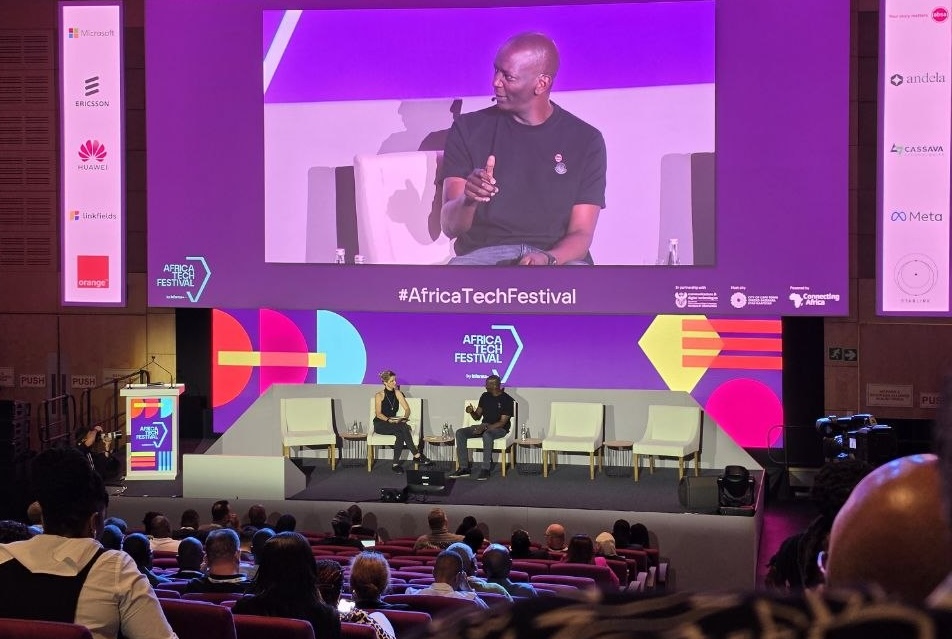
Banks will have to find new sources of income as payment fees fall towards zero, according to Absa Group Executive Sitoyo Lopokoiyit. He said lenders must build lending, insurance and other services on top of their payment rails to stay profitable.
Mr Lopokoiyit, the Chief Executive of Personal and Private Banking at Absa Group and a former M-Pesa Africa boss, was speaking during a fireside chat at the Africa Tech Festival 2026, held at the Cape Town International Convention Centre in South Africa. He said payments remain essential but can no longer carry the industry’s revenue.
“Payments are the rails you have to play on. If you’re not in payments, you’re not in financial services in the future,” he said. “But payments can’t be the way you make money forever. You need to go beyond them and create value on top.”
He said future growth would come from embedded lending, embedded insurance, buy now pay later and services built around customers’ salaries and merchants.



“You need to build an ecosystem that creates shared value,” he said.
His comments come as instant payment systems and regulatory reforms across the continent cut the transaction fees banks have long earned for being the only institutions connected to payment networks.
Mr Lopokoiyit said many payments outside South Africa are already free, and estimated that about 60 percent of transactions fall into that category.
“So you have to find new ways to generate value,” he said.
He praised South Africa’s Reserve Bank and government for reforms that are lowering the cost of payments and opening national switches to more players, including fintechs.
“Costs are dropping, and that lets everybody play very differently,” he said, adding that the change frees established banks to work differently with partners.
Mr Lopokoiyit also pointed to how few people Africa’s big banks actually reach, despite their size.
“I was looking at the top 10 banks in Africa, and they’re massive. But then look at how far they’ve actually reached into the population today,” he said.
He said Absa has about 15 million customers across its markets, which have a combined population of around 400 million.
“Look at any big South African bank’s share of the population in the markets it operates in, and it’s small. We need to change fundamentally,” he said adding that understanding customers in the informal economy is central to closing that gap.
Mr Lopokoiyit urged fintechs building in payments, lending and wealth to partner with banks. He admitted that such partnerships often stall over procurement, return on investment and compliance.
“The question is how we responsibly open up our infrastructure, products and services, and let fintechs distribute them on our behalf into their own ecosystems,” he said.
Absa’s Kenyan unit launched Absa Next, a digital platform open to non-customers, in September. Mr Lopokoiyit said the app has signed up more than 600,000 users in about two months.
Visit TECHTRENDSKE.co.ke for more tech and business news from across Africa and the world.
Follow us on WhatsApp, Telegram, Twitter, and Facebook, or subscribe to our weekly newsletter so you don’t miss future updates. Send tips to info@techtrendsmedia.co.ke

