
Cassava brings AI computing capacity into Mauritius Telecom's expansion plans

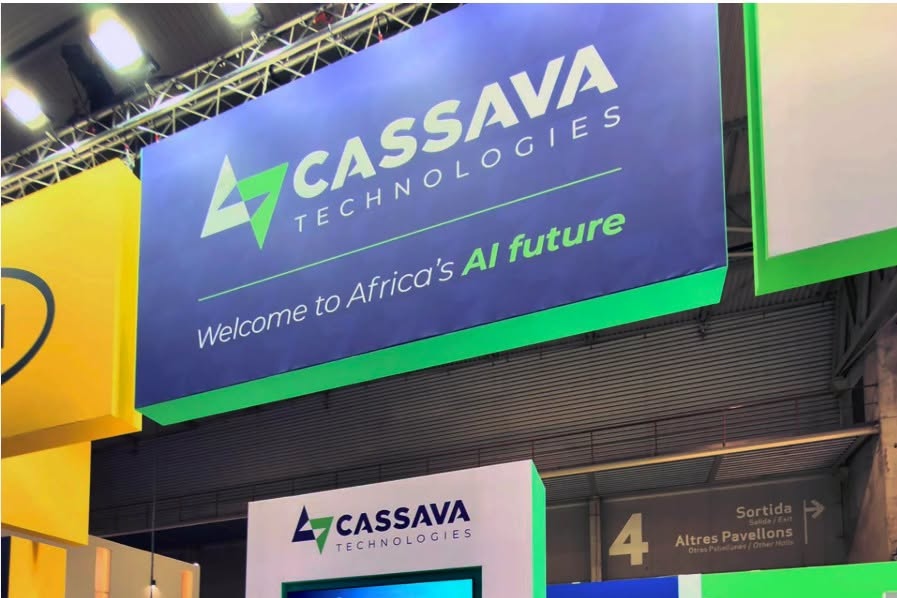
Cassava Technologies and Mauritius Telecom (MT) have signed a memorandum of understanding to work together on artificial intelligence, with a focus on computing power for MT’s AI services and on taking its AI-based education platform, myt Learn, to South Africa and possibly other African countries.
The agreement was signed at Africa Tech Festival. It sets out a strategic partnership in which MT could draw on the computing capacity of Cassava’s AI Factory in Cape Town, which is powered by NVIDIA and described as Africa’s most powerful supercomputer. Cassava’s AI platforms and its reach across the continent would be part of the arrangement, alongside MT’s own AI products, local language capabilities and experience running networks and services.
Ziaad Suleman, SVP Cassava Technologies for South Africa and Botswana, said: “Realising AI’s promise in Africa requires more than potential; it takes infrastructure, technology, and proven expertise. By pairing Mauritius Telecom’s AI products and operating experience with Cassava’s AI infrastructure and reach, we aim to bring locally relevant AI services and education solutions to more African markets.”
On the technical side, the two companies will look at using the AI Factory as an extra, on-demand source of computing capacity for MT’s AI offerings. They will also explore access to AI models through CAIMEx, Cassava’s AI platform. Cassava’s capacity and models would only be used for workloads where customers give their permission. The options are meant to sit alongside MT’s existing myt AI Cloud platform and infrastructure in Mauritius, and could support the company’s push into other African markets.

Veemal Gungadin, CEO of Mauritius Telecom, said: “We are building AI capability in Mauritius that can also serve other African markets. With myt Learn, we are already putting that capability to work in our schools, supporting both students and teachers. This partnership brings together products we have developed and Cassava’s infrastructure and reach to take that work further. Our ambition is to make trusted AI useful and accessible, while ensuring that those responsible for its use retain meaningful control.”
The education side of the deal begins with South Africa. The partners will jointly assess where myt Learn could fit in both the public and private school sectors there, and may later extend it to other markets where Cassava operates.
MT built myt Learn and is rolling it out in Mauritian schools for selected grades. Students get guided lessons aligned to the curriculum, a multilingual AI tutor and personalised revision. Teachers get performance insights, plus AI tools to help with marking, writing tests and preparing lessons. The platform can be adapted to different national curricula and classroom needs.
Through the partnership, the companies want to show that telecom operators can deliver AI services designed for local customers, and that products developed in Africa can find users in new markets across the continent.
A new report by the Kenya National Chamber of Commerce and Industry (KNCCI) and Akili AI indicates that nearly all Kenyan organisations have adopted artificial intelligence (AI). Still, most lack the policies, staff training, and accountability structures needed to maximise its benefits and manage associated risks.
The report, AI Readiness in Kenya 2026, found that 99% of the organisations surveyed use AI in some form,indicates that nearly all Kenyan organisations have adopted artificial intelligence (AI), but most lack the policies, staff training, ranging from publicly available tools to AI-powered features integrated into everyday business software.
However, widespread adoption has not been matched by adequate governance, with three-quarters of organisations lacking a formal AI policy and four in five having no designated person responsible for overseeing AI-related risks.
The findings are based on 214 responses collected in October 2026 through the Akili Snapshot AI readiness assessment at the Africa Commerce & Industry Summit (ACIS), hosted by KNCCI, and the Safaricom Cybersecurity Summit. Respondents included business owners, executives, IT professionals and security specialists from organisations of different sizes.
The report also found that 63% of organisations do not provide structured AI training for employees, while seven in ten lack the capacity to detect or respond to AI-related incidents.
Despite these gaps, AI is increasingly influencing business operations, with four in ten organisations already using the technology in core processes or customer-facing decisions, including credit assessments, insurance claims and customer service.
The findings highlighted a growing gap between AI adoption and the ability of businesses to deploy the technology strategically. In many organisations, employees are independently using free AI tools without clear guidelines or alignment with business objectives.
This has contributed to concerns over the quality of AI-generated content, with managers increasingly spending time reviewing and correcting low-quality outputs rather than benefiting from the efficiency the technology is expected to deliver.
The report also warned that the absence of clear AI policies and accountability structures could expose businesses to data protection and cybersecurity risks, particularly where employees use AI tools that may process customer or company information without adequate oversight.
Additionally, Kenya’s Data Protection Act applies to the processing of personal data through AI systems, meaning organisations using such tools must ensure their practices comply with existing data protection requirements.
Despite the governance challenges, businesses remain optimistic about AI’s potential. Three-quarters of the organisations surveyed plan to increase their use of the technology over the next 12 months, while more than nine in ten view AI as a greater opportunity than a risk.
Vincent Kimosop, Head of Policy, Research and Advocacy at KNCCI, said, “Kenya and KNCCI members are ideally placed to take advantage of AI. Our highly digital economy and unifying technologies such as M-PESA give member companies the opportunity to build AI into their businesses to accelerate growth, capture new markets and create new products and services. We need to embrace that potential while managing the risks, and the Chamber is delighted to be playing a role in that transition.”
“Most leaders we speak to guess they have 15 to 20 applications using AI. The answer is usually 50 to 100. You cannot get value from, or manage, what you cannot see. The good news is that closing the gap is not difficult. It just has to be done.” Added Dr Simon Bransfield-Garth, Founder and CEO of Akili AI.
To address the gaps, the report recommended that businesses should begin by identifying all AI tools currently in use, appointing a person to oversee AI governance, establishing acceptable-use policies and providing employees with practical training.
It further added that organisations should maintain records of their AI systems and related governance measures to improve accountability and demonstrate compliance.
Ultimately, the report’s findings come as Kenyan businesses increasingly integrate AI into their operations, raising questions about whether organisations have the necessary structures to ensure the technology delivers measurable business value without exposing them to avoidable risks.
Go to TECHTRENDSKE.co.ke for more tech and business news from the African continent and across the world.
Follow us on WhatsApp, Telegram, Twitter, and Facebook, or subscribe to our weekly newsletter to ensure you don’t miss out on any future updates. Send tips to editorial@techtrendsmedia.co.ke

