
Orange bets on local-language AI to bring Africans into the AI economy

Orange Middle East and Africa (MEA) is training artificial intelligence (AI) models in African languages to handle customer assistance and mobile financial services. The group says this is how AI can follow the path mobile money took across the continent.
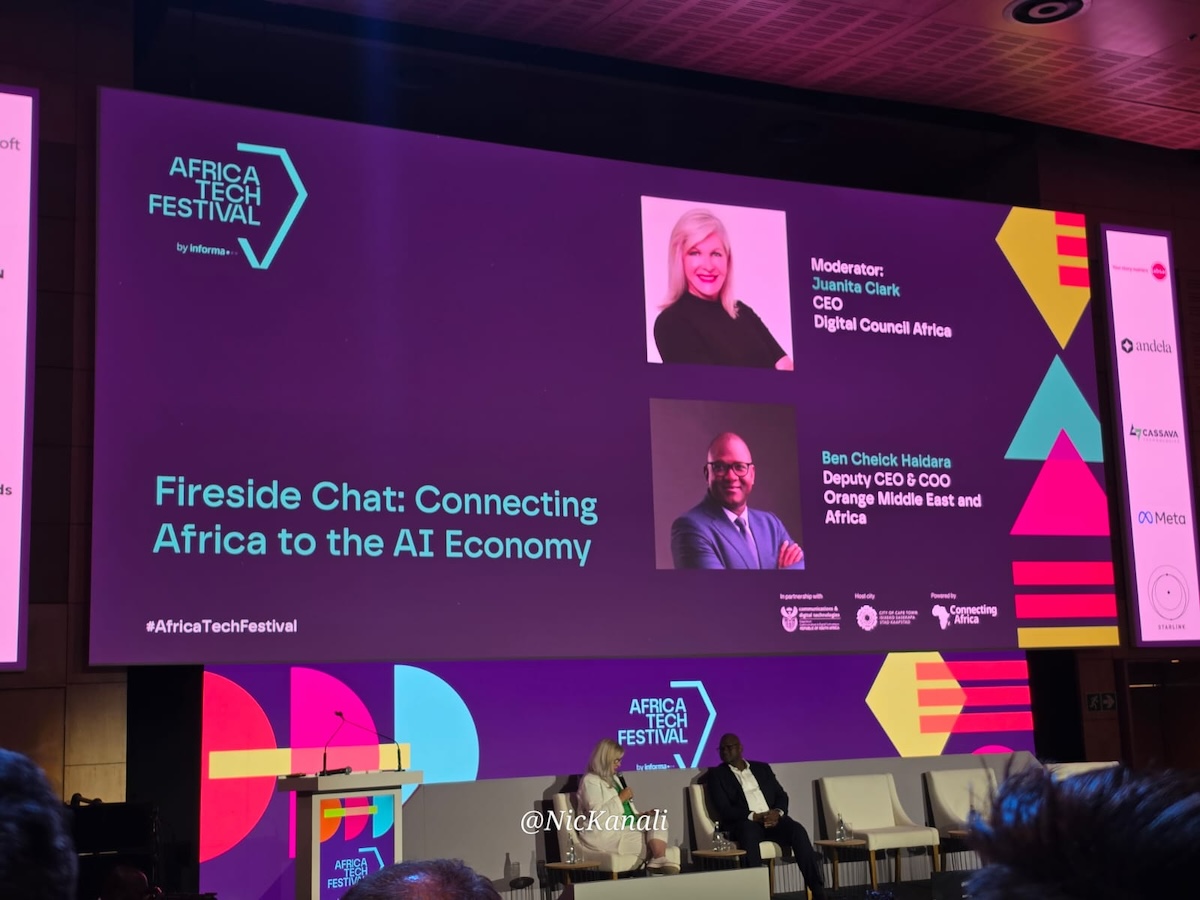
Ben Cheick Haidara, deputy CEO and COO of Orange MEA, said customers can now use an AI assistant in the group’s Max it app to carry out financial transactions by voice, in their own language. He was speaking during a fireside chat titled “Connecting Africa to the AI Economy” at Africa Tech Festival 2026 in Cape Town today.
“I can take my phone, use my voice and ask for a money transfer. We trained our AI so that I can make the request in my language, in Hausa for instance, not in English. I believe this makes a difference,” said Haidara.
He added that Orange is pushing for large language models (LLMs) in local languages and already uses them to serve millions of customers through its customer assistance channels.


Haidara said the continent’s demographics make it well placed to benefit from AI. Africa’s median age is about 19, the youngest population in the world.
He said mobile money took off because it solved everyday problems, such as sending money to relatives and friends and making daily payments, and that AI must do the same to gain traction.
“The opportunity is not to import AI and adapt it. The opportunity lies in our ability, in Africa, to build local solutions that address real needs and solve real problems,” said Haidara.
“We strongly believe that if we are able to do that, AI will transform our journey more than mobile money did, or more than what we observed with the internet.”
Juanita Clark, CEO of the Digital Council Africa, moderated the session. She said language remains a major barrier to technology adoption across the continent, noting that South Africa alone has 12 official languages.
“It cannot just be something we consume because it helps you write a speech. It has to actively serve people,” said Clark.
Haidara said the biggest obstacle to AI adoption in Africa is low internet use, not network coverage.
He said only 25% to 30% of Africa’s population is online, even though mobile broadband networks cover more than 85% of the continent. He blamed the gap mainly on the cost of devices.
“It’s very difficult to buy a device that costs 80% or 100% of your monthly income. And to enjoy AI, you need a smartphone,” said Haidara, adding that the industry must keep pushing to make smartphones more affordable.
He said Microsoft’s latest research on AI adoption shows a similar gap on the continent.
Haidara’s remarks came hours after South Africa’s Deputy President Paul Mashatile opened the festival with a keynote urging African countries to build their own AI capabilities rather than simply consume technologies developed elsewhere.
Orange operates in 17 countries across Africa and the Middle East. Its Orange Money service is one of the continent’s largest mobile money platforms.
Visit TECHTRENDSKE.co.ke for more tech and business news from across Africa and the world.
Follow us on WhatsApp, Telegram, Twitter, and Facebook, or subscribe to our weekly newsletter so you don’t miss future updates. Send tips to info@techtrendsmedia.co.ke

