
Equity's profits climb as lending accelerates, but bad loans remain above target

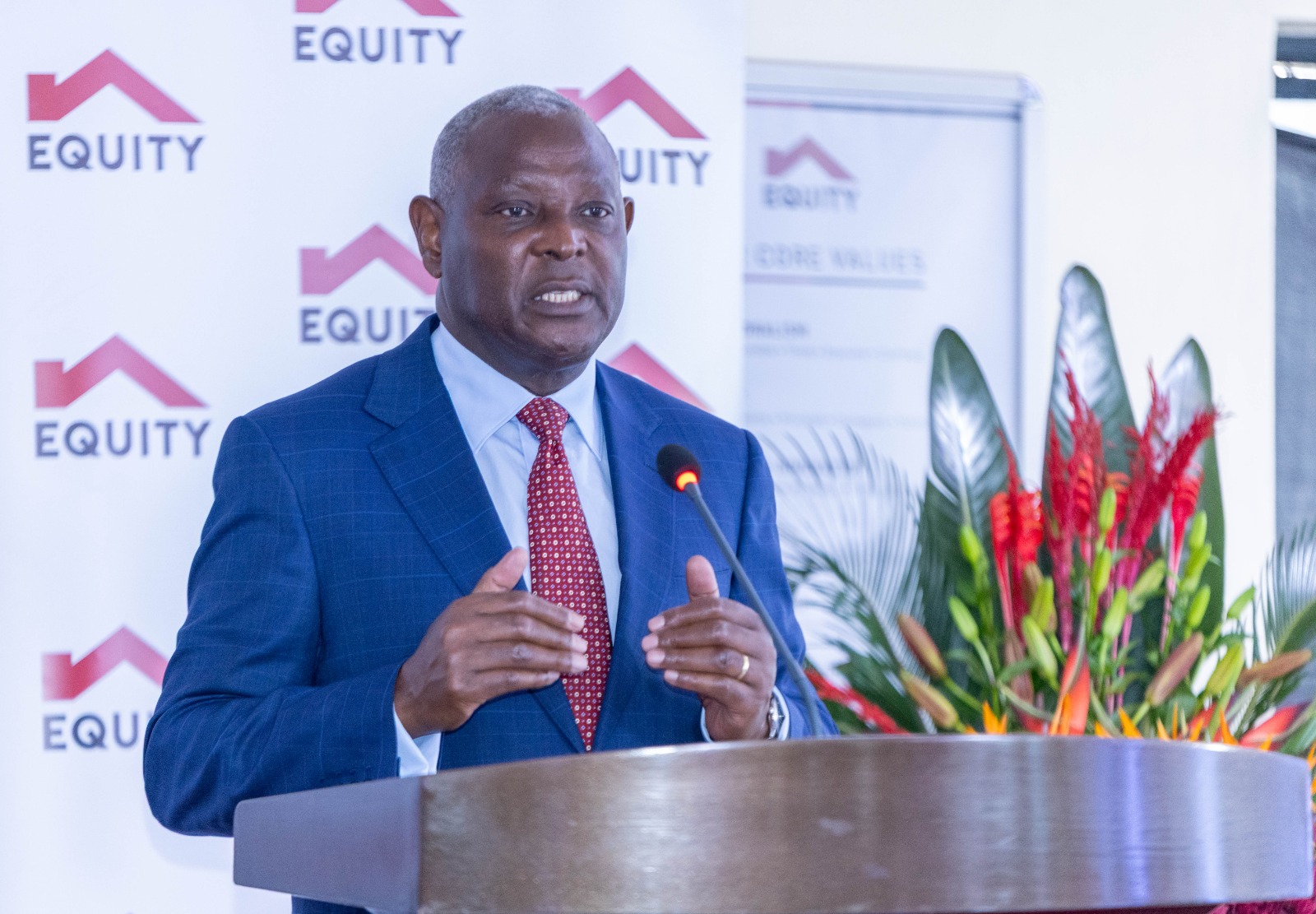
Equity Group’s loan and deposit growth had already exceeded its full-year targets by the third quarter of 2026, while subsidiaries generated nearly half of the group’s profit before tax. The performance points to a business expanding faster than management had projected, with a growing share of its assets and earnings coming from outside Kenya.
The lender reported profit after tax of KSh71.5 billion for the nine months to September, a 32% increase from the same period in 2025. Profit before tax rose 37% to KSh89.8 billion, while total income increased 23% to KSh192 billion, according to its third-quarter investor presentation.
Net loans grew 17.2% year on year to KSh1.01 trillion, compared with full-year guidance of 8% to 12.5%. Customer deposits increased 19.4% to KSh1.58 trillion, against a target range of 8% to 10%. Both measures had moved well beyond the upper limits of management’s original expectations before the year had ended.
The group also reported a return on average assets of 4.6%, above its 2026 guidance range of 3.5% to 4%. Its return on average equity stood at 27.2%, within the 25% to 30% target.



Subsidiaries account for nearly half of group earnings
The regional businesses contributed 49.2% of Equity Group’s profit before tax and held 55.2% of its total assets in the third quarter. The profit contribution was within the group’s 45% to 50% guidance range, while the asset share was marginally above its 50% to 55% target.
The figures place operations outside Kenya at the centre of the group’s financial performance. Its regional businesses now account for more than half of group assets, while generating almost half of pre-tax earnings.
Equity’s earlier disclosures had already shown the importance of these operations. In its full-year 2025 results, the group said regional subsidiaries contributed 51% of banking profit before tax. Its first-half 2026 results placed their contribution at 42% of banking profitability, 47% of banking revenue, 51% of deposits and 54% of loans.
Those first-half figures refer to banking operations, while the third-quarter presentation reports subsidiaries’ share of group assets and group profit before tax. They provide related evidence of regional scale, but the measures should not be treated as identical.
Equity’s competitive position also differs across its markets. Its 2025 market-share figures, measured by banking assets, placed it second in Kenya with 12.5%, behind KCB Group’s 17.9%. In the Democratic Republic of Congo, Equity BCDC held 22.8%, behind Rawbank’s 28.9%.
Rwanda was another relatively strong market, with Equity holding 17.3% of banking assets, narrowly ahead of BPR’s 16.6%. Bank of Kigali remained the market leader at 33.8%.
The group’s positions in Uganda and Tanzania were considerably smaller. Equity held 5.3% of banking assets in Uganda, ranking fifth, and 1.9% in Tanzania, where it ranked 13th. In South Sudan, it held 17.9%, giving it the third-largest position.
This spread shows why the regional contribution cannot be understood as a uniform expansion across the continent. Equity has substantial positions in some markets, while others remain smaller parts of its banking footprint.
Lending and deposits outpace full-year growth guidance
The gap between actual growth and management’s forecasts is one of the clearest features of the third-quarter results. Loan growth of 17.2% exceeded the upper end of guidance by 4.7 percentage points, while deposit growth of 19.4% was 9.4 percentage points above its target ceiling.
Total assets reached KSh2.15 trillion, an increase of 18% year on year. The group reported a net interest margin of 8.4%, within its 8.3% to 9% guidance range, and a non-funded income contribution of 43.9% of total income, also within its 40% to 45% target.
Non-funded income has been an important source of growth for Equity. In the first half of 2026, it increased 36% to KSh55.6 billion, compared with 17% growth in net interest income, which reached KSh69.3 billion.
During the August results briefing, management attributed the increase in non-funded income to cross-border trade finance, loan appraisal fees associated with lending activity, digital transactions and insurance income. Group managing director James Mwangi said he expected non-funded income to eventually account for approximately half of revenue as it continued to grow faster than interest income.
The third-quarter mix of 43.9% keeps the group within its stated target, although it has not yet reached the level anticipated by management as a longer-term ambition.
Profitability improves while bad loans remain above target
Equity’s operating efficiency and returns remained within or above its full-year guidance ranges. The cost-to-income ratio stood at 47.9%, inside the 46% to 49% target, while return on average equity reached 27.2%, within the 25% to 30% range.
Return on average assets was the stronger measure, at 4.6% against a target ceiling of 4%. The cost of risk stood at 1.5%, within the 1.25% to 1.8% guidance range.
Credit quality has improved over the past year, although the non-performing loan ratio remains slightly above management’s target. Non-performing loans represented 9.3% of gross loans in the third quarter, compared with 12.1% in the corresponding quarter of 2025. The group’s full-year target is between 7% and 9%.
The absolute value of non-performing loans stood at KSh100.2 billion, up slightly from KSh99.7 billion in the second quarter. The declining ratio therefore needs to be considered alongside the amount of impaired credit still on the books.
Provision coverage reached 70.9%, while the cost of risk remained within guidance. The figures indicate improved asset-quality ratios, but the group has yet to bring its NPL ratio within the range it set for 2026.
Digital channels account for nearly nine in ten transactions
Digital platforms handled 89.5% of Equity’s transactions in the third quarter, while 98.3% of all transactions took place outside branches.
The digital share was already at 89.5% in the first quarter of 2026, according to an earlier company disclosure. The latest result therefore indicates that the group has maintained that level through the year rather than recorded a new increase in digital adoption.
The longer-term trend shows the scale of the change in its transaction mix. Digital channels accounted for 76.8% of transactions in the third quarter of 2019, rising to 89.5% in the third quarter of 2022. The share subsequently fell to 84.9% in the third quarter of 2023 before recovering to 88% in the third quarter of 2025.
Branch transactions declined from 3.7% in the third quarter of 2019 to 1.7% in the third quarter of 2026. Agency transactions fell from 12.2% to 5.2% over the same period, according to the investor presentation.
Equity has also introduced additional digital banking features and security controls during 2026. These include biometric payment authorisation through the Equity Mobile App and controls allowing customers to pre-approve agents for mobile money float purchases. The initiatives add to the group’s digital service offering, although the company has not quantified their individual contribution to transaction growth.
Digital adoption has coincided with a lower cost-to-income ratio, but the available figures do not isolate how much of the efficiency improvement comes from customers moving transactions away from branches.
Equity’s nine-month performance shows a group expanding its lending and deposit base faster than planned, with regional subsidiaries supplying almost half of its pre-tax earnings. Its profitability indicators are largely within or above management’s targets, while the non-performing loan ratio remains outside the desired range. That leaves credit quality as one of the main measures to track as the group moves towards its full-year results.
Go to TECHTRENDSKE.co.ke for more tech and business news from the African continent and across the world.
Follow us on WhatsApp, Telegram, Twitter, and Facebook, or subscribe to our weekly newsletter to ensure you don’t miss out on any future updates. Send tips to info@techtrendsmedia.co.ke

