
Kenya wins another ITU Council term as it seeks stronger African coordination on technology policy

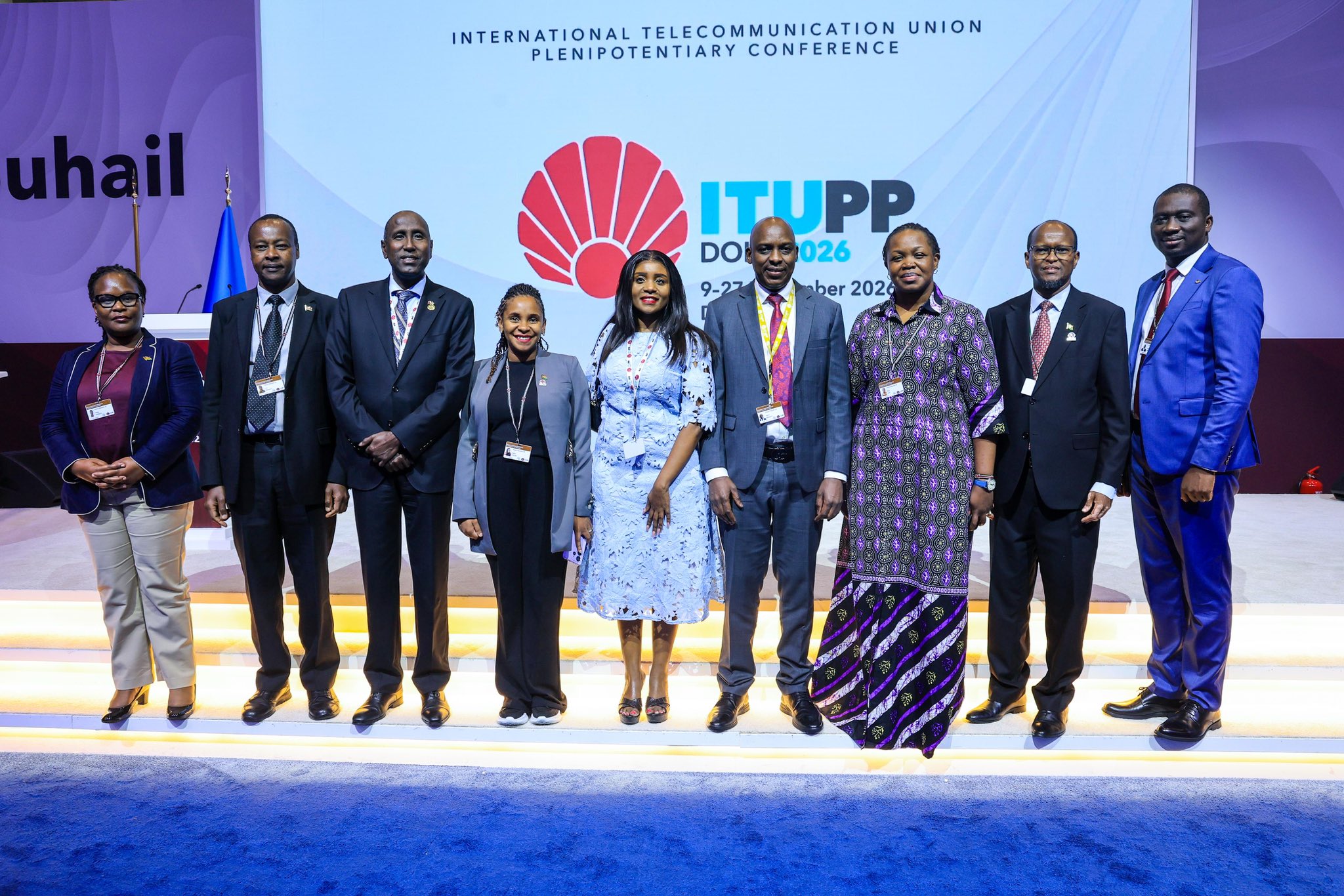
Kenya has secured another four-year term on the International Telecommunication Union (ITU) Council, winning 136 votes at the organisation’s Plenipotentiary Conference in Doha, Qatar, as it seeks a stronger role in shaping international policy on connectivity, artificial intelligence and digital infrastructure.
The result places Kenya at the top of the African regional group, known as Region D, for the 2027–2030 term. It also gives the country another opportunity to participate in the Union’s governance and contribute to the strategic and financial plans that will guide its work between 2028 and 2031.
ICT Cabinet Secretary William Kabogo led Kenya’s diplomatic engagement during the conference, which brought together governments and telecommunications stakeholders to determine the organisation’s leadership and priorities for its next planning cycle.
Kenya will serve on the Council alongside 12 other African countries: Algeria, Côte d’Ivoire, Egypt, Ghana, Mauritius, Morocco, Nigeria, Rwanda, Senegal, South Africa, Tanzania and Tunisia. The regional composition gives Africa 13 representatives in the Council, although each country retains its own national interests and responsibilities.



Kenya has been an ITU member since 1964 and has served on its Council since 1982. Its latest election extends that institutional presence for another term.
Kenya puts African AI capacity and connectivity on the agenda
At the conference, Kabogo called for international digital policy to account for the infrastructure and affordability constraints facing developing countries.
During a ministerial roundtable on digital transformation, he set out four priorities for the ITU’s 2028–2031 strategic cycle. These included measuring connectivity through the reliability and affordability of services, strengthening regional planning for digital infrastructure, developing African AI capacity at continental scale and supporting the implementation of existing international digital commitments.
The connectivity proposal extends beyond network coverage. Kabogo argued that access should also account for last-mile infrastructure, the cost of devices and the maintenance required to keep networks operational.
He also called for stronger regional planning around submarine cables and cross-border connectivity routes. Kenya intends to support this work through the Connected Africa Secretariat, which it chairs.
On artificial intelligence, Kenya wants African countries to coordinate investment in computing infrastructure, regional sovereign data centres and language models that can serve local populations. The government also called for data governance frameworks that reflect African interests and greater access to the resources needed to develop and deploy AI systems.
These proposals come as the continent faces constraints in computing capacity, data centre infrastructure and the cost of running advanced AI workloads. African governments and technology companies have been looking at shared infrastructure and regional investment as ways to reduce dependence on capacity located outside the continent.
Kenya also raised the need for equitable access to satellite orbits and radio-frequency spectrum, alongside greater harmonisation of spectrum use across African countries.
Domestic infrastructure remains part of Kenya’s case
Kabogo used the conference to outline Kenya’s domestic digital infrastructure and government service ambitions.
He said the country had completed about 60 per cent of its 100,000-kilometre national fibre-optic target. Kenya also had 88 million mobile subscriptions, while the eCitizen platform offered 24,000 government services, compared with 500 in 2022.
The subscription figure represents mobile connections rather than a count of unique users. The eCitizen figure, meanwhile, describes the number of services available through the platform, not how frequently citizens use them.
On device affordability, Kabogo said the government would remove the 25 per cent import duty on mobile devices. The proposed measure is intended to lower the cost of smartphones and other devices, although its implementation will depend on the relevant tax and policy processes.
Cybersecurity was another part of the government’s case. Kabogo said Kenya had established a National Cybersecurity Agency in 2026 to protect critical ICT infrastructure.
The country’s wider security effort also includes the Konza Security Operations Centre, which provides monitoring and incident response services to public institutions and businesses. The Communications Authority reported 2.7 billion detected cyber threat incidents between July and September 2026, a 14.45 per cent increase from the previous quarter. The figure refers to detected incidents and should not be read as the number of successful cyberattacks.
Bilateral engagements extend Kenya’s digital partnerships
Kenya’s campaign in Doha also involved meetings with government representatives and industry leaders from several regions.
Engagements with Kazakhstan focused on implementing a memorandum of understanding signed in May 2026, when President William Ruto and Kazakhstan’s President Kassym-Jomart Tokayev witnessed the agreement in Astana. Kabogo later met Kazakhstan’s Deputy Prime Minister and Minister of Artificial Intelligence and Digital Development, Zhaslan Madiyev, to review the Joint Implementation Committee and cooperation between Konza Technopolis and Astana Hub.
The two countries also discussed AI policy, digital skills and the next steps for implementing the agreement.
A separate meeting with Estonia’s Minister of Justice and Digital Affairs, Liisa-Ly Pakosta, covered digital government, digital identity, cybersecurity and interoperability. Estonia has been a partner in Kenya’s Digital Transformation Centre in Nairobi, building on an ICT cooperation memorandum signed in 2021.
Kabogo also discussed digital public infrastructure and cross-border recognition of skills with Ghana’s Minister for Communication, Digital Technology and Innovations, Samuel Nartey George.
Kenya proposed Ghana as the first country for reciprocal recognition of credentials through Masterkey, a skills and work wallet designed to allow verified qualifications to be recognised across borders. The proposal follows President Ruto’s announcement in September that Kenya would become the first implementer of the initiative. The discussions do not yet establish that reciprocal recognition between the two countries is operational.
Meetings with the GSMA covered mobile network investment, regulatory capacity building, smartphone affordability, digital inclusion and AI adoption. Other bilateral engagements involved countries including Rwanda, Zimbabwe, Mauritius, Australia, Sweden, Cuba, Thailand, Algeria, Switzerland and Uganda.
The meetings provided opportunities to discuss cooperation and Kenya’s positions at the ITU, but they do not establish how individual countries voted in the Council election.
African coordination will shape the next Council cycle
Kenya’s election took place alongside a broader effort by African governments to coordinate their positions at the conference.
The African preparatory process began in July 2024 and concluded in Abidjan in September 2026 with the adoption of 50 African Common Proposals. The proposals cover AI, access to spectrum and satellite orbits, regional representation, digital infrastructure resilience, and implementation of the World Summit on the Information Society (WSIS) outcomes and the 2030 Agenda.
The African Telecommunications Union coordinated the process, with each proposal assigned an African lead coordinator and daily meetings planned during the conference to align delegations.
Kenya’s Dominic Ooko of the Communications Authority was proposed as Africa’s candidate for Chair of Committee 3 on Budget Control. The proposal should be distinguished from a confirmed appointment.
Kabogo said Kenya would work with other African delegations to advance the common positions and strengthen the continent’s participation in global ICT policy discussions.
The country is also due to host the Internet Governance Forum in Nairobi from 14 to 18 December 2026, giving it another international platform to convene discussions on internet policy and governance.
Kenya’s new Council term will give it a seat in the ITU’s deliberations over the next four years. Its ability to advance the priorities outlined in Doha will depend on continued coordination with other African members, support from the wider membership and the practical work of turning proposals into decisions and programmes.
Go to TECHTRENDSKE.co.ke for more tech and business news from the African continent and across the world.
Follow us on WhatsApp, Telegram, Twitter, and Facebook, or subscribe to our weekly newsletter to ensure you don’t miss out on any future updates. Send tips to info@techtrendsmedia.co.ke

