
PAPSS wants to make regional trade easier for African businesses, but cheaper infrastructure alone may not be enough

African businesses have more options for moving money across borders than they did a few years ago, but the cost of accessing those services still depends heavily on the financial institutions handling transactions.
The Pan-African Payment and Settlement System (PAPSS) is trying to reduce that dependence by allowing participating countries to settle payments in their own currencies. Its expansion into Kenya and other African markets has given the network a wider institutional footprint, although the charges businesses ultimately pay remain partly outside its control.
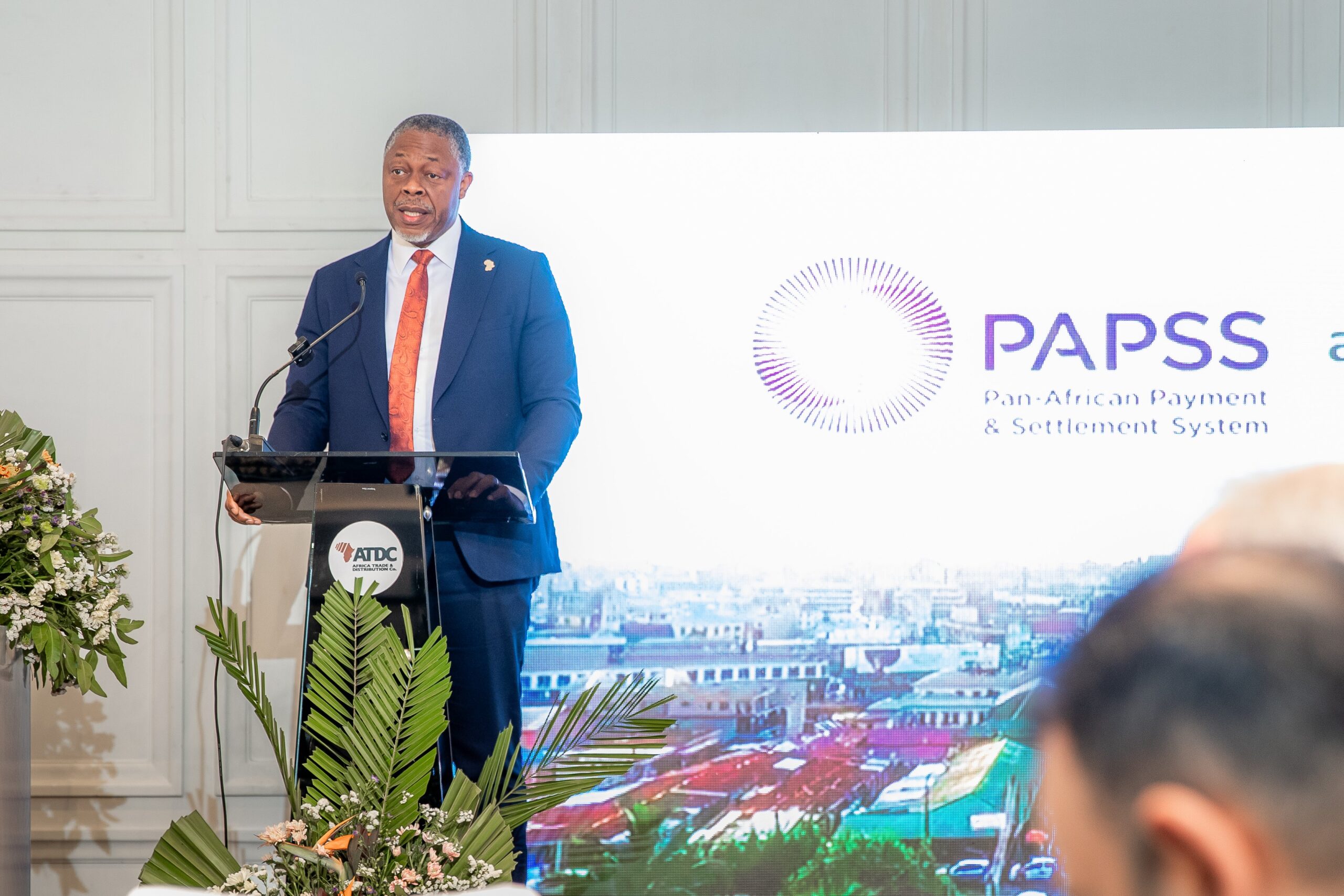
PAPSS Chief Executive Officer Mike Ogbalu says participating financial institutions sometimes add their own margins to the system’s relatively low infrastructure fees, limiting the savings that reach customers. The organisation puts its average infrastructure fees at approximately 0.1% of transaction value, but the final price depends on the institutions providing access to the service.
This creates a commercial challenge for a network designed to make intra-African trade payments cheaper. PAPSS can reduce the cost of processing and settling transactions, but it cannot automatically ensure that banks and other participants pass the full reduction to businesses.



Kenya’s domestic payment networks provide PAPSS with a continental route
Kenya’s connection to PAPSS rests partly on existing domestic payment infrastructure rather than individual businesses establishing direct relationships with the continental network. In February 2026, PAPSS partnered with Pesalink to connect the Kenyan payment switch to its cross-border infrastructure.
The arrangement linked more than 80 Kenyan banks, fintechs, SACCOs and telecommunications participants on the Pesalink network to more than 160 commercial banks and fintechs on the PAPSS side at the time of the announcement. Pesalink became a technical connectivity provider, with Kenya serving as the first market where PAPSS piloted the switch for transaction termination.
This provides an important foundation for understanding the system’s local reach. Rather than requiring every Kenyan financial institution to develop an independent connection to PAPSS, the partnership uses an existing domestic network to facilitate access to continental payment infrastructure.
Pesalink’s domestic expansion has continued since that agreement. In November 2026, Airtel Money announced an integration giving its customers access to 30 banks, SACCOs and microfinance institutions through the network. Postbank Kenya also opened more than 600 agent and branch locations to customers of participating financial institutions for cash deposits, extending interoperability into physical banking services.
These developments do not automatically mean every institution connected to Pesalink can process PAPSS transactions. They do, however, demonstrate the domestic network’s expanding reach, which is relevant to the potential distribution of cross-border payment services.
Kenyan financial institutions, including KCB Group, have already been associated with PAPSS integration. Capital FM’s November 12 report also identifies Equity Bank as a connected institution.
The commercial opportunity extends beyond the banks themselves. Afreximbank’s 2026 Kenya country brief estimates that the country exported approximately US$3.4 billion in merchandise to African markets in 2025, representing around 39% of its merchandise exports. Uganda accounted for 31% of those exports to African markets, followed by Tanzania at 16%, Rwanda at 10% and the Democratic Republic of Congo at 8%.
These trade relationships provide a substantial market for payment services that can reduce the friction involved in receiving money from neighbouring countries.
Bank charges could limit the savings from local-currency payments
PAPSS’s pricing proposition needs to be understood at two levels: the cost of using its infrastructure and the charges imposed by financial institutions serving customers.
Ogbalu says PAPSS’s average infrastructure fees are approximately 0.1% of transaction value. He also puts the cost of conventional cross-border payments and remittances at between 8% and 10%, although these figures should not be treated as a universal comparison of equivalent commercial trade-payment services.
The PAPSS executive says participating institutions sometimes mark up the network’s low fees, preventing customers from receiving the full benefit of the infrastructure’s pricing model.
“One of the key design principles for us was how to lower the cost of transactions. Our average fees now total about 0.1 percent of the value. We are still dealing with participants who sometimes mark up our low costs, meaning the service does not reach customers as affordably as we intended,” Ogbalu said.
Kenya’s domestic payment market offers an example of how financial institutions influence the price of interoperable services.
In July 2026, 19 banks and microfinance banks adopted a common Pesalink pricing arrangement under which transfers of up to KSh1,000 were free, while transactions above that amount and up to KSh999,999 attracted a KSh20 charge. NCBA subsequently joined the pricing arrangement.
That initiative concerned domestic account-to-account transfers rather than PAPSS transactions, so the charges are not directly comparable. It nevertheless illustrates how banks determine the prices customers encounter even when they share access to common payment infrastructure.
For businesses trading across African markets, the final cost can influence how much money they retain from each transaction. Exporters and importers dealing in relatively small consignments may be particularly sensitive to fixed charges, foreign-exchange spreads and intermediary fees.
PAPSS allows participating countries to offset payments moving in opposite directions, reducing the amount of foreign currency required for settlement. Under the arrangement, a Kenyan exporter can receive payment in Kenyan shillings from a transaction involving a Ugandan buyer paying in Ugandan shillings.
Ogbalu says this mechanism has significantly reduced dependence on third-party currencies in transactions between countries such as Kenya and Nigeria. Instead of sourcing foreign currency for the full transaction value, only the net difference between opposing payment flows needs to be settled in an acceptable settlement currency.
The system also targets processing times of less than 120 seconds, compared with conventional arrangements that can take several days to confirm receipt of funds. Faster access to payments can help businesses manage supplier obligations and working capital, particularly when they operate across markets with different banking systems.
PAPSS expands its network as business adoption becomes the priority
PAPSS’s expansion figures indicate that the network has established a substantial institutional presence. Ogbalu says it currently operates in 31 African countries, with more than 220 commercial banks and 17 payment switches integrated, including 12 national switches.
The organisation wants to extend its reach to 37 countries by the end of 2026 and at least 50 countries in 2027. Its strategy for 2027 is expected to place greater emphasis on transaction volumes and business adoption rather than simply adding more participating institutions.
The adoption challenge had already featured in TechTrends’ September 2026 coverage of PAPSS. An earlier update reported approximately 1,000% growth in transaction volumes and 120% growth in transaction values. The November interview also refers to adoption growth exceeding 1,000%, although the latest report does not provide transaction volumes or values to establish how that figure relates to the earlier measurements.
Ogbalu acknowledged that PAPSS had yet to comprehensively measure the platform’s impact on trade and businesses. This leaves a distinction between the network’s reported expansion and the economic benefits businesses have actually realised.
The challenge is particularly relevant to small and medium-sized enterprises, which PAPSS identifies as an important potential user group. Large financial institutions may already have the technical capacity to connect to cross-border networks, but smaller traders need affordable services that are accessible through their existing banks and payment providers.
TechTrends previously reported that fragmented payment systems, different regulatory requirements, currency conversion costs and settlement delays continue to complicate African trade. The February 2026 coverage of cross-border payments also examined how delays can tie up working capital for businesses waiting to receive funds from customers in other markets.
PAPSS’s expansion addresses part of that infrastructure problem. Its ability to translate wider connectivity into regular transactions will depend on whether businesses find the service sufficiently affordable and convenient to adopt.
New payment products extend PAPSS beyond bank transfers
The network is also developing services intended to address other parts of the continental payment ecosystem.
Ogbalu says PAPSS has introduced an Africa Currency Marketplace to match demand and supply for different African currencies. The initiative is intended to address the difficulty of accessing and exchanging currencies across markets where liquidity and convertibility can complicate trade transactions.
The organisation has also introduced a card scheme designed to facilitate payments within Africa without relying on settlement infrastructure outside the continent. This extends its ambitions beyond the processing of bank transfers into the card-payment market.
These products sit within a wider African financial technology market where different providers are approaching cross-border payments through currency management, digital wallets, stablecoins and card infrastructure.
Yellow Card, for example, introduced Global Accounts in October 2026 to help businesses receive international payments, hold foreign-currency balances and manage payments to suppliers. DCSPay and Kotani Pay have also explored connections between stablecoin-funded payments and local African payment rails.
PAPSS takes a different approach by concentrating on direct payments in participating African currencies and the infrastructure needed to settle them. Its expansion is linked to efforts by African governments to deepen trade under the African Continental Free Trade Area, where payment fragmentation remains one of the practical barriers to regional commerce.
The network now has a growing base of participating financial institutions and national switches. Its ability to become a routine payment channel for African businesses will depend on whether those connections deliver competitive prices and reliable services at the customer level.
Go to TECHTRENDSKE.co.ke for more tech and business news from the African continent and across the world.
Follow us on WhatsApp, Telegram, Twitter, and Facebook, or subscribe to our weekly newsletter to ensure you don’t miss out on any future updates. Send tips to editorial@techtrendsmedia.co.ke

