Need working capital for your business? How LOOP Biz makes credit targets easier to understand


For many small businesses, access to credit can depend on how clearly a lender can assess the activity of the business. A shop may have regular customers, steady sales and a reliable operating history, yet the owner may struggle to present a complete picture of its performance when seeking financing.
Digital payment records can help address part of that information gap. When business transactions are collected through a formal payment channel, they create a record that can support an assessment of sales activity over time.
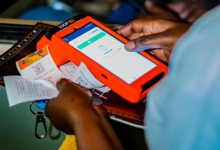
LOOP Biz, NCBA’s business platform, uses merchant transaction activity as part of its approach to business credit. Its credit tools are designed to show merchants the sales targets associated with potential borrowing, giving them a clearer view of the activity that may be required to qualify for financing.
The feature sits alongside LOOP Biz’s payment and business-management services. Merchants can use the platform to accept payments, while eligible businesses can also access credit facilities subject to the bank’s assessment and approval.


Making the relationship between sales and credit clearer
A business owner considering a loan often needs to understand more than the amount available to borrow. Repayment terms, costs, eligibility requirements and the lender’s assessment process all influence whether the facility is suitable.
LOOP’s credit-target approach adds another piece of information by linking a potential credit amount to the business’s transaction activity.
In a demonstration, a merchant considering an overdraft was shown the sales activity associated with different target amounts. The example included a KSh20,000 overdraft target linked to monthly Till collections of KSh400,000, while a KSh30,000 target was associated with monthly collections of KSh600,000 over three months.
It is worth knowing that actual credit decisions will depend on the bank’s assessment, the merchant’s eligibility and the applicable product terms.
Why transaction records matter
A business that accepts payments through a digital Till can build a record of its collections. Over time, that information may help the lender assess the scale and consistency of the business’s activity.
For merchants, having transactions recorded through LOOP Biz can make it easier to build a visible payment history within the platform. It also gives the business a basis for reviewing its own sales performance.
However, sales volume is only one part of a credit assessment. A lender may consider other information, including business registration, customer due diligence, account activity and the terms of the facility being requested.
Eligibility requirements include a registered business, completion of full KYC requirements and an active LOOP Till. Meeting these requirements does not automatically qualify a merchant for a loan.
The credit facilities available through LOOP Biz
Loop Biz describes overdrafts and term loans of up to KSh1 million over a period of up to 12 months, subject to assessment and approval.
An overdraft can provide short-term access to funds when a business needs to manage a temporary gap between payments coming in and expenses going out. A term loan, by comparison, provides a defined amount that is repaid over an agreed period.
The suitability of either facility depends on the purpose of borrowing and the business’s ability to meet the repayment obligations. A merchant should understand the applicable interest, fees, repayment schedule and other conditions before accepting an offer.
Credit planning still starts with the business
A sales target can help a merchant understand the level of transaction activity associated with a potential credit amount. It can also encourage the owner to review how much of the business’s activity is being recorded through its Till.
But increasing collections simply to reach a target may not be appropriate for every business. Sales need to be profitable, and borrowing should be connected to a clear business need.
An owner considering stock financing, equipment or working capital should estimate the expected return and assess whether the business can manage repayments under different trading conditions.
The ability to view a target does not remove the need for that assessment. Nor does it mean that every merchant will receive credit after reaching a stated collection level.
Keeping access to credit connected to business activity
LOOP Biz is positioned as a platform that brings payments and business services together. The credit component builds on the transaction information generated through the merchant’s Till, while the inventory and PDQ additions give eligible businesses more tools for managing daily operations.
The platform is also described as bank-agnostic. Merchants do not have to move their entire banking relationship to NCBA simply to use LOOP Biz or be considered for credit, although they must meet the applicable product and eligibility requirements.
For a small business, a clearer view of transaction activity can be useful when reviewing performance and planning its financing needs. The credit-target feature gives merchants another reference point in that process, while the final lending decision remains subject to the bank’s assessment and terms.
Go to TECHTRENDSKE.co.ke for more tech and business news from the African continent and across the world.
Follow us on WhatsApp, Telegram, Twitter, and Facebook, or subscribe to our weekly newsletter to ensure you don’t miss out on any future updates. Send tips to editorial@techtrendsmedia.co.ke

