Norway, IFC and Kenya's banks turn to risk-sharing to expand SME financing

Kenya’s commercial banks extended KSh245.06 billion in new loans to micro, small and medium-sized enterprises (MSMEs) during the first half of 2026, according to figures reported by TechTrendsKE. Yet the availability of credit across the banking sector does not necessarily translate into financing for businesses with limited collateral, irregular cash flows or little borrowing history.
Development finance institutions are addressing part of that problem by taking on a share of the potential losses when commercial lenders finance businesses considered too risky under conventional lending arrangements. Norway is among the governments pursuing this approach in Kenya, where its development agency has partnered with local financial institutions and business accelerators to support enterprises in the green and blue economies.
The arrangement with Equity Bank provides a practical example. Through a risk-sharing facility administered by the Norwegian Agency for Development Cooperation (Norad), the lender can transfer 60–70% of potential lending losses to the programme, leaving Equity responsible for the remainder. Mehraz Rafat, a senior adviser in Norad’s Department for Partnerships and Shared Prosperity, said the arrangement had enabled the bank to issue 1,500 new loans to blue economy businesses during the previous year.
The borrowers included fish farmers, fishermen and small-scale seafood processors. According to Rafat, each loan generated an average of two jobs. The programme’s employment contribution therefore extends beyond the businesses receiving credit, although the reported average does not distinguish between newly created and existing jobs supported.



Kenya’s SME lending market is expanding, but access remains uneven
The Norwegian facility operates within a banking market that already channels substantial capital towards smaller enterprises. Equity Bank alone disbursed KSh404 billion to MSMEs through its Enterprise Development and Financial Inclusion programme, according to Equity Group’s 2025 Sustainability Report. The group also reported that 962,924 entrepreneurs had cumulatively received business training through Equity Group Foundation.
Industry lending figures provide another indication of the market’s scale. TechTrendsKE reported that Kenyan banks issued KSh326.5 billion in new MSME loans during 2025, exceeding the Kenya Bankers Association’s KSh150 billion target. The association subsequently set an annual lending ambition of KSh300 billion for the 2026–2028 period.
Equity accounted for KSh82.3 billion in new MSME lending during the first half of 2026, followed by Co-operative Bank at KSh32.4 billion and KCB at KSh26.4 billion. The three institutions together represented approximately 58% of the KSh245.06 billion issued during the period.
These figures demonstrate the scale of commercial lending, but they also make the allocation of credit important. A bank can expand its MSME portfolio while continuing to exclude businesses whose operating models, assets or financial records do not satisfy conventional underwriting requirements.
Sidian Bank chief executive John Okulo has previously described this tension in Kenya’s banking market. In September 2026, he said MSMEs accounted for approximately 25% of the banking sector’s loan portfolio, while lenders faced pressure to increase financing without compromising asset quality.
Sidian’s own experience illustrates the role of external guarantees. The bank received a $5 million African Guarantee Fund loan portfolio guarantee in 2021 and entered into a KSh1.7 billion facility with FMO under the NASIRA programme in 2022, according to TechTrendsKE’s reporting.
The Norwegian arrangement with Equity fits into this wider financing model. Rather than requiring development agencies to replace commercial lenders, risk-sharing facilities allow banks to retain responsibility for originating and managing loans while transferring an agreed portion of potential losses to development partners.
Risk guarantees give banks room to finance underserved businesses
Norway’s programme is not the only recent initiative using this structure in Kenya. The International Finance Corporation launched three Catalytic First Loss Guarantee transactions involving 4G Capital, Equity Bank Kenya and KCB Bank Kenya in August 2026.
The transactions were expected to facilitate approximately $144.4 million in local-currency lending to microenterprises, women-owned businesses and climate-focused enterprises. IFC committed $24.2 million, with an additional $11 million from the International Development Association’s Private Sector Window. The structure was designed to mobilise a further $120.2 million in MSME financing.
The IFC programme is separate from Norad’s arrangement, but both illustrate how development institutions are using their capital to influence commercial lending decisions. The guarantees absorb some of the exposure associated with borrowers who might otherwise struggle to secure financing, allowing participating banks to expand lending without assuming the entire risk themselves.
Similar arrangements are emerging elsewhere on the continent. Sterling Bank and Cascador established a $200 million SME Credit Backstop Fund in Nigeria in October 2026, designed to support up to $1 billion in outstanding credit. The initiative targets businesses that struggle to obtain larger and longer-term loans because of collateral and guarantee requirements.
Kenya Development Corporation is also reviewing its equity and quasi-equity investment framework, including minority shareholding, preferred shares and convertible instruments. The proposed framework covers how investments are evaluated, monitored and eventually exited, with commercial viability and development impact among the considerations.
These initiatives address different financing needs, but they point to a wider range of mechanisms through which institutions are trying to bring private capital into smaller businesses.
Norway’s commitment extends beyond the individual Equity Bank facility. Through Norad, the government committed approximately NOK600 million, equivalent to about $65 million, in grants to organisations participating in a programme launched in 2023 to connect African and international business incubators and accelerators with Kenyan entrepreneurs. The participating organisations subsequently mobilised additional private capital.
Norad estimates that its wider interventions have reached close to 5,000 SMEs through financing and business development support across different programmes.
Digital banking offers lenders another way to assess SMEs
Risk-sharing arrangements address the financial exposure associated with SME lending. Another obstacle is the information available to banks when evaluating businesses with limited formal financial records.
Digital payment platforms and merchant banking services offer additional ways to understand business activity. Transaction histories, sales volumes, payment frequency and inventory records can provide lenders with information that conventional financial statements may not capture.
NCBA’s LOOP Biz+ is one example of how banking services are being integrated into business operations. The platform combines payment acceptance with working-capital loans, supplier credit, overdrafts and inventory management. Its merchant services also provide transaction records and business reporting tools.
LOOP Biz PDQ, covered separately by TechTrendsKE in November 2026, supports card payments, M-PESA Till and Paybill, and STK push transactions. Its inventory tools can update stock records following sales and provide information to help businesses manage replenishment.
These services illustrate how digital infrastructure can improve the visibility of business activity.
Lucas Robinson of Renew Capital has argued that embedded finance could provide another route to underserved businesses. The approach integrates financing into products and services that businesses already use, potentially bringing credit closer to the point where commercial transactions take place.
For smaller enterprises, the combination of accessible payment infrastructure and financing products could help reduce some of the barriers associated with conventional borrowing. The availability of reliable business information also gives lenders additional material to consider when assessing applicants.
Enterprise development extends beyond access to credit
Norway’s programme also includes business acceleration, an area that addresses challenges banks cannot solve through lending alone.
One of its beneficiaries is Assistive Technologies for Disability Trust (AT4D), whose Innovate Now accelerator supports early-stage companies developing products for persons with disabilities. Founder and chief executive Bernard Chiira said the accelerator had supported more than 50 businesses since partnering with Norad in 2022.
The participating businesses develop products covering mobility, hearing and visual impairments. Chiira said some had expanded into markets in the United Kingdom and Europe, while arguing that local manufacturing could reduce reliance on imported assistive products and create commercial opportunities within Kenya.
AT4D also participates in Kenya’s wider assistive technology ecosystem. A separate AI for Disability Project launched in 2026 brought together organisations including the Ministry of Information, Communications and the Digital Economy, Kenya Institute of Special Education, inABLE, Qhala, Huawei Kenya and AT4D.
That initiative is distinct from the Norwegian programme, but its participants and objectives illustrate the range of organisations involved in developing accessible technology in Kenya.
The commercial potential of assistive technology depends on more than product development. Businesses need financing to manufacture and distribute products, reach customers and establish sustainable operations. Accelerators can help entrepreneurs develop those capabilities, while credit facilities provide another source of capital for expansion.
Green finance brings additional requirements for SME lenders
Businesses in the green and blue economies also face financing considerations linked to the activities they undertake. A lender evaluating a fish-processing enterprise, renewable energy business or agricultural technology company may need to consider operational and environmental risks alongside conventional credit assessments.
The Kenya Bankers Association’s Sustainable Finance Roadmap for 2027–2037, developed with support from IFC and WWF-Kenya, addresses some of the institutional requirements for financing such activities. The roadmap covers sustainability disclosures, climate and nature-related risk assessments, and tracking sustainable capital allocation.
Its development reflects the need for banks to establish more consistent ways of identifying and assessing sustainable economic activities. Such frameworks can help financial institutions evaluate the businesses they finance, although the roadmap is separate from Norad’s SME lending programme.
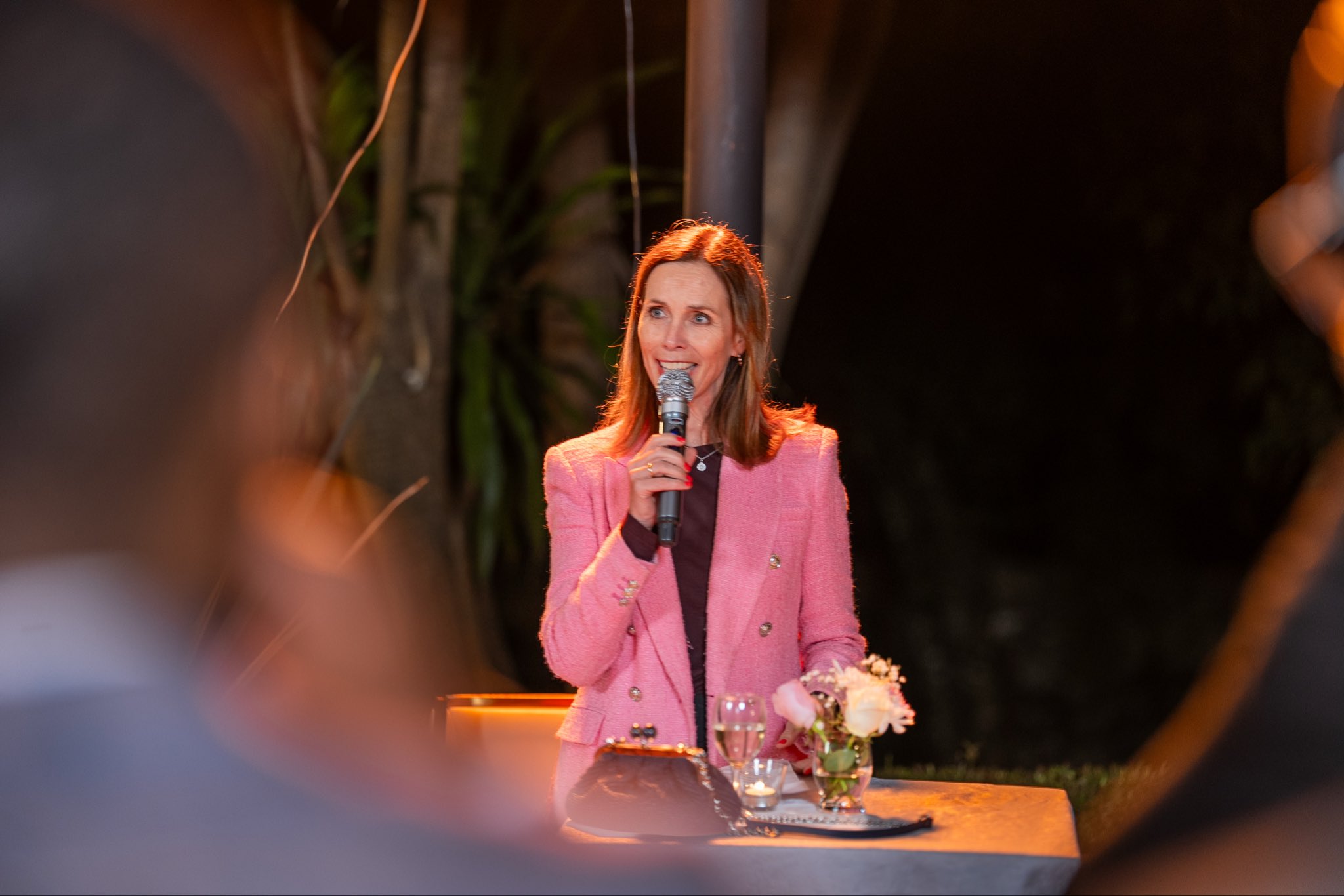
Norway’s Ambassador to Kenya, Siv Cathrine Moe, said employment creation remained a priority in the bilateral development partnership, with SMEs playing an important role in generating jobs.
The economic value of these interventions will ultimately depend on whether businesses can continue operating, repay their loans and attract financing without relying indefinitely on development-funded guarantees. For Kenyan lenders, the task is to turn risk-sharing arrangements, digital business information and enterprise development support into lending models that can sustain themselves commercially while reaching businesses that conventional credit assessments have left outside the market.
Go to TECHTRENDSKE.co.ke for more tech and business news from the African continent and across the world.
Follow us on WhatsApp, Telegram, Twitter, and Facebook, or subscribe to our weekly newsletter to ensure you don’t miss out on any future updates. Send tips to editorial@techtrendsmedia.co.ke

