CBK presses banks to meet KSh5 billion capital target despite Treasury's extended deadline

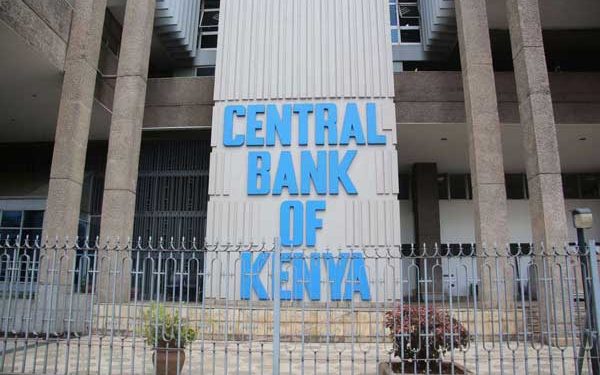
The Central Bank of Kenya (CBK) is continuing to engage commercial banks over a KSh5 billion capital target for December 2026, with Governor Kamau Thugge saying one or two lenders could struggle to meet the requirement despite changes to the statutory timetable under the Finance Act 2026.
Appearing before the National Assembly’s Finance and Planning Committee this week, Thugge said the regulator had asked a small number of banks to explain how they intended to reach the KSh5 billion threshold. He also disclosed that CBK had written to the National Treasury explaining why it believes commercial banks need stronger capital bases.
The comments highlight differences in emphasis between the banking regulator and the Treasury over the pace of capital increases. The Finance Act 2026 changed the timetable for banks to reach KSh10 billion in minimum core capital, while CBK continues to press institutions over the earlier KSh5 billion target.
Thugge says one or two banks could struggle with KSh5 billion target
Thugge told lawmakers that CBK was engaging a few banks over their plans to meet the KSh5 billion capital target for the end of 2026.

He said the regulator wanted the institutions to explain how they intended to reach the threshold, adding that one or two could have difficulty meeting it.
“Only a few, maybe one or two, might struggle,” the Governor said, describing the engagement as part of CBK’s efforts to understand how the affected institutions planned to strengthen their capital positions.
The Governor did not frame the discussions as a general difficulty across the banking sector. Instead, he pointed to a small number of lenders whose capital plans required closer engagement with the regulator.
The KSh5 billion figure formed part of the phased increase in minimum core capital introduced through the Business Laws (Amendment) Act 2024, which raised the requirement from KSh1 billion towards KSh10 billion by December 2029.
Finance Act 2026 changed the timetable for bank capital increases
The original framework introduced annual capital milestones intended to move commercial banks towards the KSh10 billion minimum. The milestones included a KSh3 billion threshold for December 2025 and KSh5 billion for December 2026, followed by further increases towards the final KSh10 billion requirement.
The Finance Act 2026 changed that implementation framework by removing the annual milestones and extending the deadline for banks to reach KSh10 billion in minimum core capital to December 31, 2032.
The revised timetable followed concerns about the pace of capital accumulation and its possible effect on credit access, particularly for smaller businesses and specialised lenders.
In a parliamentary presentation in June 2026, National Treasury Cabinet Secretary John Mbadi said the government supported the strategic objective of stronger bank capitalisation but wanted a transition that would minimise disruption to lending and financial services delivery.
The Treasury’s position emphasised the need to protect access to credit for micro, small and medium-sized enterprises and institutions serving niche markets while banks worked towards the higher capital requirement.
Thugge’s latest comments show that CBK continues to regard the earlier KSh5 billion threshold as an important target in its engagement with banks.
CBK defends higher capital requirements against emerging risks
The Governor told lawmakers that stronger bank capital was necessary to help financial institutions withstand risks affecting the banking sector, including climate-related shocks and cybersecurity threats.
He said banks needed sufficient financial resources to invest in technology that could protect their operations against cyberattacks and other emerging threats.
Thugge argued that the financial system needed strong institutions capable of absorbing shocks without allowing difficulties at individual banks to spread across the wider sector.
He also linked stronger capitalisation to banks’ ability to finance larger projects, explaining that institutions with stronger capital bases would have greater capacity to support businesses and investments requiring substantial funding.
The argument places capital requirements within CBK’s broader financial stability responsibilities. Capital provides banks with a financial buffer against losses and supports their ability to expand lending while managing the risks associated with their assets.
Central Bank has written to Treasury over capitalisation policy
Thugge disclosed that CBK had written to the National Treasury explaining why the regulator believes banks need to increase their capital bases.
The Governor said the Central Bank had engaged Treasury on the issue because it considers stronger capitalisation necessary in an environment where banks face cybersecurity risks, climate-related disruptions and demands for larger financing commitments.
The correspondence highlights the continuing engagement between the two institutions over how quickly banks should build their capital positions.
CBK’s wider capital framework also includes additional prudential measures. The regulator has proposed capital conservation requirements that would influence how much banks can distribute to shareholders, alongside a framework for identifying domestic systemically important banks and applying additional supervisory requirements to institutions whose failure could threaten financial stability.
These measures form part of the Central Bank’s broader approach to strengthening the resilience of Kenya’s banking sector as institutions adjust to the revised minimum capital timetable.
Go to TECHTRENDSKE.co.ke for more tech and business news from the African continent and across the world.
Follow us on WhatsApp, Telegram, Twitter, and Facebook, or subscribe to our weekly newsletter to ensure you don’t miss out on any future updates. Send tips to info@techtrendsmedia.co.ke


