
Africa’s mobile money executives are taking their experience into banks and global payment companies
Africa’s biggest mobile money businesses are producing leaders for the wider financial services industry

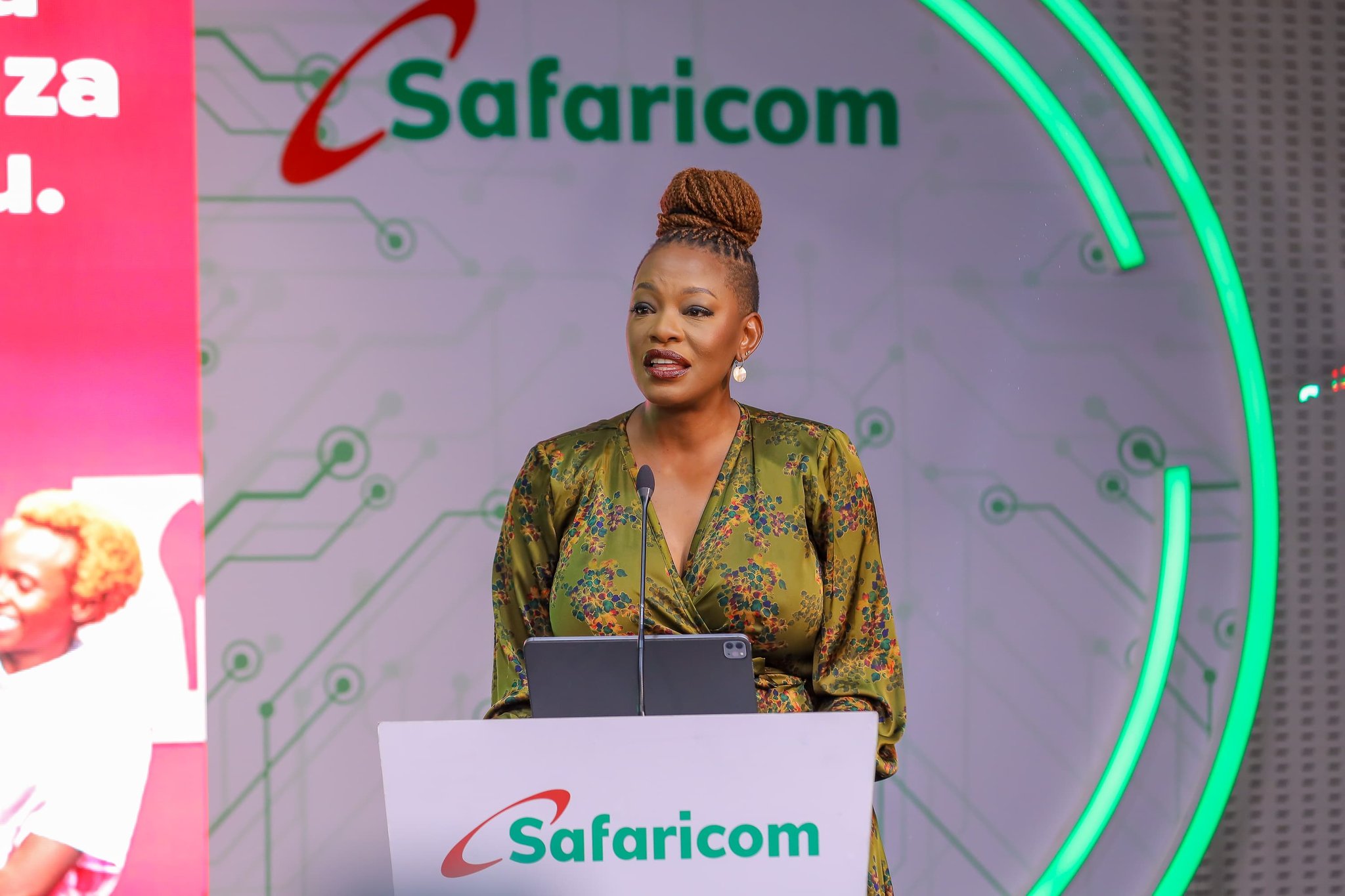
Africa’s mobile money industry has become a source of senior leadership talent for banks and global payment companies. Executives who built and managed some of the continent’s largest digital financial services operations are now leading businesses at Absa, Stanbic Bank Kenya and Visa.
Several prominent appointments in 2026 illustrate the movement. Former M-PESA Africa managing director Sitoyo Lopokoiyit joined Absa Group to lead Personal and Private Banking. Michael Mutiga left Safaricom for the chief executive position at Stanbic Bank Kenya and South Sudan. Former Airtel Money Kenya managing director Anne Kinuthia-Otieno joined Visa as Vice-President and Head of East Africa, while Safaricom’s former Chief Financial Services Officer Esther Waititu took a senior regional role at the same payments company.
The appointments involve different career paths, but they connect institutions that increasingly compete across payments, banking, merchant services and digital financial products. They also come as payment infrastructure expands and financial institutions look beyond transaction fees for new sources of revenue.
Banks are recruiting from Africa’s mobile money industry
Lopokoiyit’s move to Absa was one of the clearest examples of a mobile money executive taking responsibility for a major banking operation. As managing director of M-PESA Africa, he worked across a financial services platform operating in multiple markets. At Absa, he became Group Chief Executive for Personal and Private Banking, effective April 2026.


Mutiga’s appointment at Stanbic followed a different route. Before joining Safaricom as Chief Business Development and Strategy Officer, he had spent more than two decades in banking and corporate finance. His move was therefore a return to an industry where he had built much of his career, bringing additional experience from telecom strategy and digital business development.
The two appointments were part of a wider period of senior management changes involving Safaricom. Waititu announced her departure in July, with her last day at the company set for July 31. Her exit followed more than three years at Safaricom, where she had joined in 2023 after senior banking roles at KCB Group and Standard Bank.
Waititu’s responsibilities covered a broader financial services portfolio than M-PESA’s core payments operation. She oversaw the FinTech 2.0 programme, which moved the platform towards a cloud-native architecture designed to improve scalability, reliability and software deployment.
Her tenure also coincided with the expansion of M-PESA into investments, savings, insurance and merchant services. Among the products introduced during this period was Ziidi Trader, which allows customers to buy and sell shares listed on the Nairobi Securities Exchange through M-PESA.
Safaricom also advanced Daraja, its developer platform, through which businesses and software developers integrate M-PESA services into their applications. My OneApp brought telecom and financial services together while introducing mini-apps from third-party developers.
This experience placed Waititu across several parts of the digital financial services value chain, including payment infrastructure, product development, merchant services and third-party integrations.
The businesses behind the executive movement
The scale of M-PESA and Airtel Money provides context for the experience their former leaders bring to other institutions.
Safaricom reported that M-PESA generated KSh100.1 billion in revenue in the six months to September 2026, accounting for 42.8% of the company’s total revenue. The platform processed 27.4 billion transactions during the period, while its paying customer base stood at 27.86 million.
For the financial year ended March 2026, M-PESA handled 46.4 billion transactions worth KSh41.68 trillion. Its merchant network had reached 3.13 million businesses, while Safaricom increased the platform’s processing capacity from 4,500 to 6,000 transactions per second through its FinTech 2.0 upgrade.
Airtel Money operates across a wider group of African markets. Airtel Africa reported revenue of US$830 million for the six months ended September 2026, up 34% in reported currency. Its customer base reached 56.7 million across 13 markets, while transaction value during the period was US$128 billion.
The same results showed growth across the infrastructure supporting the service. Airtel Money had more than 587,000 merchants and 2.4 million active agents. Revenue from financial services, including lending and savings, grew 44.8% in constant currency.
The figures cover different geographic scopes. Safaricom’s M-PESA results largely describe its Kenyan operation, while Airtel Money’s figures cover 13 African markets. They should not be treated as a direct comparison of the two businesses, but they demonstrate the scale and reach of the platforms.
Managing operations of this size involves more than overseeing transfers between mobile wallets. The businesses combine payment processing, agent and merchant distribution, financial products, customer platforms, technology infrastructure and partnerships with banks, fintechs and regulators.
That experience is relevant to financial institutions seeking to expand digital distribution and develop products around customer and merchant relationships.
Visa brings former M-PESA and Airtel Money leaders together
Visa’s recruitment of Kinuthia-Otieno and Waititu creates a notable connection between Kenya’s two major competing mobile money businesses.
Kinuthia-Otieno left Airtel Money Kenya after nearly five years as managing director. She joined Visa as Vice-President and Head of East Africa, with responsibility for seven markets.
Waititu’s appointment placed another former Kenyan mobile money executive within Visa’s regional leadership. She became Senior Vice-President and Group Country Manager for Southern and Eastern Africa, overseeing the company’s business across 24 markets.
Their previous roles gave them experience in different parts of the mobile money market. Kinuthia-Otieno led Airtel Money Kenya, while Waititu oversaw Safaricom’s financial services portfolio, including M-PESA and its expansion into products beyond payments.
Kinuthia-Otieno also attended Safaricom’s HY2027 results event after leaving Airtel Money and joining Visa. Waititu had already departed Safaricom by that point. Their presence in Visa’s leadership structure brings executives from two competing mobile money operations into the same global payments company.
The appointments extend beyond Kenya’s domestic market. Both executives now have regional responsibilities within an international payments network whose business depends on relationships with banks, mobile money operators, merchants, fintechs and public institutions.
Payment infrastructure is expanding beyond traditional banking networks
The executive movement is taking place as Africa’s payment infrastructure becomes more interconnected.
The 2026 State of Inclusive Instant Payment Systems in Africa report, published by AfricaNenda Foundation, the United Nations Economic Commission for Africa and the World Bank Group, recorded 71.4 billion instant payment transactions worth US$1.8 trillion across the continent in 2025.
Mobile money systems accounted for 73% of transaction volumes, while cross-domain systems, which connect different categories of financial institutions and payment providers, handled 67% of transaction value.
The report also found that bank-based instant payment transaction volumes grew 42% year-on-year in 2025. Cross-domain systems recorded 21% growth, while mobile money systems grew 7%.
These figures describe activity across instant payment systems rather than the performance of individual companies. They show the different roles played by mobile money, banks and networks connecting institutions, as well as the expansion of payment infrastructure beyond individual providers.
For banks, the commercial challenge is to develop services around that infrastructure as transfer costs fall. Lopokoiyit addressed the issue at Africa Tech Festival 2026 in Cape Town, arguing that payments would remain essential to financial services but could not provide a lasting source of revenue on their own.
“Payments are the rails you have to play on. If you’re not in payments, you’re not in financial services in the future,” he said. “But payments can’t be the way you make money forever. You need to go beyond them and create value on top.”
He identified embedded lending, insurance, buy now, pay later and services built around customers’ salaries and merchant relationships as potential areas for growth. He also estimated that about 60% of transactions outside South Africa were already free.
His comments point to the need for banks to build products around the payment relationships they maintain with customers and businesses. He also urged fintechs operating in payments, lending and wealth management to partner with banks, although he noted that procurement, compliance and return-on-investment requirements can slow such arrangements.
Absa is developing its own digital distribution channels in Kenya. Its local unit launched Absa Next in September as a platform open to people who are not existing bank customers. Lopokoiyit said it had attracted more than 600,000 sign-ups in approximately two months.
The platform provides an example of how banks are seeking to extend their reach through digital services rather than relying exclusively on traditional account relationships. Absa has about 15 million customers across markets with a combined population of approximately 400 million, according to Lopokoiyit.
Telecom and financial services leadership continues to cross over
The movement extends beyond former mobile money executives taking operational roles at banks and payment networks.
Former Airtel Africa chief executive Segun Ogunsanya joined Vodacom’s board in August. Vodacom executives Mariam Cassim, who leads financial services, and Matimba Mbungela, the group’s human resources executive, also joined Safaricom’s board.
These appointments connect the governance structures of major telecom groups with substantial mobile money operations. Vodacom operates M-Pesa in several African markets, while Airtel Money remains one of the continent’s largest mobile financial services businesses.
Technology leadership has also crossed from telecoms into banking. Nikos Angelopoulos, formerly a senior technology executive at MTN, joined Nedbank as Group Chief Information Officer in August.
The appointments do not all represent the same kind of movement. Some involve executives returning to an industry where they previously worked, others involve mobile money leaders taking responsibility for banking or payment businesses, while board appointments connect companies through governance.
Taken together, however, they show how experience developed in telecoms and mobile money is finding applications across a wider financial services market.
Mobile money operators have built large customer networks, merchant ecosystems and digital platforms. Banks are expanding instant payments and developing services around their customer relationships, while global payment networks are deepening their engagement with financial institutions and local markets.
The executives moving between these organisations have worked across many of the capabilities involved in that expansion. Their appointments offer a view of how leadership talent is following the growing overlap between mobile money, banking and payments.
Visit TECHTRENDSKE.co.ke for more tech and business news from across Africa and the world.
Follow us on WhatsApp, Telegram, Twitter, and Facebook, or subscribe to our weekly newsletter so you don’t miss future updates. Send tips to info@techtrendsmedia.co.ke

