
Africa must build, not just consume, AI, says SA’s Deputy President Mashatile

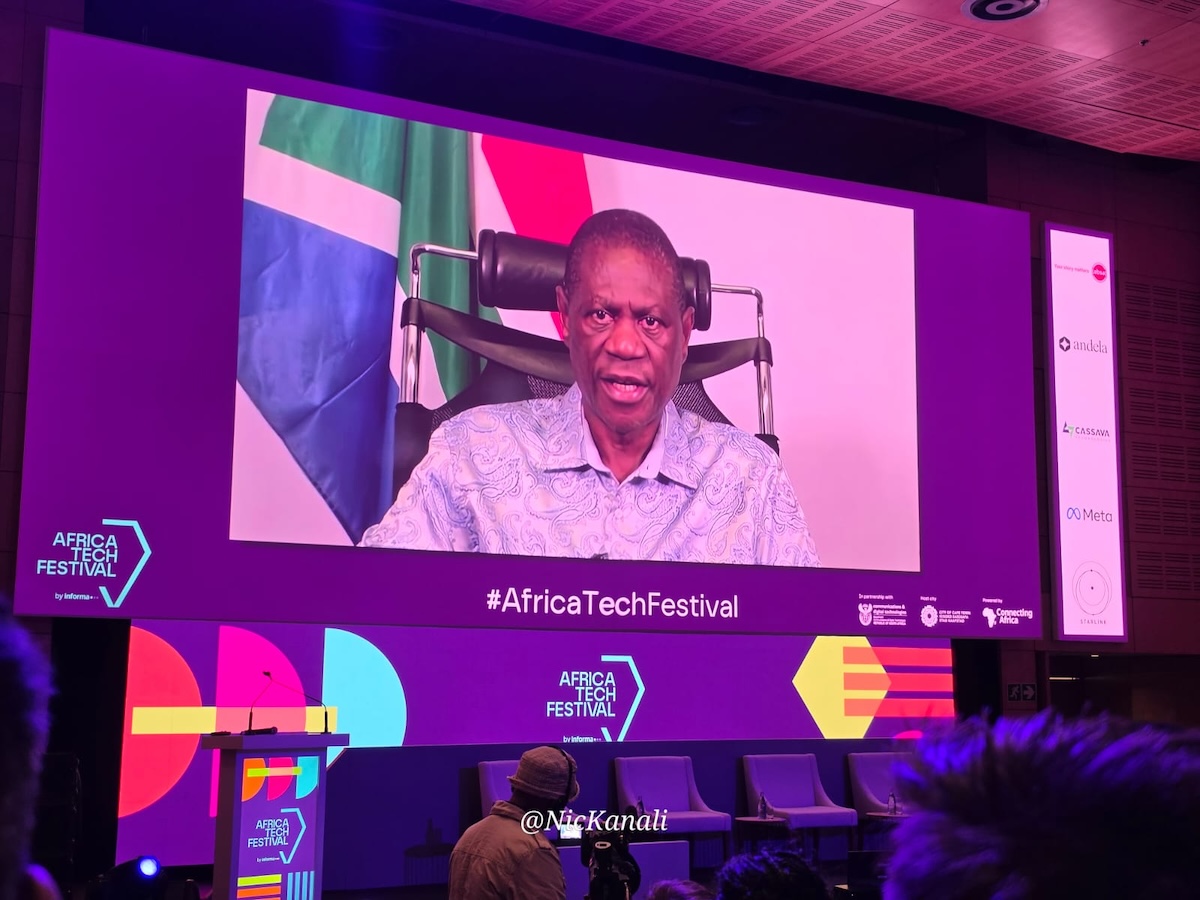
Africa must become a builder and exporter of artificial intelligence and other emerging technologies, not merely a consumer of tools developed elsewhere, South African Deputy President Paul Mashatile has said.
Officially opening the 29th Africa Tech Festival at the Cape Town International Convention Centre, Mashatile said the continent cannot rely on technologies “trained on data that does not reflect our realities and designed without our priorities in mind”.
“We must be innovators, builders and exporters of the technologies that will define the future,” he said.
He said every technological revolution rewards those who invest in people, embrace innovation and prepare for the future. “For perhaps the first time in modern economic history, Africa has an opportunity not to catch up, but to leapfrog,” he said.


Mashatile also warned of the challenges standing in the way. Millions of Africans still lack affordable and reliable broadband, digital skills shortages persist, and infrastructure gaps remain, particularly between urban and rural areas.
“The cost of connectivity remains too high for many households, while cyber security threats continue to grow in scale and complexity,” he said.
“If left unaddressed, these challenges risk creating a two-speed Africa: one connected, innovative and prosperous, and another excluded from the opportunities of the digital age. We should not allow this to happen.”
He said digital transformation must be inclusive and people-centred. “Technology alone does not transform societies; people do,” he said.
Mashatile outlined five priorities to guide Africa’s digital agenda.
The first is building the digital infrastructure of the future, including more data centres, expanded fibre and 5G networks, and secure, sovereign cloud capabilities. He said South Africa is already playing a leading role, hosting a significant share of the continent’s data centre capacity and remaining Africa’s largest cloud market. Cloud adoption alone is projected to unlock more than R185 billion (about US$11 billion) in economic value for South Africa by 2028, with small and medium-sized enterprises (SMEs) among the biggest beneficiaries.
However, he said no country can succeed alone, calling on governments, development finance institutions and the private sector to work together to close Africa’s connectivity gap and strengthen digital public infrastructure.
The second priority is investing in people. “Africa’s most valuable resource in the digital era is its human talent, not its natural resources,” Mashatile said. He said equipping young people with skills in AI, cyber security, data science, critical thinking and entrepreneurship would determine which countries succeed in the AI era.
The third is strengthening innovation ecosystems. Mashatile said Africa has a wealth of ideas in fintech, healthcare, education, agriculture and renewable energy, but too many ventures struggle to secure finance, access markets and navigate regulation.
“The focus needs to shift from merely celebrating innovation to actively commercialising it,” he said. “Rather than being a testing ground for foreign ideas, Africa should aspire to be a hub for transformative innovation on a global scale.”
The fourth is building trust in the digital economy through stronger cyber security, data protection, transparency and reliable payment systems. He also called for AI frameworks that protect rights and reflect Africa’s “values, languages and development priorities”.
“In other words, technology must also adapt to Africa,” he said.
The fifth is deepening regional integration. Mashatile said the African Continental Free Trade Area presents an opportunity to create a single digital market, supported by trusted data flows, interoperable payment systems and harmonised regulations.
“Our greatest advantage lies not in the size of individual markets, but in the strength of a connected continent,” he said.
Mashatile framed the shift as a generational responsibility.
“Our predecessors fought for political freedom. Our generation must secure economic transformation and lead Africa into technological leadership,” he said.
“Africa will not compete in the age of artificial intelligence through imitation. We will compete by solving our own challenges, harnessing our own talent, building our own capabilities and creating solutions that the world will want to use.”
The three-day festival, which runs until 19 November, brings together executives from telecoms, technology, finance and investment, including speakers from OpenAI, Meta, Amazon, MTN, Vodacom, Orange and Cassava Technologies.
Visit TECHTRENDSKE.co.ke for more tech and business news from across Africa and the world.
Follow us on WhatsApp, Telegram, Twitter, and Facebook, or subscribe to our weekly newsletter so you don’t miss future updates. Send tips to info@techtrendsmedia.co.ke

