
Africa’s AI needs more than GPUs, says Cassava’s Ziaad Suleman

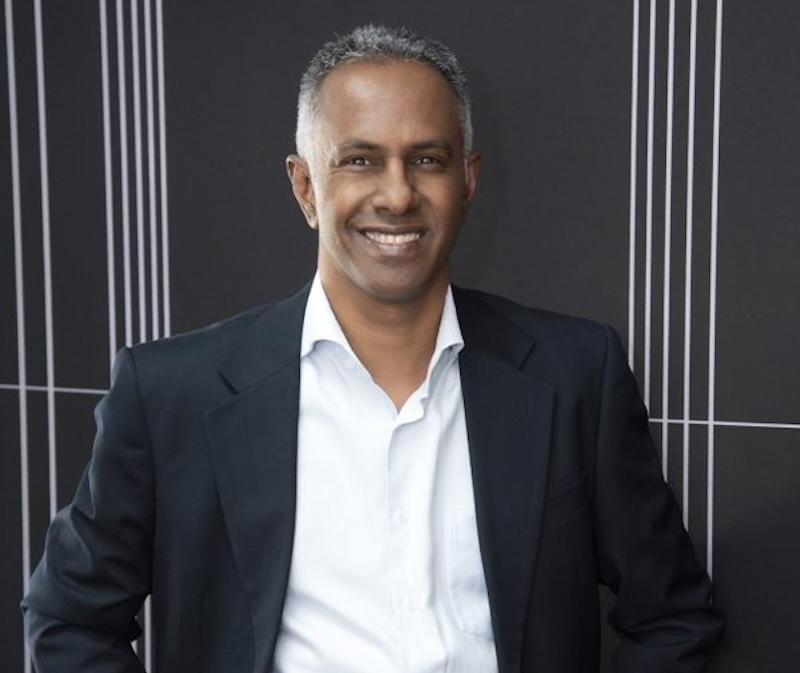
Cassava Technologies says Africa cannot build sovereign artificial intelligence on graphics processing units (GPUs) alone, arguing that the continent needs connectivity, data centres and compute that it controls end to end.
Speaking to TechTrends Media on the opening day of Africa Tech Festival 2026 in Cape Town, Ziaad Suleman, Senior Vice President and Chief Executive Officer of Cassava Technologies in South Africa and Botswana, said the company’s AI factory in Cape Town now runs 2,048 NVIDIA GPUs.
“This is true sovereignty coming to the African continent,” Suleman said.
He drew a clear line between data residency and data sovereignty, two terms he said are often confused. “Data residency is simply leaving your data in a particular location where it is resident. Data sovereignty means that you are operating in an environment where you can control that environment,” he said.


“We have the connectivity which we control. We have the data centres which we control on African soil. And now we have the GPUs and the computational power which we control. So that gives you the best level of sovereignty that you’re going to be able to get in today’s environment.”
Cassava describes itself as a digital transformation company built on infrastructure and value-added services. Suleman said the group operates about 120,000 kilometres of terrestrial fibre, alongside fixed wireless, satellite and undersea cable capacity. It also runs five data centres on the continent: two in Johannesburg, one in Cape Town, one in Kenya and one in Nigeria.
A partnership with Vodafone will take that to six with a facility in Egypt, and a Morocco site is planned. Cassava has also partnered with a Silicon Valley firm on quantum-safe encryption at the network level, which Suleman said prevents data leakage in transit.
“It’s all on African soil and it’s all within our control, which means that it cannot just be switched off by a foreign power where we have no control,” he said.
Asked which of compute, context and security is the biggest barrier for African businesses, Suleman rejected compute as the framing. “I wouldn’t say compute. I’d rather use the word infrastructure, because compute is part of infrastructure,” he said. “You can have all the compute, but if you don’t have the connectivity or the data centre, then ultimately you have a lopsided view.”
He said a supercomputer cannot operate without the right cooling, engineers, operating model and security. Building the Cape Town AI factory alone required 100 kilometres of internal fibre.
On who is using the facility, Suleman said customers range from researchers and enterprises to small businesses and hyperscalers, some of which take pure bare-metal capacity. “We don’t control the data. We provide the architecture and the ability to use it,” he said.
To make scarce and costly GPUs affordable for startups, he said Cassava bundles and discounts connectivity whose capital costs have already been recovered. Customers only “dip into the supercompute” when a workload needs it. “What’s important is to get the architecture right,” he said.
Suleman said global models used off the shelf leave Africa exposed. “Africa as a continent has always been reliant on a third-party factory that is controlled elsewhere. For the first time in an industrial revolution, we now have a level playing field,” he said.
“Why would we now want to leverage something that is far away, has latency, costs of foreign exchange, uncertainty around regulations, and the risk that it could be switched off at any point in time?”
He gave practical examples, including AI-driven fraud detection in banks and call centres where voice recognition can take a customer’s query in a local language and respond in the same language. That, he said, opens services to older customers who struggle with mobile phones.
Cassava’s AI Multi-Model Exchange (CAIMEx) gives developers access to multiple AI models through one platform. Suleman likened it to a multi-brand car dealership. “If you were trying to work out which car to choose and which is the best model to get the output, perhaps you’ll go to a dealership that sells multiple brands,” he said. “This is the benefit of choice.”
On whether data should leave the continent, Suleman said the decision comes down to risk appetite and that he favours hybrid models. “There’s absolutely nothing wrong with the cloud. But choose what you want to put in the cloud,” he said. Workloads covered by data residency rules, such as citizen data, must stay onshore or be held in an encrypted sovereign cloud that satisfies the regulator.
Suleman, who also chairs CollectiveX, South Africa’s national digital skills initiative, warned against mass-producing technical skills that the market does not need. “Instead of driving unemployment down, you actually create more unemployment,” he said. He urged African countries to match training to market demand and share skills across borders, so that South African talent can support Kenya and Nigeria and the reverse.
Cassava runs an AI academy and places its own staff in customer environments. “Human being and machine have got to work together in harmony in order to drive the outcome,” he said.
Asked which pillar would be solved first, Suleman said infrastructure already exists but must mature, security keeps changing, and local context remains critical. “The most important thing for me is not which is solved first, but rather growing all of that at the same pace so that they support and supplement each other.”
Looking ahead, Suleman pointed to new partnerships, including one with Mauritius Telecom. “We’re not sitting idle and we’re not sitting static,” he said. “Expect continued really good infrastructure, new applications, better data science and ultimately much more coverage.”
Visit TECHTRENDSKE.co.ke for more tech and business news from across Africa and the world.
Follow us on WhatsApp, Telegram, Twitter, and Facebook, or subscribe to our weekly newsletter so you don’t miss future updates. Send tips to info@techtrendsmedia.co.ke

