
Kenya releases KSh1.67 trillion through the Exchequer as Treasury bill redemptions hit KSh66.76 billion

Kenya’s government had issued KSh1.57 trillion through the Exchequer by October 30, 2026, as domestic borrowing continued to supply a substantial share of public financing and short-term debt repayments added to the Treasury’s cash requirements. A Central Bank of Kenya (CBK) Treasury bill auction recorded KSh66.76 billion in maturing securities, the largest redemption amount in the supplied auction series for both the current financial year and calendar year.
The National Treasury’s statement of actual revenues and net Exchequer issues shows that cumulative cash issues reached KSh1.567 trillion against actual receipts of KSh1.657 trillion. The resulting Exchequer balance stood at KSh89.78 billion.
Domestic borrowing contributed KSh677.20 billion to actual receipts, while tax revenue generated KSh850.54 billion. The figures provide a picture of the resources supporting government operations during the opening months of the 2026/27 financial year, as the Treasury manages existing debt obligations, transfers to counties and expenditure across national government institutions.
Treasury cash issues reach KSh1.57 trillion
The National Treasury recorded KSh1.656 trillion in cumulative receipts by October 30, comprising tax revenue, non-tax revenue, borrowing and other financing sources.

Tax collections accounted for KSh850.54 billion, while non-tax revenue contributed KSh31.68 billion. Domestic borrowing generated KSh677.20 billion, with external loans and grants providing another KSh65.79 billion. Other domestic financing contributed approximately KSh2.11 billion, while the opening balance from July 1, 2025, stood at KSh29.21 billion.
The cumulative receipts compared with total Exchequer issues of KSh1.567 trillion, leaving a reported balance of KSh89.78 billion.
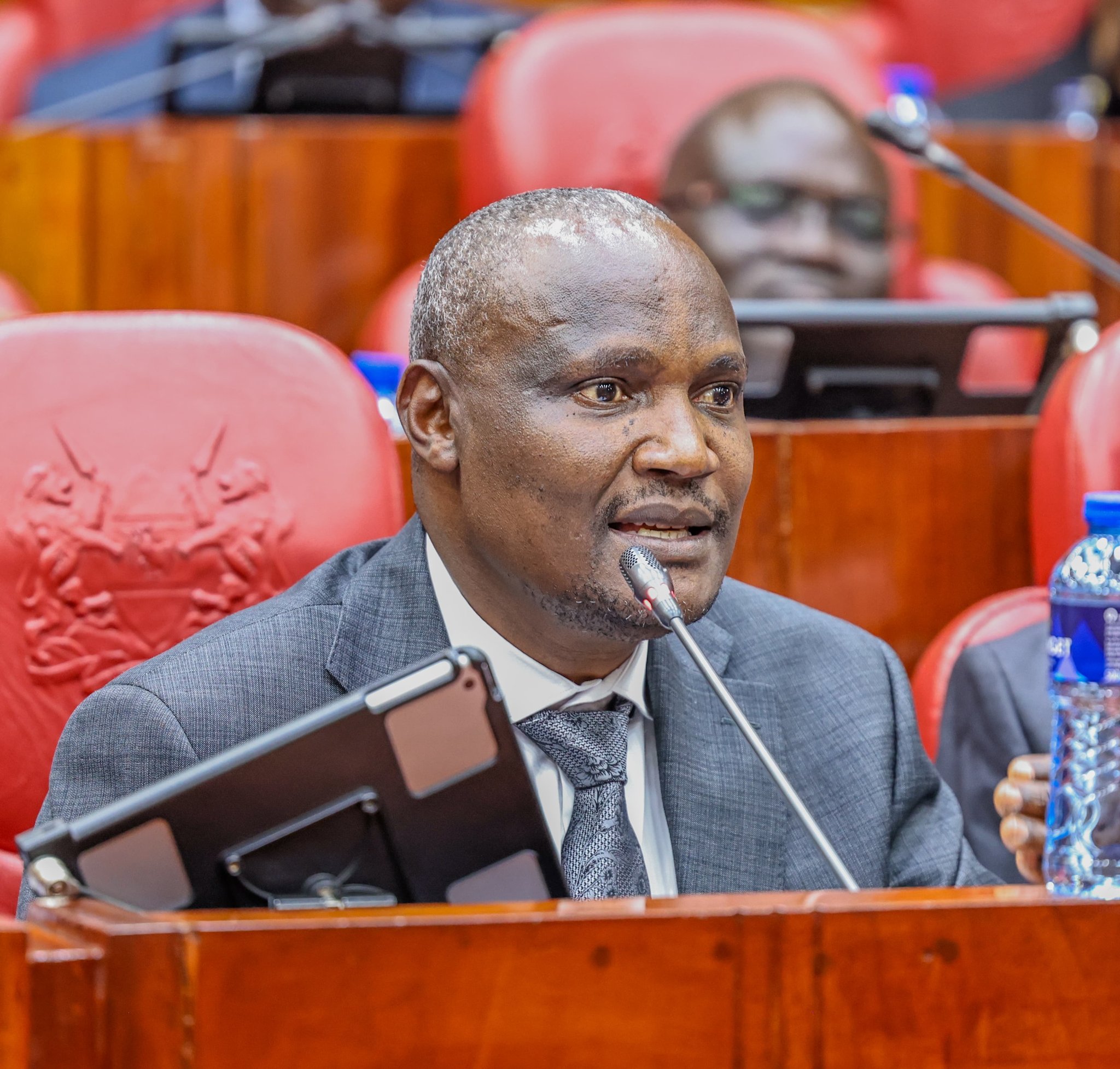
The statement, issued by the National Treasury and signed by Cabinet Secretary John Mbadi on November 12, 2026, compares original budget estimates with actual receipts and cash issues across ministries, departments, agencies and county governments.
The original estimate for total receipts stood at approximately KSh5.18 trillion. Actual receipts had reached KSh1.66 trillion by the end of October.
Domestic borrowing remains central to government financing
Domestic borrowing accounted for approximately 40.9% of the Treasury’s cumulative actual receipts, making it the second-largest source of financing after tax revenue.
The original budget estimate for domestic borrowing was KSh1.568 trillion. The Treasury’s explanatory note breaks this estimate into KSh919.36 billion in net domestic borrowing and KSh648.78 billion in internal debt redemptions to be rolled over.
This distinction is important when examining the government’s financing requirements. Net borrowing represents additional financing, while the rollover component relates to replacing existing debt as it matures.
The Treasury’s actual domestic borrowing receipts stood at KSh677.20 billion by October 30.
The government’s reliance on domestic financing has implications for commercial banks and other institutional investors that hold Treasury bills and bonds. Government securities provide an investment channel for these institutions, but government financing requirements also compete with other borrowers for funds available in the domestic market.
Central Bank of Kenya Governor Kamau Thugge has previously warned that heavy government borrowing could undermine efforts to reduce commercial lending rates. The CBK has argued that lowering the government’s domestic borrowing requirement would create more room for private-sector credit.
Family Bank’s nine-month financial results provide an illustration of the role government securities play in commercial banking. The lender reported KSh8.48 billion in interest income from government securities for the period to September 2026, up 52% from KSh5.58 billion a year earlier. Government securities accounted for 38.5% of its total interest income.
KSh66.76 billion in Treasury bills falls due
The Treasury’s domestic financing position comes as the government faces substantial short-term debt maturities.
A CBK Treasury bill auction document dated November 19, 2026, records KSh66.76 billion in redemptions across the 91-day, 182-day and 364-day securities.
The 91-day bills accounted for KSh30 billion, while the 182-day securities contributed KSh8.71 billion. Another KSh28.04 billion was due from the 364-day tenor.
The redemption amount was the largest in the supplied auction series for the current financial year and calendar year. The previous comparable peaks were KSh61.29 billion on February 9, 2026, and KSh59.47 billion on June 8, 2026.
The auction attracted KSh44.09 billion in bids against KSh28 billion offered. The CBK accepted KSh43.70 billion, producing an overall performance rate of 157.48% and a bid-to-cover ratio of 1.01.
However, accepted bids were below the amount of securities falling due. The auction therefore resulted in an implied net repayment of approximately KSh23.06 billion.
The 91-day tenor attracted the strongest demand, receiving KSh22.68 billion in bids against KSh8 billion offered. The 182-day securities attracted KSh8.86 billion against KSh10 billion offered, while the 364-day bills received KSh12.55 billion against a similar KSh10 billion offer.
Accepted interest rates declined slightly across all three maturities compared with the preceding auction. The weighted average rates stood at 8.7422% for the 91-day bills, 8.8286% for the 182-day securities and 8.9943% for the 364-day tenor.
The next auction, scheduled for November 26, has KSh28 billion in Treasury bills on offer against scheduled redemptions of KSh53.41 billion. This creates another potential net repayment of approximately KSh25.41 billion based on the announced amounts.
The CBK has indicated that the actual amount realised will depend on the National Treasury’s immediate liquidity requirements.
County governments receive KSh136.96 billion
The Treasury statement records KSh136.96 billion in actual cash releases to county governments against their combined equitable share allocation of KSh428 billion.
Nairobi City had the largest allocation at KSh22.11 billion, with KSh7.08 billion released by October 30. Nakuru had an allocation of KSh14.90 billion, followed by Turkana at KSh14.27 billion and Kakamega at KSh14.07 billion.
Other substantial allocations included Kiambu at KSh13.51 billion, Machakos at KSh10.51 billion, Meru at KSh10.90 billion and Kisii at KSh10.11 billion.
The county allocation table provides both the approved estimates and actual cash releases for each devolved administration, showing the distribution of national transfers during the financial year.
The Treasury also identifies KSh71.09 billion in additional allocations under the County Governments Additional Allocations Act, 2026. These funds are to be disbursed through the respective ministries, departments and agencies.
County financing has also featured in the government’s outstanding payment obligations. TechTrendsKE reported on November 20 that county trade payables stood at KSh172.5 billion as of June 2026, while county governments collected KSh96.1 billion in own-source revenue during FY2025/26.
Ministry releases show how government spending is distributed
The Treasury’s recurrent Exchequer table records KSh560.58 billion in actual cash issues against original estimates of approximately KSh1.72 trillion.
The Ministry of Defence recorded the largest actual recurrent releases among the listed national government departments, receiving approximately KSh76.56 billion against an original estimate of KSh233.92 billion.
The State Department for Higher Education and Research received KSh59.22 billion against KSh98.12 billion, while the State Department for Basic Education received KSh34.97 billion against an allocation of KSh116.83 billion.
The State Department for Internal Security and National Administration recorded KSh25.30 billion in actual issues against an original estimate of KSh52.88 billion.
Other departments had substantially smaller cash releases. The Office of the President received KSh1.47 billion against an allocation of KSh6.17 billion, while the Office of the Prime Cabinet Secretary received approximately KSh336.71 million against KSh1.14 billion.
The National Treasury itself recorded KSh15.69 billion in actual recurrent issues against an original estimate of KSh58.44 billion.
The figures cover recurrent Exchequer issues rather than the full expenditure of each institution. They provide a breakdown of cash released for government operations across the national administration.
Pending bills add to the Treasury’s financing commitments
Government cash requirements also extend beyond the expenditure recorded in the October Exchequer statement.
TechTrendsKE reported on November 20 that pending-bill claims had reached KSh664.8 billion, with KSh155.34 billion recommended for settlement. The report also put roads-sector claims settled through securitisation at KSh80.3 billion and cited KSh23.74 billion in claims approved by Cabinet during October.
These outstanding obligations add to the government’s financing commitments, particularly where contractors and suppliers are waiting for payments from public institutions.
The government’s medium-term budget plans also point to substantial financing requirements. TechTrendsKE’s November 4 reporting put proposed expenditure and net lending for FY2027/28 at KSh5.416 trillion against projected revenue of KSh4.004 trillion, with a projected fiscal deficit of approximately KSh1.35 trillion.
A subsequent November 20 report detailed revisions to the financing framework, reducing projected net domestic financing from KSh929.1 billion to KSh658.9 billion while increasing net foreign financing from KSh423.8 billion to KSh570 billion.
The proposed changes would lower the domestic financing requirement in the next financial year while increasing the contribution expected from external sources.
For the current financial year, the Treasury’s October statement records KSh677.20 billion in actual domestic borrowing receipts, alongside KSh850.54 billion in tax revenue and KSh65.79 billion in external loans and grants.
The November Treasury bill auction adds another measure of the government’s short-term financing activity, with KSh66.76 billion in maturities and an implied KSh23.06 billion net repayment. The next auction carries another KSh53.41 billion in scheduled redemptions as the Treasury continues managing its domestic debt obligations.
Visit TECHTRENDSKE.co.ke for more tech and business news from across Africa and the world.
Follow us on WhatsApp, Telegram, Twitter, and Facebook, or subscribe to our weekly newsletter so you don’t miss future updates. Send tips to info@techtrendsmedia.co.ke

