
CBK looks beyond shilling stability as it pushes reforms to make loans cheaper and strengthen Kenya's financial system

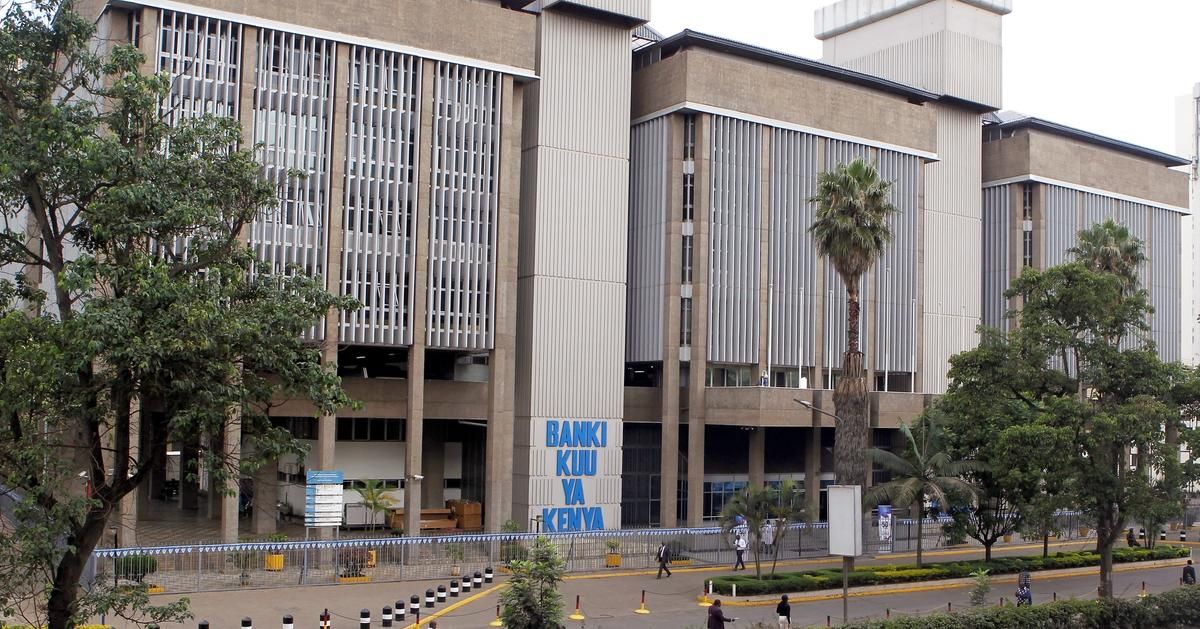
The Central Bank of Kenya (CBK) is pursuing a broader programme of financial sector reforms after restoring stability to the Kenyan shilling, bringing inflation within its target range and rebuilding foreign exchange reserves following the economic pressures of 2023 and early 2024.
Governor Dr Kamau Thugge says the next phase of the central bank’s work will focus on improving how monetary policy influences commercial lending rates, strengthening banks’ capital positions and developing payment infrastructure that can connect financial institutions across Kenya and the wider African region.
The agenda reflects a change in the challenges facing the regulator since Thugge took office on June 19, 2023. At the time, Kenya was dealing with a rapidly depreciating currency, inflation above the central bank’s target range and uncertainty over its ability to meet a $2 billion Eurobond maturity in 2024. The interventions that followed helped restore confidence in the foreign exchange market, but they also exposed weaknesses in the transmission of monetary policy, particularly the speed at which commercial banks adjust lending rates when the central bank changes its policy position.
Thugge’s account of the period since his appointment provides a useful starting point for understanding the reforms now underway. His priorities extend from the pricing of individual loans to the capital strength of financial institutions and the infrastructure supporting digital payments.



From currency crisis to two years of relative stability
When Thugge assumed office, the Kenyan shilling was under substantial pressure from external financing conditions and domestic economic challenges. He attributed part of the pressure to monetary tightening in the United States following the inflationary effects of pandemic-era stimulus, which widened the interest rate differential between Kenya and developed economies and encouraged capital to flow towards dollar-denominated assets.
CBK initially responded by supplying dollars to the foreign exchange market, but Thugge said the country’s reserves declined by approximately $2 billion in 2022 and another $1 billion in 2023. At the same time, uncertainty surrounding the approaching $2 billion Eurobond maturity encouraged businesses and households to move their shilling deposits into foreign currency accounts, adding to pressure on the exchange rate. The shilling eventually reached approximately KSh161 against the US dollar in January 2024.
Inflation was another major concern. Kenya’s inflation rate had reached 9.6% in October 2022, exceeding CBK’s target range of 5% plus or minus 2.5 percentage points. When Thugge took office, inflation remained above the upper limit of that range, prompting the Monetary Policy Committee to tighten monetary policy aggressively.
CBK raised the Central Bank Rate (CBR) by 100 basis points in June 2023, followed by another 200 basis points in December and 50 basis points in February 2024. Thugge said the increases were intended to address inflationary pressures while narrowing the interest rate differential with developed economies, which had contributed to pressure on the shilling.
The central bank also introduced changes to the foreign exchange market to improve liquidity and price discovery. These included allowing electronic trading, reducing the minimum interbank transaction size counted towards the market from $500,000 to $100,000 and changing currency swap tenors for foreign counterparties from one year to six months. For banks within the East African Community, the swap tenor requirement was reduced from six months to zero.
Another measure involved removing the indicative exchange rate, which was not based on actual transactions, leaving a single transaction-based exchange rate. Previously, the indicative rate and rates quoted by commercial banks could differ by as much as KSh8, according to Thugge.
The government also addressed the approaching Eurobond maturity through liability management. In February 2024, Kenya issued a $1.5 billion Eurobond, which Thugge said was used to cover part of the $2 billion obligation. An infrastructure bond issued during the same week also attracted foreign investment, bringing additional foreign exchange into the market.
The combined measures helped the shilling recover from approximately KSh161 to around KSh130 within six weeks. Thugge said the currency has remained broadly stable around KSh129–130 since March 2024, describing this as the longest period of exchange rate stability since Kenya liberalised its foreign exchange market.
The recovery also allowed CBK to rebuild reserves after the losses experienced in the preceding two years. Thugge attributed the improvement to renewed investor confidence, foreign capital inflows and balance of payments surpluses, which he said enabled Kenya to accumulate approximately $1.4 billion in 2024 and $2.4 billion in 2025. He projected a further accumulation of up to $2.5 billion in 2026.
Inflation also declined following the monetary tightening and improvements in the foreign exchange market. According to the governor, inflation fell below 5% in April 2024 and remained below that level until the inflationary pressures associated with developments in the Middle East in 2026.
The stabilisation process came with higher borrowing costs. Thugge acknowledged that aggressive monetary tightening affected private sector credit expansion as commercial banks increased lending rates in response to the higher policy rate. Once CBK became confident that exchange rate and inflation stability had been restored around August 2024, it began easing monetary policy, lowering the CBR by a cumulative 425 basis points over 10 consecutive Monetary Policy Committee meetings.
How CBK is changing the way banks price loans
One of the central challenges Thugge identifies is the uneven response of commercial banks to changes in the central bank’s policy rate. He said lenders were relatively quick to increase borrowing costs when CBK raised interest rates but became more reluctant to reduce lending rates when the central bank started easing monetary policy.
This prompted CBK to work with commercial banks on a risk-based credit pricing model intended to make monetary policy transmission more consistent. Under the framework, variable-rate loans denominated in Kenya shillings use a common reference rate across commercial banks, replacing the different reference rates previously applied by individual lenders.
The reference rate is the Kenyan Shilling Overnight Interbank Average, commonly known as KSONIA. It reflects the overnight interbank lending market and has converged with the Central Bank Rate following changes to CBK’s monetary policy implementation framework.
Thugge explained that the pricing model combines three main elements: the common reference rate, a bank’s operating costs and shareholder return requirements, and the individual risk profile of the borrower. Banks can therefore apply different margins based on the cost of operating their businesses and the credit risk associated with each customer, while using the same underlying reference rate.
The relationship between KSONIA and the CBR is important because it determines how effectively changes in monetary policy reach the commercial lending market. Thugge said the two rates were virtually indistinguishable at the time of the interview, with both standing at approximately 8.75%. This means that when CBK changes its policy rate, the interbank rate is expected to move alongside it, providing a common foundation for commercial loan pricing.
The governor said the objective is to ensure that lending rates respond in both directions. When CBK raises its policy rate to reduce aggregate demand and contain inflation, borrowing costs should increase. When the central bank lowers rates to stimulate economic activity, commercial lending rates should also decline more quickly.
The framework therefore places greater emphasis on how commercial banks translate monetary policy decisions into the actual cost of borrowing for households and businesses. Its effectiveness will be important to the wider economic recovery because lower policy rates have limited benefits for borrowers if commercial lending costs remain elevated.
Thugge said CBK would continue refining its monetary policy implementation framework to improve the speed and effectiveness of this transmission. The central bank’s broader objective remains price stability, but the governor also wants monetary policy decisions to have a more direct effect on the financial conditions experienced by businesses and consumers.
Bank capital requirements put lenders under pressure
Alongside the lending rate reforms, CBK is pursuing a major increase in the minimum capital requirements for commercial banks. Thugge said the regulator has raised the minimum requirement tenfold, from KSh1 billion to KSh10 billion, with the original implementation framework requiring banks to meet the new threshold by 2029.
The central bank’s argument is that stronger capital positions will enable lenders to withstand financial shocks, fund larger projects and compete more effectively across East Africa and the wider sub-Saharan African market. Thugge identified cybersecurity threats and climate-related financial risks among the pressures requiring banks to maintain stronger balance sheets.
The capitalisation programme has, however, become a point of disagreement between CBK and the National Treasury. TechTrendsKE reported on November 9 that Treasury Cabinet Secretary John Mbadi and Thugge were divided over the implementation timetable, with Treasury seeking to extend the final KSh10 billion deadline to December 2032.
The same report said 14 commercial banks were below the KSh5 billion capital threshold at the end of June 2026, while seven had also fallen short of the earlier KSh3 billion threshold. A separate TechTrendsKE report published on October 31 detailed Thugge’s defence of the capital requirements before lawmakers, including his position that one or two banks could struggle to meet the KSh5 billion milestone by December 2026.
The disagreement reflects the difficulty of balancing stronger financial institutions with the cost of meeting higher regulatory requirements. For CBK, capitalisation is intended to give banks sufficient capacity to absorb losses and support larger financing needs, particularly as financial risks become more complex.
The issue also extends to how banks manage their capital and shareholder distributions. CBK’s broader regulatory agenda includes additional requirements for systemically important banks, alongside measures governing capital buffers and dividends.
Thugge’s argument is that well-capitalised institutions can support economic activity more effectively and compete with larger financial institutions elsewhere in the region. The reforms therefore form part of a wider effort to strengthen the banking system while improving its capacity to finance businesses and infrastructure.
Treasury borrowing complicates the push for cheaper credit
The cost of credit is also influenced by government borrowing, an issue Thugge raised in his parliamentary engagements. In a report published on October 31, TechTrendsKE detailed the governor’s warning that heavy domestic borrowing by the National Treasury could undermine efforts to reduce commercial lending rates.
Government borrowing creates competition for available domestic financing, affecting the amount of credit available to businesses and other private sector borrowers. Even when CBK reduces its policy rate, commercial lending costs can remain under pressure if the government continues to demand substantial financing from the domestic market.
This adds a fiscal dimension to the monetary policy reforms discussed in the governor’s interview. The KSONIA-based pricing framework is intended to improve the relationship between the policy rate and commercial lending rates, but the broader cost and availability of financing are also influenced by government borrowing requirements.
The implication is that monetary and fiscal policy need to work together if Kenya is to achieve more affordable credit. Reducing the government’s demand for domestic financing would support the central bank’s efforts to improve credit conditions for private businesses and households.
The issue is particularly relevant to small and medium-sized enterprises, which depend heavily on commercial bank financing to fund working capital, expansion and investment. Lower lending rates would help reduce financing costs, but the availability of credit also depends on banks’ liquidity, capital positions and assessment of individual borrowers.
CBK wants a more competitive banking market
CBK is also working with the Kenya Bankers Association to address practical barriers that make it difficult for borrowers to move secured loans between lenders. According to a TechTrendsKE report published on October 31, the regulator and the banking association are developing an electronic collateral registry intended to simplify the transfer of collateral when customers switch banks.
Thugge told Parliament that the proposed system would reduce the administrative and legal costs associated with transferring secured loans. This could make it easier for borrowers to move to lenders offering more favourable borrowing terms, strengthening competition across the banking sector.
The initiative complements the risk-based credit pricing framework by addressing another aspect of the relationship between banks and their customers. A common reference rate can improve the transparency of loan pricing, while easier collateral transfers can give borrowers greater flexibility when comparing financing options.
For commercial banks, this creates additional pressure to compete on the margins they charge, the services they provide and their assessment of customer risk. Borrowers would have more room to consider alternatives when another institution offers a better combination of pricing and service.
Together, the KSONIA framework and the collateral registry form part of CBK’s effort to improve the functioning of the credit market. They also connect the central bank’s monetary policy objectives with practical changes in how customers access financial services.
Interoperable payments feature in CBK’s next phase of reforms
Payments infrastructure is another priority Thugge wants CBK to pursue. He said the central bank is working towards a fast and interoperable retail payments system that would operate across Kenya, extend into the East African Community and potentially connect with other African markets.
Kenya already has a large digital payments ecosystem, supported by mobile money services and commercial bank platforms. According to TechTrendsKE’s October 5 report on the proposed National Payment System Bill 2026, mobile money subscriptions had reached 54.01 million by June 2026. The same report said M-PESA processed 46.4 billion transactions worth KSh41.7 trillion in the financial year ended March 2026.
The proposed National Payment System Bill 2026 would also expand CBK’s supervisory powers over payment service providers. The legislation seeks to replace the existing 2011 framework, giving the regulator broader authority to inspect payment companies, access their records and premises, and intervene where providers pose risks to customers or financial stability.
These regulatory changes are relevant to Thugge’s ambition for a more connected payments ecosystem. As banks, mobile money operators and other payment providers become part of a more interconnected financial environment, CBK wants a framework that supports interoperability while strengthening oversight of the institutions involved.
Regional payment connectivity is also becoming relevant to commercial banking operations. On November 10, TechTrendsKE reported that KCB Bank Tanzania had integrated PayPal into its mobile banking application, giving customers another channel for receiving international payments. The development illustrates how financial institutions are expanding the services available through digital banking platforms, while Thugge’s proposal points towards broader connectivity across national payment systems.
The governor said CBK wants to finalise work on the fast retail payments framework, with interoperability extending beyond Kenya’s borders. Such infrastructure would support more efficient movement of money between participating institutions and markets, strengthening the foundations for regional digital commerce and financial services.
Artificial intelligence enters the central bank’s operations
CBK’s institutional reform agenda also includes the use of artificial intelligence and alternative data to improve economic analysis and operational efficiency. A TechTrendsKE report published on October 31 said the central bank had identified almost 300 AI use cases across 14 departments.
The applications include machine learning for inflation forecasting, economic nowcasting using alternative datasets and analysis of mobile payments information. CBK is also exploring the use of online supermarket prices to supplement conventional inflation monitoring, giving researchers additional information about price movements in the economy.
Other applications involve satellite data, including night-time lights, electricity consumption and vegetation patterns, which can help provide insights into economic activity. These datasets could complement traditional economic indicators and give policymakers additional information when assessing developments in the economy.
The work connects with Thugge’s wider emphasis on improving the central bank’s capacity to deliver its constitutional responsibilities. Better economic intelligence supports monetary policy decisions, while more efficient internal processes can strengthen the institution’s ability to supervise the financial system.
The governor also wants the Institute of Monetary Studies to become a centre of excellence serving CBK employees, commercial bank staff and financial sector professionals across the region and Africa. He said the institution is implementing a performance management framework and a young professionals programme to attract talented Kenyans and strengthen its technical capacity.
Thugge’s broader priorities remain price stability, financial stability, reserve management and currency issuance. His agenda also includes strengthening the banking sector, improving payment infrastructure and ensuring that CBK has the expertise needed to manage the demands facing modern financial institutions.
The reforms place the central bank at the centre of several interconnected changes in Kenya’s financial system, from the way commercial banks determine borrowing costs to the capital they must maintain and the infrastructure through which customers and businesses move money. For Thugge, sustaining the stability achieved since 2024 will depend partly on how effectively these changes translate into a stronger banking sector, more competitive credit markets and a payments system capable of supporting economic activity across the region.
Go to TECHTRENDSKE.co.ke for more tech and business news from the African continent and across the world.
Follow us on WhatsApp, Telegram, Twitter, and Facebook, or subscribe to our weekly newsletter to ensure you don’t miss out on any future updates. Send tips to editorial@techtrendsmedia.co.ke

