
Safaricom gives Vodacom greater scale, but the acquisition comes at a cost

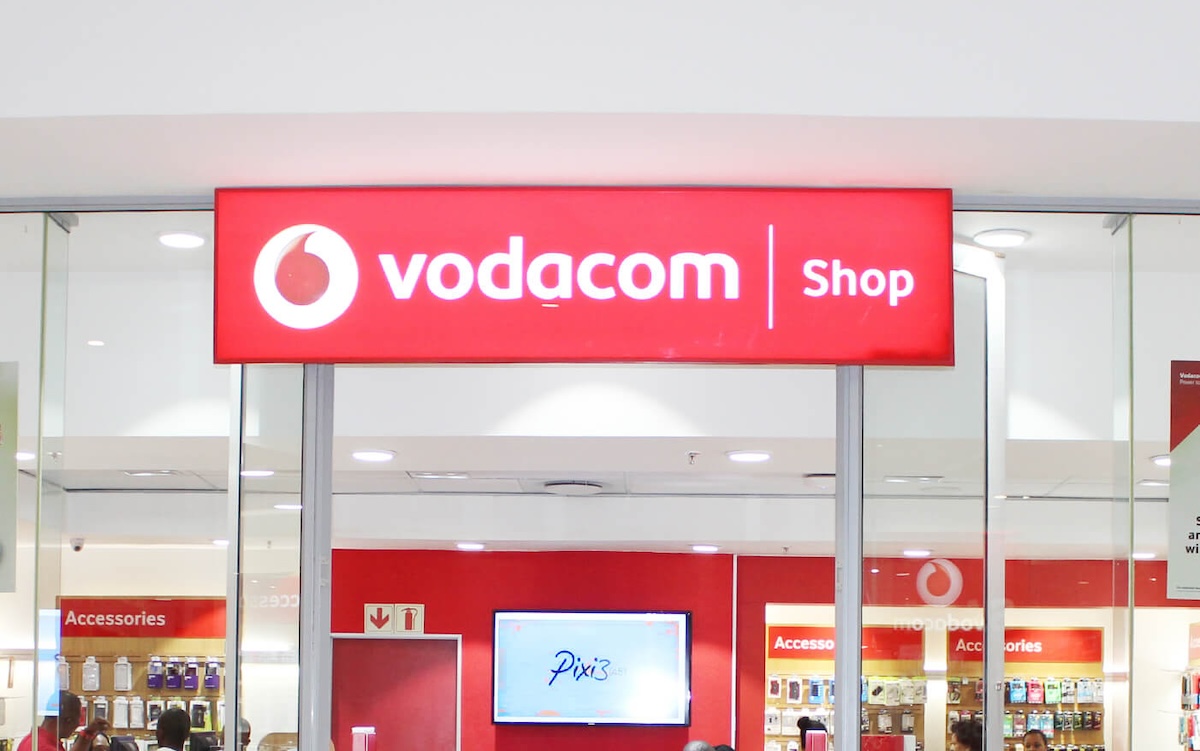
Vodacom Group’s earnings have expanded sharply following its consolidation of Safaricom, but results from Airtel Africa and MTN Group show that the wider telecommunications industry is also generating stronger returns from data, mobile money and operating efficiencies.
Vodacom increased earnings before interest, taxes, depreciation and amortisation (EBITDA) by 40% to R42.7 billion (US$2.6 billion) in the six months ended 30 September 2026. Group revenue rose 25.6% to R102.5 billion, while service revenue increased 29.4% to R85.1 billion.
The reported growth includes Safaricom, which became a Vodacom subsidiary on 30 June 2026 after the South African operator raised its stake to 55%. However, the reported figures do not capture a full six months of Safaricom’s contribution. On a pro-forma basis, assuming Safaricom had been consolidated throughout the comparative period, Vodacom’s EBITDA grew by 18%, while service revenue increased by 13.3%.
That distinction changes how the results compare with its regional competitors. Airtel Africa reported 23.5% growth in underlying EBITDA in constant currency for its September half-year, while MTN Group recorded 22.9% growth over nine months. Both businesses are expanding without the same Safaricom consolidation effect that lifted Vodacom’s reported figures.



Safaricom expands Vodacom’s financial scale
Safaricom brings a large telecommunications and financial services operation into Vodacom’s consolidated business. Its own half-year results show service revenue of KSh226.1 billion, up 13.1%, and EBITDA of KSh129.2 billion, an increase of 27.5%. Net income rose 35.9% to KSh58.2 billion, while operating free cash flow increased 59.1% to KSh74.5 billion.
The service revenue figure covers Safaricom’s group operations in Kenya and Ethiopia. Kenya contributed KSh216 billion, while the Ethiopian business generated KSh10.6 billion. The distinction matters because the two markets are at different stages of development, with Ethiopia still reporting operating losses despite rapid revenue growth.
Safaricom Ethiopia’s service revenue increased 71.6%, while its EBITDA loss narrowed by 96.5% to KSh434.4 million. The business nevertheless recorded an EBIT loss of KSh11.4 billion and a net loss of KSh8.8 billion. Safaricom has set an EBITDA breakeven target for the end of its 2027 financial year.
The Kenyan operation remains the larger earnings contributor. Its service revenue, mobile money activity and customer base give Vodacom additional exposure to a market where telecommunications and financial services are closely connected.
Vodacom’s total customer base reached 250 million, an increase of 11.8%, with the group adding 19 million smartphone users. The expanded customer base gives the operator a larger platform for data consumption, digital services and financial products across its markets.
Mobile money is becoming central to telecoms earnings
The financial services business is one of the clearest areas where Safaricom strengthens Vodacom’s regional position. Vodacom’s financial services revenue increased 99% to R15.9 billion, although pro-forma growth was 19.2%. Its financial services customer base reached 108 million, up 15%, while the group’s combined platforms processed more than US$575.5 billion in transaction value over the preceding 12 months.
Safaricom’s M-PESA operation provides a substantial part of that opportunity. M-PESA revenue increased 13.6% to KSh100.1 billion in the half-year, while chargeable transactions rose 48.2% to 12.9 billion. Safaricom’s wider financial services revenue increased 55.3% to KSh7.1 billion.
The business had 17.5 million credit customers and 3.4 million money market fund customers. Ziidi, its investment product, held KSh25.6 billion in assets under management. In the year ended March 2026, M-PESA processed KSh41.68 trillion across 46.4 billion transactions, with 3.13 million merchants on its network.
The scale of these operations helps explain why mobile money has become a major earnings and customer-retention platform for African telecommunications groups. The services extend beyond person-to-person transfers into merchant payments, credit, savings, investments and business transactions.
MTN and Airtel Africa are pursuing similar opportunities. MTN reported 70.3 million active Mobile Money users in the nine months to September, with fintech transaction value reaching US$512.5 billion, an increase of 36.9%. Its fintech revenue grew 18.5%, excluding Airtime Advance.
Airtel Africa reported mobile money revenue of US$840 million for its six-month period, up 25.8% in constant currency. Its mobile money customer base reached 60.9 million, an increase of 22.4%, while annualised transaction value in the second quarter reached US$275 billion.
These transaction values cover different reporting periods and measurement bases, so they should not be treated as a direct ranking. They nevertheless demonstrate the scale of financial activity handled by the three operators and the importance of fintech to their growth strategies.
Airtel Africa and MTN show that earnings growth extends beyond Vodacom
Airtel Africa’s results provide the closest reporting-period comparison with Vodacom. The company reported revenue of US$3.823 billion for the six months ended 30 September 2026, an increase of 28.2% in reported currency and 20.8% in constant currency.
Underlying EBITDA rose 32.8% in reported currency and 23.5% in constant currency to US$1.921 billion. Profit after tax increased 20.5% to US$452 million, while the underlying EBITDA margin reached 50.3%.
Data revenue increased 28% in constant currency to US$1.571 billion. Airtel Africa had 89.9 million data customers, up 15%, and smartphone penetration reached 51.6%. The company invested US$657 million in capital expenditure during the period, more than doubling its spending against the previous comparative period.
The results show that Airtel’s earnings expansion is supported by increased data consumption and mobile money adoption, alongside network investment. Its leverage ratio also declined to 1.6 times, from 2.1 times, giving the company a different balance-sheet position from Vodacom following the Safaricom transaction.
MTN Group’s latest update covers the nine months ended 30 September 2026, rather than the six-month period reported by Vodacom and Airtel Africa. The company recorded R176.2 billion in service revenue, up 17.2% in constant currency, while EBITDA increased 22.9% to R86 billion. Its EBITDA margin reached 47.9%, an expansion of 2.8 percentage points.
MTN’s performance was supported by growth in Nigeria and Ghana. In Nigeria, third-quarter service revenue increased 19.7%, while EBITDA rose 32.8%. Ghana recorded third-quarter service revenue growth of 35.7% and EBITDA growth of 42.1%.
South Africa presented a more subdued revenue picture. MTN reported 1% service revenue growth over the nine months, but third-quarter EBITDA increased 7%, with the margin expanding 3.6 percentage points to 38.1%. The improvement followed cost restructuring and better operating efficiency.
The group’s nine-month free cash flow reached R22.4 billion, while net debt stood at 0.2 times EBITDA. These figures provide a contrast with Vodacom, whose debt increased substantially following the Safaricom transaction.
Acquisition financing changes Vodacom’s balance-sheet position
The Safaricom transaction has expanded Vodacom’s earnings base, but it has also increased the financial obligations attached to the group. Vodacom’s net debt reached R135.6 billion, an increase of R78.8 billion year on year. The company disclosed that R35 billion of debt was used to fund the transaction, including R9 billion through preference shares.
Vodacom also recognised R72.8 billion in fair value for its previously held interest in Safaricom as part of the acquisition accounting. The transaction’s financing and accounting effects are important when assessing the group’s reported earnings growth because the higher EBITDA base now sits alongside a larger debt position.
Vodacom generated R16.9 billion in operating free cash flow during the period and invested R13.3 billion in capital expenditure. Its group EBITDA margin increased to 41.6%, from 37.3% in the comparative period, reflecting the expanded group structure and improved performance across several markets.
The company declared an interim dividend of 355 cents per share, an increase of 7.6%. It has set a medium-term target of early-teens pro-forma EBITDA growth, a measure that provides a more useful reference point for assessing the business after Safaricom’s inclusion.
Airtel Africa and MTN offer contrasting examples of how earnings growth can translate into balance-sheet capacity. Airtel reduced leverage while increasing network investment, while MTN reported low net debt relative to EBITDA and strong free cash flow. Their positions do not remove the need for continued investment, but they show that the three operators are entering their next growth cycle with different financing constraints.
Legal dispute continues over Safaricom ownership
Vodacom’s expanded financial exposure to Safaricom remains subject to a legal dispute in Kenya. In September 2026, the High Court declared the government’s disposal of a 15% Safaricom stake null and void, citing concerns surrounding the process and approvals for the transaction.
Vodacom appealed the ruling. The Court of Appeal directed that the existing position be maintained pending the outcome of the appeal, while Vodacom said it remained Safaricom’s registered shareholder.
The transaction involved 8.01 billion shares acquired for KSh204.3 billion, alongside a KSh40.2 billion dividend-rights arrangement. Vodacom’s stake rose to 55%, while the Kenyan government retained a 20% holding.
Safaricom shareholders had also approved 14 special resolutions in July formalising governance arrangements associated with Vodacom’s majority ownership. These included provisions covering board appointments and the selection of the chief executive. Vodacom executives Mariam Cassim and Matimba Mbungela subsequently joined Safaricom’s board.
The legal challenge therefore remains relevant to the structure through which Vodacom exercises its ownership and governance rights. The financial results reflect Safaricom’s consolidation, but the court proceedings have not concluded.
Africa’s telecoms groups are relying on data and financial services for growth
The results from Vodacom, Airtel Africa and MTN point to a common commercial pattern. Data usage and mobile money are supporting revenue growth, while cost management and operational scale are helping earnings expand faster than revenue.
The markets producing that growth differ. Egypt is a major contributor to Vodacom, whose service revenue there increased 36.3% in local currency and EBITDA rose 31.3%. MTN’s strongest reported momentum came from Nigeria and Ghana, while Airtel Africa recorded growth across its data and mobile money businesses.
South Africa offers a useful contrast. Vodacom reported a return to growth in prepaid services and an EBITDA margin of 37.4% in its South African operation, its highest in several years. MTN also improved its South African EBITDA margin despite limited service revenue growth.
The differences become clearer when reported growth is separated from underlying performance. Vodacom’s 40% reported EBITDA increase reflects the addition of Safaricom to its consolidated results, while its pro-forma growth was 18%. Airtel Africa’s underlying EBITDA grew 23.5% in constant currency over six months, and MTN’s EBITDA increased 22.9% in constant currency over nine months.
The three groups are therefore expanding their earnings through a combination of connectivity, financial services and operating efficiencies, but their financial positions are not identical. Vodacom has acquired a larger platform through Safaricom and taken on additional debt. Airtel Africa has increased network investment while reducing leverage, and MTN has reported strong cash generation alongside low net debt.
For Vodacom, the longer-term measure will be whether Safaricom’s earnings and cash generation can support the enlarged group’s growth targets while absorbing the cost of the acquisition and navigating the outstanding ownership dispute in Kenya.
Go to TECHTRENDSKE.co.ke for more tech and business news from the African continent and across the world.
Follow us on WhatsApp, Telegram, Twitter, and Facebook, or subscribe to our weekly newsletter to ensure you don’t miss out on any future updates. Send tips to editorial@techtrendsmedia.co.ke

