
Africa’s IPO market in 2026: Big share sales, foreign investors and deals that stalled

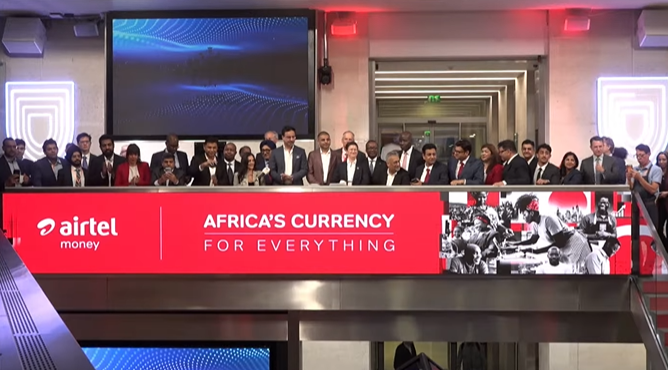
African IPOs in 2026 have produced an unusual mix of large share offerings, international listings, private equity exits and transactions that failed to reach the trading floor.
Dangote Petroleum Refinery attracted substantial demand through Nigeria’s domestic market, Airtel Money completed a London listing, and Kenya’s Quickmart brought major international institutions into its shareholder register. Elsewhere, OPay’s planned New York debut was terminated after its shares had been priced, while Dangote Cement postponed a proposed $1 billion London share sale because of unfavourable market conditions.
The contrasting outcomes offer a useful picture of the African IPO market in 2026. Companies have used public exchanges to raise fresh capital, provide liquidity to existing shareholders and widen their investor bases, although the transactions have served different purposes. The year’s activity also extends beyond the headline deals, with Kenya Pipeline Company completing a major offering, Family Bank joining the Nairobi Securities Exchange through a listing by introduction, and smaller companies accessing exchanges in Egypt and West Africa.
The distinction between companies raising money and existing investors selling shares is particularly important. Some of the largest transactions have involved shareholders monetising their holdings rather than businesses receiving fresh funding for expansion. That difference helps explain why the headline value of African equity offerings does not necessarily represent the amount of new capital entering African companies.

African companies take different routes to public markets
The year’s transactions demonstrate how African businesses are approaching public markets through different exchanges and ownership structures. Nigeria and Kenya have hosted substantial domestic offerings, while London has provided an international route for Airtel Money. OPay attempted to access US investors through the New York Stock Exchange, and Dangote Cement had been preparing a separate London transaction before putting its plans on hold.
The companies behind these deals also represent different parts of the economy. Refining, cement production, mobile payments, supermarkets, banking and energy infrastructure have all featured in the year’s public-market activity. This breadth matters because the transactions are attracting investors to businesses with different revenue models, growth prospects and capital requirements.
The structure of each offering determines who benefits financially. An IPO involving newly issued shares provides money to the company, which can use the proceeds for investment, debt reduction or other corporate requirements. A secondary offering transfers existing shares from shareholders to new investors, with the proceeds going to the sellers. Listings by introduction provide another route, allowing existing shareholders to trade their holdings publicly without a conventional public share subscription.
Dangote Refinery and Kenya Pipeline lead domestic offerings
Dangote Petroleum Refinery delivered the year’s standout Nigerian equity offering, seeking to raise approximately N2.15 trillion through the sale of 4.1 billion shares at N525 each. The offer opened in September 2026 and closed in late October following an extension intended to broaden participation across Africa. Reported applications reached approximately N6.4 trillion, representing substantial demand against the original offer size.
The refinery attracted applications from investors in 120 countries, including all 54 African nations, according to the offering reports. The transaction also demonstrated the potential of digital investment platforms to bring retail investors into a large public offering. However, the ambition to reach 10 million investors encountered access and regulatory challenges across national borders, illustrating the practical difficulties of distributing shares to investors across multiple African jurisdictions.
The offering stands out because it involved the sale of refinery shares through Nigeria’s domestic exchange, rather than an international secondary listing. It therefore provides a different picture from the transactions involving Airtel Money and Dangote Cement, where existing shareholders were seeking liquidity through international markets.
Kenya Pipeline Company provided another major example of domestic public-market activity after completing its IPO in March. The state-owned infrastructure operator offered 11.81 billion shares at KSh9 each, bringing a major regional energy infrastructure business to the Nairobi Securities Exchange after an 11-year gap in major Kenyan IPOs.
The transaction expanded public participation in a company that plays an important role in transporting petroleum products across Kenya and the wider region. Kenya Pipeline subsequently reported a 13% increase in profit after tax to KSh11.6 billion for the financial year ended June 2026, while revenue rose 9% to KSh42.98 billion. The company’s financial performance provides investors with an operating-business dimension to the listing, beyond the initial opportunity to acquire shares.
The ownership landscape around Kenya Pipeline also attracted attention after Aliko Dangote acquired a 24.7% stake for KSh42.5 billion. The transaction illustrates how public-market participation and strategic share acquisitions can bring different categories of investors into important African businesses.
Airtel Money takes African fintech to London
Airtel Money’s London listing demonstrated that international equity markets remain accessible to major African businesses with an established investor proposition. The mobile-money subsidiary of Airtel Africa made its London Stock Exchange debut in October at a reported valuation of approximately $7 billion. The secondary offering raised around $700 million for selling shareholders, giving international investors an opportunity to acquire exposure to one of the continent’s largest mobile-money operations.
The transaction provided liquidity to existing investors while creating a separate public-market profile for Airtel Money. Its valuation also reflected investor interest in African digital financial services, particularly businesses built around mobile payments and the distribution of financial products through telecommunications networks.
However, the initial market performance presented a more complicated picture than the subscription demand suggested. Airtel Money shares fell below their £1.96 offer price on the first trading day after initially rising following admission. The performance illustrated the difference between attracting investors during an offering and sustaining demand once shares begin trading on the open market.
That distinction matters when assessing the year’s IPO activity. An oversubscribed transaction can provide a successful outcome for selling shareholders, but the subsequent performance of the shares determines whether investors who acquired them at the offer price receive the returns they expected.
Quickmart IPO brings international investors into Kenya’s retail sector
Quickmart’s IPO provides one of the clearest examples of how a public offering can change the ownership of an established African business without delivering fresh capital to the company. The Kenyan supermarket retailer offered half of its existing shares, valued at approximately KSh15 billion, bringing new institutional and retail investors into its shareholder register.
The offer attracted applications worth approximately KSh18.4 billion against the KSh15 billion offering, resulting in a subscription rate of 122.7%. Investors applied for 2.455 billion shares against the two billion shares available, with 18,492 applications recorded. Foreign investors applied for approximately KSh3.57 billion worth of shares against an allocation of KSh1.2 billion, demonstrating substantial overseas demand for the retailer.
The final allocation gave foreign shareholders a combined 52.9% stake in Quickmart, up from 50.8% before the offering. Founders and local investors collectively retained 47.1%, compared with 49.2% previously. The change in ownership reflected the allocation of existing shares and the composition of the investors who participated in the offer.
Four international institutions acquired a combined 21.6% stake. The International Finance Corporation received 258 million shares, representing 6.45% of the retailer, while US-based 337 Frontier received 259.7 million shares, equivalent to 6.5%. UK fund manager RWC LLC acquired 173.15 million shares, or 4.32%, and the UK government-backed MOBILIST programme received 173.33 million shares, representing 4.33%.
Adenia Partners and its associates retained 25.4% after selling half of their original holding. The private equity firm had acquired a majority interest in Quickmart in 2019, following its earlier investment in Tumaini in 2018. The two businesses were subsequently consolidated under the Quickmart brand, creating a larger retailer that could attract institutional investment through a public offering.
The transaction also provided a partial exit route for Adenia while bringing new international shareholders into the business. Five founding shareholders attempted to acquire an additional 118.6 million shares worth approximately KSh889.9 million but received no allocation following the oversubscription. Quickmart’s implied valuation stood at approximately KSh30 billion, equivalent to around 19.9 times its FY2025 statutory net profit.
The retailer’s financial position helps explain the interest in its shares. Quickmart reported revenue of KSh50.43 billion in 2025, an increase of 9.3%, while statutory net profit rose 33% to KSh1.51 billion. It had 72 outlets across 16 counties and employed more than 8,000 people by August 2026. The company also reported adjusted profit after tax of KSh1.7 billion, a separate measure from its statutory earnings.
Quickmart’s ownership changes have implications beyond the company itself. Foreign investors already have significant exposure to Kenya’s largest supermarket chains, with Mauritius-based IBL Group leading a consortium that owns 51% of Naivas, while UAE-based Majid Al Futtaim controls Carrefour Kenya. Naivas held an estimated 31% of the supermarket market in 2025, compared with approximately 15% for Quickmart and 14% for Carrefour.
The three retailers accounted for an estimated 60% of Kenya’s supermarket revenue in 2025. Naivas reported revenue of KSh123.66 billion for the financial year ended June 2026, while its net profit increased 41.7% to KSh3.37 billion. Carrefour Kenya recorded revenue growth of 13.7% to AED1.386 billion in 2025, according to Majid Al Futtaim’s reported figures.
The concentration of foreign investment across the three largest supermarket operators places international shareholders in a substantial position within Kenya’s modern retail industry. Their investments have different structures and objectives, but the Quickmart IPO adds another major international institutional presence to a sector where overseas capital already plays an important role.
OPay and Dangote Cement expose the risks of international listings
While Airtel Money completed its London listing, OPay’s attempt to access the New York Stock Exchange ended before trading began. The SoftBank-backed payments company priced an IPO of 16 million American Depositary Shares at $19 each in late October, the bottom of its proposed $19 to $21 range. The pricing implied a valuation of approximately $4 billion and would have raised around $304 million before any overallotment options.
The company was preparing to trade under the ticker OPAY, and executives participated in the NYSE opening-bell ceremony ahead of the planned debut. However, the shares never commenced trading. OPay and its underwriters subsequently terminated the offering following a regulatory inquiry in a foreign jurisdiction.
The company described the jurisdiction involved as immaterial to its core operations, which are concentrated primarily in Nigeria, and said it expected the matter to be resolved satisfactorily. Subsequent media reports linked the inquiry to China. The cancellation also placed a proposed private placement of up to approximately $200 million involving Standard Bank and Stanbic on hold, alongside plans for a Nigerian Exchange secondary listing after the expected New York debut.
OPay’s experience demonstrates the exposure that cross-border corporate structures can create for African-linked businesses seeking international investors. The company had reached the pricing stage, a considerable step in the IPO process, but the regulatory inquiry prevented the offering from progressing into a completed public listing.
Dangote Cement encountered a different obstacle with its proposed London share sale, which was expected to involve approximately $1 billion in proceeds for existing shareholders. The company postponed the transaction because of global equity selloffs following the US midterm elections, weaker investor appetite and volatility surrounding the AI sector.
The proposed London transaction was structured as a secondary share sale, with Dangote Industries Limited among the shareholders seeking to sell part of its holding. It was intended to widen international access to Dangote Cement shares and provide liquidity to existing investors rather than raise fresh equity for the cement producer.
The company continues to trade on the Nigerian Exchange, and the decision has no reported effect on its operations. Dangote Cement may revisit the London listing when market conditions improve, but its decision illustrates how valuation expectations and global investor sentiment can influence the timing of international offerings.
Together, OPay and Dangote Cement show two different reasons why African-linked listings can fail to reach completion. One encountered a regulatory obstacle after pricing its shares, while the other postponed a proposed transaction before the sale because of unfavourable market conditions. Their experiences contrast with Airtel Money’s completed London offering and the substantial demand attracted by Dangote Refinery in Nigeria.
Smaller exchanges add to Africa’s public-market activity
Activity across African exchanges has extended beyond the largest transactions in Nigeria, Kenya and London. Egypt’s market has hosted offerings involving Gourmet Egypt and MNT-Halan, while the regional BRVM has recorded activity involving Bridge Bank Group Côte d’Ivoire. Nigeria has also seen public-offer and listing developments involving Champion Breweries and International Energy Insurance.
These transactions matter because the African equity market is not concentrated in a single exchange or business sector. Egypt has provided a route for companies in consumer retail and financial technology, while the BRVM offers companies access to investors across several West African countries through a regional exchange structure.
Family Bank’s entry into the Nairobi Securities Exchange provides another example of the different routes available to African businesses. The bank joined the exchange in June through a listing by introduction at a reference price of KSh18 per share, giving existing shareholders a public trading platform for their holdings. The transaction valued the bank at approximately KSh29.9 billion and brought more than 6,300 shareholders into the publicly traded market.
A listing by introduction differs from a conventional IPO because the company does not conduct a new public share subscription as part of the admission process. It can nevertheless widen access to an existing business and provide shareholders with a market through which to trade their holdings. Family Bank’s plans to consider a strategic investor also illustrate how public-market admission can form part of a broader shareholder diversification strategy.
The distinction between IPOs, secondary offers and listings by introduction is important when assessing the scale of African public-market activity. Counting every exchange admission as a new capital-raising transaction would overstate the amount of money flowing into companies and obscure the role of existing shareholders in many of the year’s deals.
The capital behind Africa’s next generation of listings
Kenya’s public-market activity offers a useful indication of the investor base available to African companies seeking to list. The Nairobi Securities Exchange added 333,043 investors during the first nine months of 2026, taking its reported investor base to 2.36 million. Equity turnover reached KSh395 billion by September, compared with KSh145 billion during the whole of 2025, although a KSh204.3 billion Safaricom block trade accounted for a substantial portion of the 2026 figure.
Foreign investment has also contributed to Kenya’s capital markets. US investors’ Kenyan portfolio holdings increased 45% in 2025 to KSh258 billion from KSh178 billion in the previous year. Government debt accounted for approximately 90% of those holdings, with US investors holding KSh231 billion in Kenyan government securities and approximately KSh27 billion in equities.
The composition of these investments is important because demand for government securities does not automatically translate into demand for corporate shares. Quickmart’s IPO provides a more direct example of international institutions taking substantial positions in a Kenyan operating business, while the wider portfolio figures show the scale of overseas exposure to the country’s financial assets.
Pension funds also represent a substantial potential source of capital for African companies. Absa’s East Africa Director of Investment Banking, Daniel Odongo, estimated that pension funds in Kenya, Tanzania, Uganda and Rwanda collectively manage approximately $41 billion. He identified the mobilisation of this capital into corporate investments and major transactions as an important issue for the region’s capital markets.
The availability of institutional capital does not guarantee a steady supply of IPOs. Companies must consider valuation expectations, shareholder liquidity, governance requirements and the costs associated with public-market participation. Private transactions, corporate bonds and structured finance can provide alternatives, particularly when owners believe that a public offering would not deliver an attractive valuation.
This competition for capital helps explain why some established African businesses remain outside public exchanges even as investor participation grows. The KSh41 billion-plus pension pool identified by Absa represents a substantial investment base, but channelling that money into corporate equity requires suitable investment opportunities and structures that meet the requirements of institutional investors.
What the 2026 IPO market reveals about African businesses
The year’s transactions show that public markets are serving several purposes for African companies and their shareholders. Dangote Refinery and Kenya Pipeline Company brought major businesses to domestic investors through substantial share offerings, while Airtel Money provided international investors with access to an established pan-African fintech operation. Quickmart created a partial exit route for Adenia Partners and brought international institutions into the ownership of a major Kenyan retailer.
The experiences of OPay and Dangote Cement illustrate the difficulties that can interrupt international listing plans. Regulatory developments affected OPay after its IPO had been priced, while global market conditions persuaded Dangote Cement to postpone its proposed London transaction. Their outcomes sit alongside successful offerings, showing that access to international equity markets depends on more than the size or reputation of the business seeking a listing.
For African companies, the choice of exchange and transaction structure will remain central to their public-market strategies. Domestic offerings can draw on local investor recognition and established exchanges, while international listings can widen the potential shareholder base and provide access to deeper pools of capital. Secondary sales also give private equity firms and other existing investors a route to realise part of their holdings without requiring the underlying business to issue new shares.
The most important measure of the year’s activity is therefore not simply the number of companies that have entered public markets or the combined value of their offerings. It is how those transactions distribute ownership, finance corporate investment and connect African businesses with domestic and international investors. The contrasting experiences of Dangote Refinery, Airtel Money, Quickmart, OPay and Dangote Cement show how varied those outcomes have become across Africa’s public markets in 2026.
Go to TECHTRENDSKE.co.ke for more tech and business news from the African continent and across the world.
Follow us on WhatsApp, Telegram, Twitter, and Facebook, or subscribe to our weekly newsletter to ensure you don’t miss out on any future updates. Send tips to editorial@techtrendsmedia.co.ke

