
Mogo's lending expansion reveals the growing divide between motorcycle and smartphone loan performance

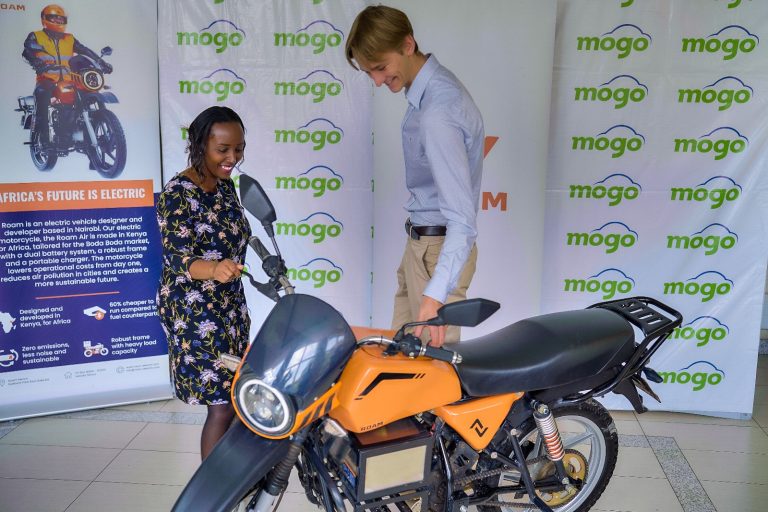
Kenya’s consumer credit market is expanding beyond conventional mobile loans into financing for motorcycles, vehicles and electronic devices, creating opportunities for lenders that can fund purchases through instalment-based arrangements. Mogo Kenya is building its business around this model, having grown its loan book to Sh15.9 billion by June 2026 after disbursing Sh9.2 billion in the first half of the year.
The asset financier is backing that expansion with a larger pool of domestic capital. Mogo has doubled its borrowing from Kenyan banks to Sh1.6 billion and taken its total local funding above Sh9 billion, drawing on commercial bank facilities and private placements that have brought institutional investors into its funding structure.
The expansion comes as credit providers face a changing regulatory environment and growing scrutiny of how they assess borrowers, price loans and manage defaults. For Mogo, the challenge is to finance more customers across different asset categories while maintaining the quality of a portfolio whose products are delivering markedly different credit performance.
Kenya’s credit market moves beyond conventional digital loans
Kenya’s digital credit market has grown substantially, with outstanding loans issued by licensed providers reaching Sh153.8 billion in June 2026, according to Central Bank of Kenya data. The portfolio doubled from Sh76.8 billion in June 2025, while the number of loan accounts increased from 5.5 million to 8.9 million.



The expansion reflects a credit market that now accommodates different lending models, including financing for identifiable assets rather than only short-term cash advances. Motorcycle, vehicle and smartphone financing allows consumers to acquire equipment or devices and repay the cost in instalments while retaining access to the assets.
Mogo operates in this segment through asset-backed lending, with motorcycles and tuk-tuks serving customers in the transport economy while car and smartphone financing extend its reach into other consumer categories. Its business therefore sits within a wider market in which access to credit is supporting purchases that would otherwise require substantial upfront payments.
The regulatory environment is also changing. CBK’s Non-Deposit Taking Credit Providers Regulations, 2026, broaden the framework governing credit providers beyond the earlier rules focused on digital lenders. The regulations address areas including borrower assessments, credit policies, customer protection and automated lending decisions, reflecting the regulator’s wider oversight of non-deposit-taking credit businesses.
Local capital supports Mogo’s asset-financing expansion
Mogo’s funding structure combines commercial bank facilities with money raised from institutional investors. Its facilities with I&M Bank and Ecobank Kenya have doubled from Sh800 million to Sh1.6 billion, while total domestic funding has crossed Sh9 billion.
Most of the local funding has been raised through one- to three-year private placement programmes arranged by Dry Associates Investment Bank. According to Mogo, the programmes have attracted a growing number of Kenyan institutional investors, broadening the pool of capital available to support its lending operations.
The company said the larger domestic funding base provides more Kenyan-shilling resources for financing customers buying motorcycles, cars, tuk-tuks and smartphones. This also helps limit currency mismatches that can arise when a lender uses foreign-currency borrowing to finance loans issued in local currency, where exchange-rate movements can affect the cost of servicing liabilities.
The funding expansion comes as Mogo disbursed Sh9.2 billion in the six months to June 2026, taking its loan book to Sh15.9 billion. The additional capital gives the company a larger domestic financing base as it extends credit across several consumer asset categories.
Smartphone lending brings a different credit-risk profile
The composition of Mogo’s lending business is changing as smartphone financing becomes a larger part of its disbursements. The company generated Sh2.5 billion from smartphone financing in the six months to June 2026, compared with Sh1.4 million in the whole of 2024. The product was reintroduced in June 2025.
The expansion has brought a different credit-risk profile into the portfolio. A GCR Ratings credit report on Mogo puts the non-performing loan ratio for smartphone financing at 31.5 percent, compared with 5.8 percent for loans issued to finance boda-boda purchases.
The gap highlights the contrasting repayment performance of the two categories. Smartphone financing has an NPL ratio more than five times that of motorcycle lending, making the product an important consideration as Mogo expands its consumer electronics business.
Motorcycles and tuk-tuks can serve as income-generating assets for borrowers who use them commercially. Smartphone purchases have a different economic purpose, although devices can also support business activities and access to digital services. The differences in how borrowers use financed assets can affect their repayment capacity and the risks lenders face across product categories.
The figures also underline the importance of credit assessment as lenders extend financing to customers with different income sources and repayment patterns. Kenya’s new regulatory framework places greater emphasis on borrower assessments and credit policies, making portfolio quality an important consideration for businesses operating across multiple lending categories.
Motorcycle financing remains central to Mogo’s business
Despite the growth of smartphone lending, motorcycles and tuk-tuks remain the largest component of Mogo’s reported disbursements. The company financed Sh5.7 billion in motorcycle and tuk-tuk purchases during the six months to June 2026, compared with about Sh900 million in car financing.
The scale of motorcycle financing reflects the role of two- and three-wheelers in Kenya’s transport economy. The boda-boda sector supports riders who use motorcycles to earn daily income, while tuk-tuks provide transport and commercial services in towns and urban centres.
Industry estimates put the boda-boda sector’s annual economic contribution at Sh660 billion, supporting more than 2.5 million livelihoods across the country, including riders and their dependants. For lenders, financing these vehicles allows customers to acquire productive assets and repay the cost through instalments while using them to generate income.
This commercial link helps explain the importance of motorcycle financing in Mogo’s portfolio. As the company draws more funding from Kenyan banks and institutional investors, its ability to manage repayment performance across motorcycles, vehicles and smartphones will shape the quality of the expanding asset-financing business.
Go to TECHTRENDSKE.co.ke for more tech and business news from the African continent and across the world.
Follow us on WhatsApp, Telegram, Twitter, and Facebook, or subscribe to our weekly newsletter to ensure you don’t miss out on any future updates. Send tips to editorial@techtrendsmedia.co.ke

