
Treasury and CBK seek consensus as dispute over Sh10bn bank capital rules deepens

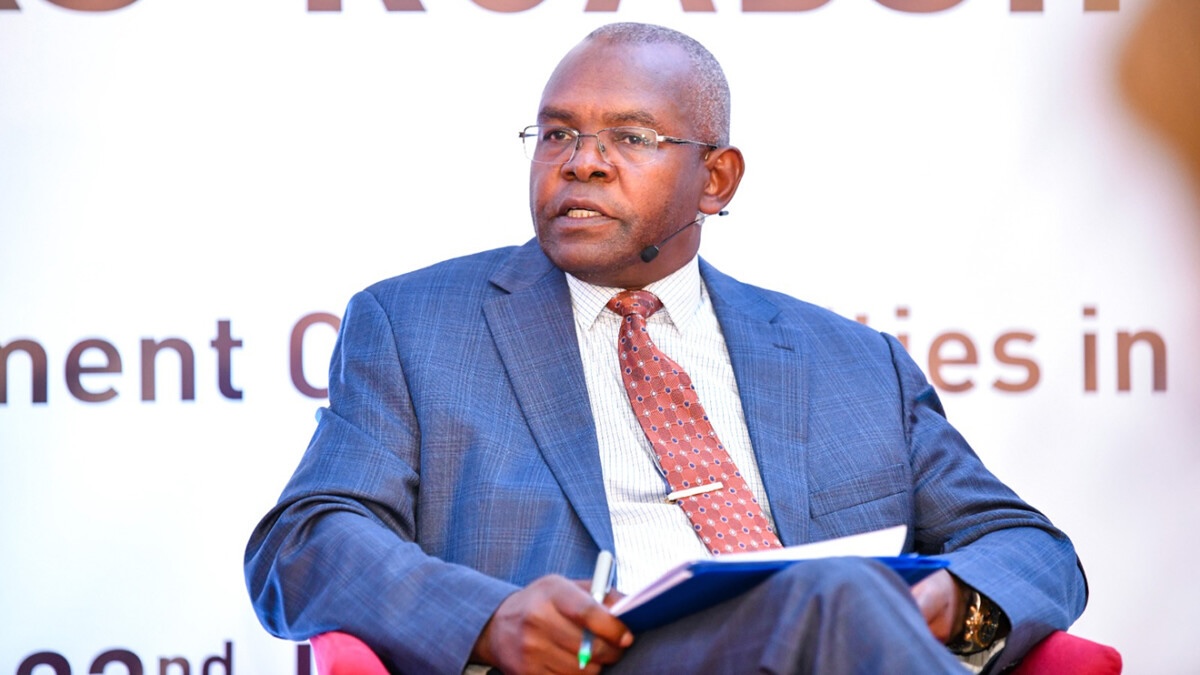
The National Treasury and the Central Bank of Kenya (CBK) are negotiating over Kenya’s Sh10 billion bank capital requirements following a disagreement over the deadline for commercial lenders to meet the higher threshold. Treasury Cabinet Secretary John Mbadi confirmed ongoing discussions with CBK Governor Kamau Thugge, with both institutions seeking consensus on how banks should transition to the new capital rules.
The discussions follow Mbadi’s proposal to extend the final compliance deadline from December 2029 to December 2032 and remove the annual capital-raising milestones. However, the CBK has maintained that commercial banks must continue working towards the existing requirements, including the Sh5 billion minimum core capital target due by December 2026.
Mbadi said the Treasury was committed to resolving the disagreement through discussions with the banking regulator, adding that the eventual position would be guided by what best serves the economy.
“We are in conversations with the governor of the central bank. This is a simple matter; we will sit with CBK, agree and communicate,” Mbadi told the Business Daily. He said the two institutions were considering the implications of the requirements for the wider economy and did not regard the disagreement as a major issue of concern.



Treasury and CBK negotiate over bank capital rules
The disagreement emerged after Mbadi proposed changes to the banking capital requirements during his June 2026 Budget Statement. The Treasury wanted banks to have until December 2032 to reach the Sh10 billion minimum core capital threshold, removing the annual milestones introduced through the Business Laws (Amendment) Act 2024.
Under the existing framework, banks were required to raise their minimum core capital from Sh1 billion to Sh3 billion by December 2025, followed by Sh5 billion by December 2026. The subsequent milestones require lenders to reach Sh6 billion by December 2027, Sh8 billion by December 2028 and Sh10 billion by December 2029.
Mbadi’s proposal was intended to give banks more time to raise capital while continuing to support lending to households and businesses. The Treasury’s position was that a longer transition would allow financial institutions to pursue commercially sustainable capital-raising strategies without diverting too much funding away from private-sector credit.
The proposal, however, was not accompanied by the necessary legislative amendment to change the existing capital requirements. This prompted the CBK to direct commercial banks to continue complying with the original timetable, leaving the industry facing conflicting positions from the Treasury and its banking regulator.
Banking industry sources told the Business Daily that the Treasury had not consulted the CBK before announcing the proposed extension. The move followed lobbying from smaller lenders that were struggling to meet the higher capital requirements.
Banks face pressure to meet the Sh5 billion threshold
The immediate compliance deadline is December 2026, when commercial banks are required to have minimum core capital of Sh5 billion. CBK Governor Kamau Thugge told the National Assembly Finance and National Planning Committee in October that institutions below the threshold had been asked to explain how they intended to meet the requirement.
“We want them to come to us and tell us how they are going to meet the target for 2026, which is Sh5 billion,” Thugge told the committee. He said one or two banks might struggle to meet the requirement, but the regulator wanted to hear their plans for reaching the target.
The CBK also said banks below the Sh5 billion threshold had yet to respond to its query on their capital-raising measures. The regulator has warned that institutions which fail to meet the requirements could face downgrading, although it had not taken enforcement action against the affected banks at the time of the report.
The pressure follows the first phase of the capital transition, which required banks to raise minimum core capital to Sh3 billion by December 2025. The requirement was introduced through the Business Laws (Amendment) Act 2024, which raised the previous Sh1 billion floor as part of efforts to strengthen the banking sector.
Smaller lenders face capital-raising pressure
As at the end of June 2026, 14 commercial banks had core capital below the Sh5 billion threshold required for December 2026. The institutions included Middle East Bank, M-Oriental Bank, Bank of Africa, Premier Bank, Guardian Bank, DIB Bank and Habib Bank AG Zurich.
Seven banks were also reported to have fallen short of the earlier Sh3 billion requirement for December 2025. They included Credit Bank, UBA Bank, Development Bank of Kenya, African Banking Corporation, Access Bank and Consolidated Bank of Kenya.
Meeting the higher thresholds will require affected lenders to mobilise additional shareholder funds, retain more earnings or pursue other capital-raising strategies. Banks that struggle to raise sufficient funds could also consider strategic investors or consolidation as they seek to maintain their position in the market.
The requirements have raised concerns about the future of smaller locally owned lenders, particularly those serving specialised customer segments and communities that may not be adequately served by larger institutions. The possibility of consolidation has therefore become part of the wider debate over how Kenya should strengthen its banking sector while maintaining competition.
The National Assembly Finance and National Planning Committee has cautioned against implementing the requirements in a manner that could weaken domestic banking institutions or reduce access to financial services.
Lending concerns complicate the capital requirements debate
The Treasury’s push for a longer transition is partly driven by concerns that banks could restrict lending while setting aside more resources to meet the higher capital requirements. Commercial banks told Mbadi that institutions below the required thresholds were likely to preserve funds for capital accumulation, potentially reducing the money available for loans to households and businesses.
A slowdown in private-sector lending would complicate government efforts to expand credit to businesses and support economic growth, particularly among micro, small and medium enterprises (MSMEs). The Treasury has argued that giving banks more time would allow them to maintain lending activities while pursuing capital-raising strategies suited to their financial positions.
Kenya Bankers Association (KBA) Chief Executive Officer Raimond Molenje previously supported a longer compliance period, arguing that it would help banks continue financing customers rather than concentrating their resources on meeting the regulatory thresholds.
“Allowing a longer timeframe facilitates banks to serve customers better and uninterrupted, deploying more capital into lending to the private sector,” Molenje said.
The debate also comes as the government expects commercial banks to expand financing for businesses, particularly smaller enterprises that depend on bank credit to manage working capital, purchase inventory and finance expansion. A longer transition could ease immediate capital pressures, while stronger capital positions are intended to improve banks’ ability to withstand financial shocks and sustain lending over time.
Parliament calls for a balanced approach to bank capital rules
The National Assembly Finance and National Planning Committee has called for a balanced approach to implementing the new capital requirements, warning that the rules could affect financial stability, competition and financial inclusion.
Committee chairperson Kuria Kimani told MPs that although consolidation could strengthen individual financial institutions, policymakers needed to protect competition and local ownership. He also cautioned against weakening the participation of domestic banks serving communities and market segments that larger lenders might not adequately reach.
“While consolidation may strengthen individual institutions, it is important to safeguard competition, local ownership and the continued participation of domestic banking institutions, particularly those serving communities and market segments that may not be adequately served by larger banks,” Kimani said.
He added that implementation should account for financial stability, competition, financial inclusion and the sustainability of locally owned banks.
The Treasury and CBK discussions will determine how the two institutions approach the competing priorities of stronger bank capitalisation and continued access to credit. For commercial lenders below the Sh5 billion threshold, the December 2026 milestone remains the immediate focus as they work to meet the requirements set out in the existing banking capital framework.
Go to TECHTRENDSKE.co.ke for more tech and business news from the African continent and across the world.
Follow us on WhatsApp, Telegram, Twitter, and Facebook, or subscribe to our weekly newsletter to ensure you don’t miss out on any future updates. Send tips to editorial@techtrendsmedia.co.ke

