
NCBA shareholders take an 8.37% stake in Nedbank as the South African bank assumes control of the Kenyan lender

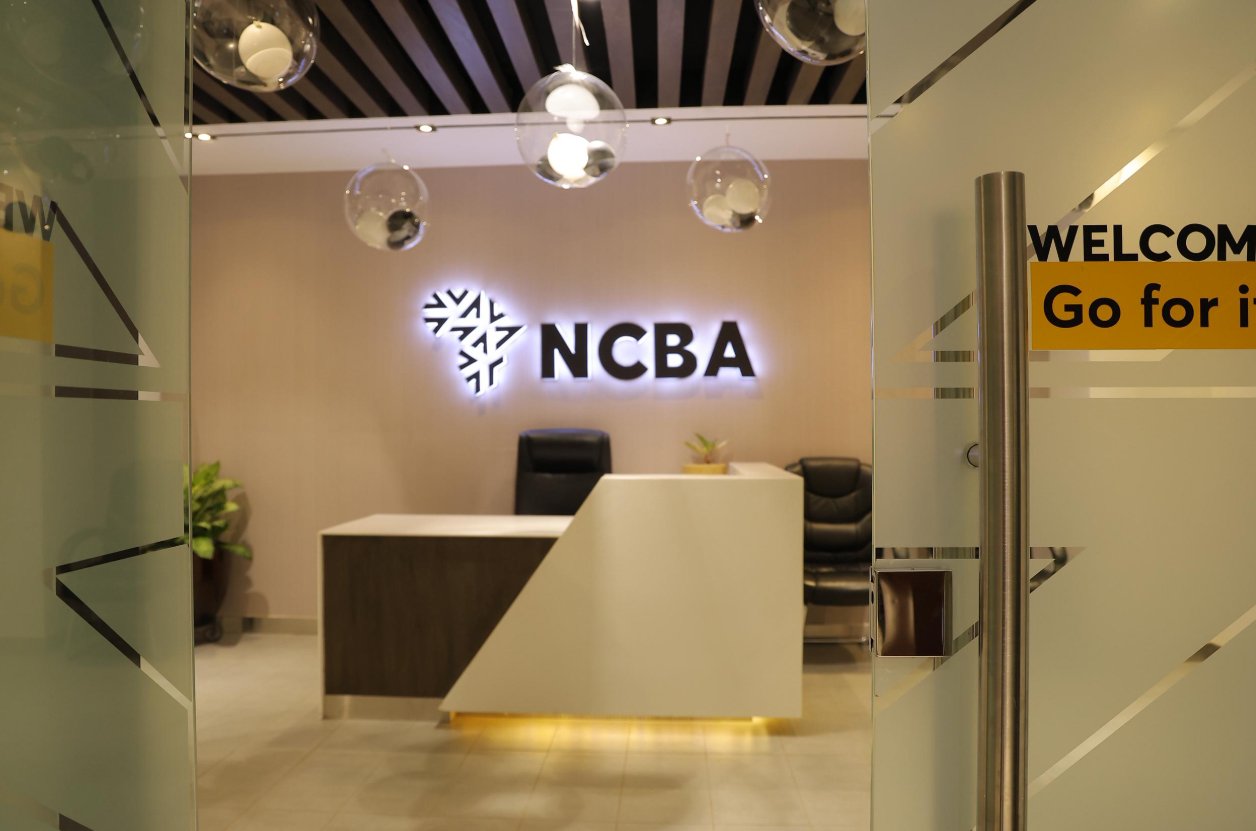
Nedbank’s acquisition of a controlling interest in NCBA has given former shareholders of the Kenyan lender an equity position in one of South Africa’s largest banking groups, while handing the acquirer control of a regional financial services business with established digital lending operations.
Eligible NCBA investors received 43,631,052 newly issued Nedbank shares, representing approximately 8.37 percent of the enlarged South African bank. The transaction also delivered KSh23.2 billion in cash payments, completing a settlement structured around a combination of equity and cash consideration.
The ownership change leaves Nedbank with 66 percent of NCBA, while the remaining 34 percent continues to trade on the Nairobi Securities Exchange. For Nedbank, the acquisition provides an operating platform across East and West Africa, including a digital banking business that has become a significant contributor to NCBA’s earnings.
NCBA’s value to the South African group extends beyond its Kenyan operations. The lender operates in six African markets, has a substantial corporate banking business and has developed digital lending products with reach through mobile money and other distribution channels.



Digital lending and regional operations underpin the acquisition
NCBA’s 2025 financial results provide a measure of the business Nedbank has taken control of. The lender reported KSh23.4 billion in profit after tax, operating income of KSh73.3 billion, total assets of KSh716 billion and customer deposits of KSh532 billion. Its digital lending business generated KSh8.9 billion in profit during the year, demonstrating the contribution of technology-led credit to the group’s earnings.
The bank disbursed KSh1.4 trillion in digital loans during 2025, according to its results coverage, with lending volumes increasing 33 percent. Its Fuliza partnership with Safaricom is a major part of that business, giving NCBA exposure to customers who access short-term credit through mobile money. The bank also operates ConnectPlus, a corporate banking platform offering payments, liquidity management, collections and trade finance services.
These capabilities help explain why Nedbank’s interest in NCBA has centred on more than its physical banking network. The Kenyan lender has developed technology, customer distribution and lending systems that could support the South African group’s operations across other markets. Nedbank chief executive Jason Quinn has previously pointed to the opportunity to connect banking platforms across Southern and East Africa to support trade, investment and economic growth.
NCBA’s regional operations also contribute to its earnings. Its businesses outside Kenya generated KSh3.6 billion in profit before tax in 2025, while the Kenyan banking subsidiary contributed KSh22.9 billion. The group operates in Kenya, Uganda, Tanzania, Rwanda, Ivory Coast and Ghana, giving Nedbank an established presence across several markets without having to build a comparable network from the ground up.
NCBA had already outlined its own expansion priorities through its 2026–2030 Ubuntu strategy, which covers strengthening core banking, digital transformation, regional growth, wealth management, SME banking and insurance. The acquisition places those ambitions under a parent group with a larger balance sheet and an established Southern African footprint.
Nedbank’s preference for control follows its experience with Ecobank
The acquisition also reflects Nedbank’s approach to investments in other banking groups. Before pursuing NCBA, the South African lender held an approximately 22 percent stake in Ecobank Transnational. Quinn previously explained that the minority position limited Nedbank’s ability to influence the bank’s strategy and its capacity to extract dividends.
Nedbank subsequently moved away from that investment, with the experience informing its preference for controlling interests in businesses where it intends to deploy capital and influence strategic decisions. The NCBA transaction gives it a 66 percent stake and the authority that comes with majority ownership.
The acquisition was valued at approximately KSh116.3 billion in the regulatory approval coverage, equivalent to around 1.4 times NCBA’s book value. That valuation placed a premium on the Kenyan lender’s existing business, including its earnings, regional presence and digital banking capabilities.
Nedbank has said it intends to use its larger balance sheet to help NCBA grow its corporate banking business and finance larger transactions. The opportunity is particularly relevant to companies operating across African markets, where trade finance, payments and cross-border banking services can require access to funding and infrastructure beyond what a single local institution can provide.
The earnings base comes with credit and capital considerations
NCBA’s digital lending operation is a major source of income, but the growth of that business also needs to be considered alongside the cost of managing credit risk. The lender’s 2025 results showed that credit-loss provisions rose 46.3 percent to KSh8 billion, while operating expenses increased 17 percent to KSh37.5 billion.
The increase in provisions is relevant to the value Nedbank expects to extract from the acquisition. Digital credit can generate substantial transaction volumes and income, but the quality of the loan book and the cost of defaults influence how much of that income ultimately reaches the bottom line. NCBA’s lending partnerships and technology infrastructure therefore represent both an earnings opportunity and an area requiring continued risk management.
Capital requirements will also shape the returns available to the new parent company. In September 2026, TechTrendsKE reported on proposed CBK capital rules linking dividend distributions to banks’ Common Equity Tier 1 capital ratios. The proposals included a requirement for banks below a specified capital threshold to retain all earnings, a consideration for any shareholder seeking to maximise distributions from a banking subsidiary.
Nedbank’s control gives it influence over NCBA’s capital allocation and dividend policy, but those decisions remain subject to applicable regulatory requirements. The ability to direct earnings towards expansion, strengthen capital or distribute dividends will therefore depend on the bank’s financial position and the rules governing its operations.
The shareholder settlement creates a cross-border investment
The transaction’s consideration was structured with 80 percent paid in Nedbank shares and 20 percent in cash. Under the conversion terms, eligible investors received 4.02994 Nedbank shares for every 100 NCBA shares, while the cash option was priced at up to KSh105 per NCBA share.
Nedbank shares were valued at 250 rand, equivalent to KSh1,928.50 at the exchange rate used for the transaction. The new issuance increased Nedbank’s total shares in issue to 520,903,680. At a market price of 300 rand on Thursday, the newly issued shares had an indicative value of approximately 13.09 billion rand.
The cash component amounted to KSh23.2 billion. Investors who received Nedbank shares can retain them to participate in the South African bank’s dividends and share-price performance or sell their holdings. Families linked to former Kenyan presidents Jomo Kenyatta and Philip Ndegwa were among the NCBA owners allotted Nedbank shares.
The issuance has also changed the proportional holdings of Nedbank’s existing shareholders. As at January 30, 2026, the Public Investment Corporation held 14.8 percent of the bank, Allan Gray held 9.5 percent and BlackRock held 5.4 percent. The additional shares have diluted the percentage represented by those existing holdings in Nedbank’s enlarged share capital.
The final allocation followed a takeover process in which shareholder participation exceeded the 66 percent stake Nedbank sought. By August, valid acceptances had reached approximately 79.9 percent of NCBA’s issued shares, after which excess acceptances were scaled back to meet the acquisition target. Earlier in the process, 15 major shareholders had provided irrevocable undertakings representing 77.54 percent of NCBA.
NCBA retains its brand and local operations under new ownership
Nedbank’s acquisition changes control of NCBA without removing the Kenyan lender from the local market. NCBA remains listed on the NSE, with public investors retaining a 34 percent interest, while its brand, Nairobi headquarters, local management, branches, products and digital channels remain in place.
The governance arrangements outlined during the acquisition process provide for Nedbank to nominate at least two representatives to NCBA’s board, while NCBA shareholders were expected to receive representation on Nedbank’s board. The structure gives the new parent influence over the subsidiary while preserving a channel for the Kenyan shareholder base to participate in the wider group’s governance.
Employment was another issue addressed during the acquisition process. Nedbank gave assurances that existing NCBA employees would retain their jobs and contractual and statutory rights under the offer arrangements. NCBA had 3,712 employees at the end of December 2024, according to the February 2026 TechTrendsKE coverage of the proposed transaction.
NCBA chief executive John Gachora previously described the acquisition as an expansion of the bank’s capabilities, saying: “The name is the same, the people are the same, but the ambition and capabilities are tremendously magnified.”
For Nedbank, the transaction provides a controlling interest in a profitable regional bank with established digital and corporate banking operations. For former NCBA shareholders, the settlement has converted part of their investment into an interest in the South African parent, while public investors continue to hold shares in the Kenyan subsidiary.
Go to TECHTRENDSKE.co.ke for more tech and business news from the African continent and across the world.
Follow us on WhatsApp, Telegram, Twitter, and Facebook, or subscribe to our weekly newsletter to ensure you don’t miss out on any future updates. Send tips to info@techtrendsmedia.co.ke

