
Beyond Bitcoin: 3 top crypto trading platforms for 2026


A trader’s watchlist can stretch from Bitcoin and Ether to gold, oil and US technology stocks. Following those markets is straightforward enough. Choosing how to trade them takes a closer look at the products behind the screen.
BYDFi, Bybit and OKX approach the trading experience from different directions. Market coverage makes BYDFi interesting, Bybit offers flexibility in how positions share collateral, and OKX provides a route from chart signals to automated orders. Here is what each brings to the comparison, based on its published product information.
1. BYDFi
BYDFi brings together spot trading, crypto perpetual futures and tools for managing different trading approaches. Its crypto futures range includes USDT-M, USDC-M and COIN-M contracts, giving traders a choice of USDT, USDC or cryptocurrency settlement when selecting a market.
Spot markets include Bitcoin, Ether and XRP alongside other altcoins. Base spot maker and taker fees are 0.1% each. For readers who want to build holdings as well as trade price movements, having spot and futures available provides room to use different strategies within the same platform.



For crypto futures, order types including Limit, Trigger and Trailing Stop let traders plan how positions are entered and managed. TradingView charts provide indicators and drawing tools for market analysis. Copy Trading adds another route: users select a lead trader, configure their copy settings and automatically follow the trader’s opening and closing signals. Trader Match offers recommendations based on trading preferences.
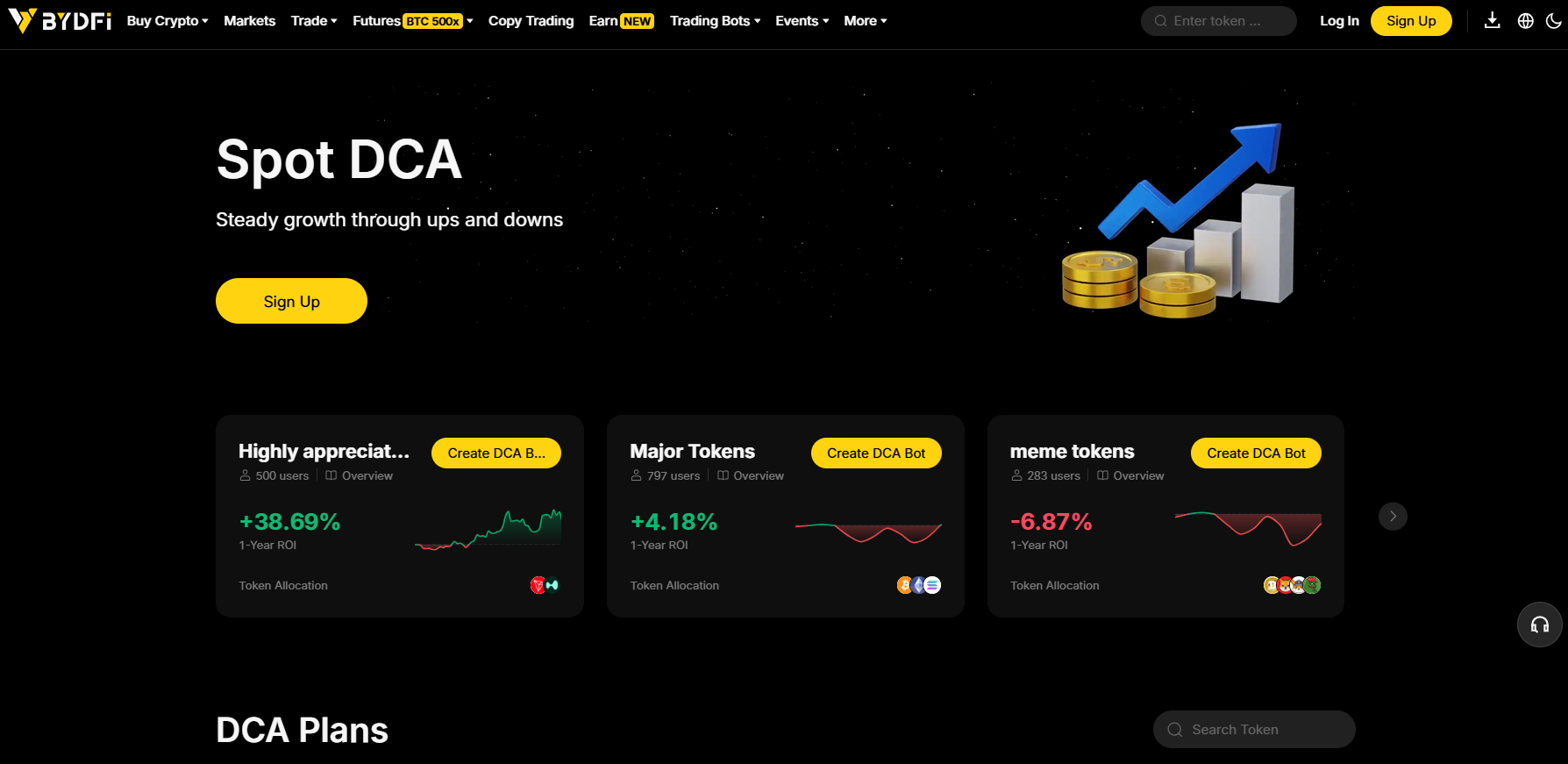
Automation also extends to Spot DCA, Spot Grid and Futures Grid. Spot DCA schedules purchases at selected amounts and intervals; Spot Grid organises buy and sell orders within a chosen price range. Futures Grid offers long, short and neutral modes for different market views. These tools allow users to choose between recurring investment, range-based trading and following another trader’s strategy.
BYDFi’s TradFi offering adds USDT-margined perpetual contracts linked to US stocks, gold, silver and crude oil. These provide exposure to price movements without ownership of the underlying assets. US stock futures trade 24 hours a day on weekdays, bringing another set of markets into the platform for readers whose interests extend beyond crypto.
2. Bybit
Bybit is worth considering for traders who work across spot, futures and options and want to manage those activities together. Its Unified Trading Account brings the products into one account, with different margin modes determining how eligible balances support positions.
Under cross margin, eligible collateral and unrealised profits contribute to account-level margin. A trader managing several positions can therefore assess them against a shared margin balance. Isolated margin allocates margin to individual positions, giving the trader a different way to organise exposure.
The important detail is how the collateral is valued. An eligible token’s full market value may not be recognised as usable margin, because assets can receive different collateral valuations. Bybit’s account structure is most useful when a trader understands those rules and wants to coordinate positions across products. It calls for attention to the account as a whole, including how losses affect the margin available to other trades.
3. OKX
For traders whose decisions begin on a TradingView chart, OKX’s Signal Trading bots offer a way to carry a strategy through to execution. A configured signal source connects with the bot, while the trader selects the trading pair, investment amount and leverage.
The workflow starts with a rule. When the strategy’s conditions are met, a TradingView alert can initiate a trading instruction through the connection. This can remove the need to place each corresponding order manually, which is useful for a trader already working with a defined set of chart-based conditions.
The work shifts towards setting up and monitoring that process. Signal messages need to match the bot’s requirements, and its parameters need to reflect the intended trade. The trader can monitor the bot and intervene manually. This makes Signal Trading a tool for implementing an existing strategy; the connection itself provides no evidence that the strategy will make money.
Before funding any of these platforms, work through the trade you actually intend to make. Check the instrument, margin requirement, opening and closing charges, and the route for moving funds out. For readers starting with Kenyan shillings, the final funding and cash-out quotes also belong in that calculation. Product and payment availability should be confirmed for the individual account.
Go to TECHTRENDSKE.co.ke for more tech and business news from the African continent and across the world.
Follow us on WhatsApp, Telegram, Twitter, and Facebook, or subscribe to our weekly newsletter to ensure you don’t miss out on any future updates. Send tips to info@techtrendsmedia.co.ke

