
Equity Group weighs bigger dividends as its African banking business gains ground

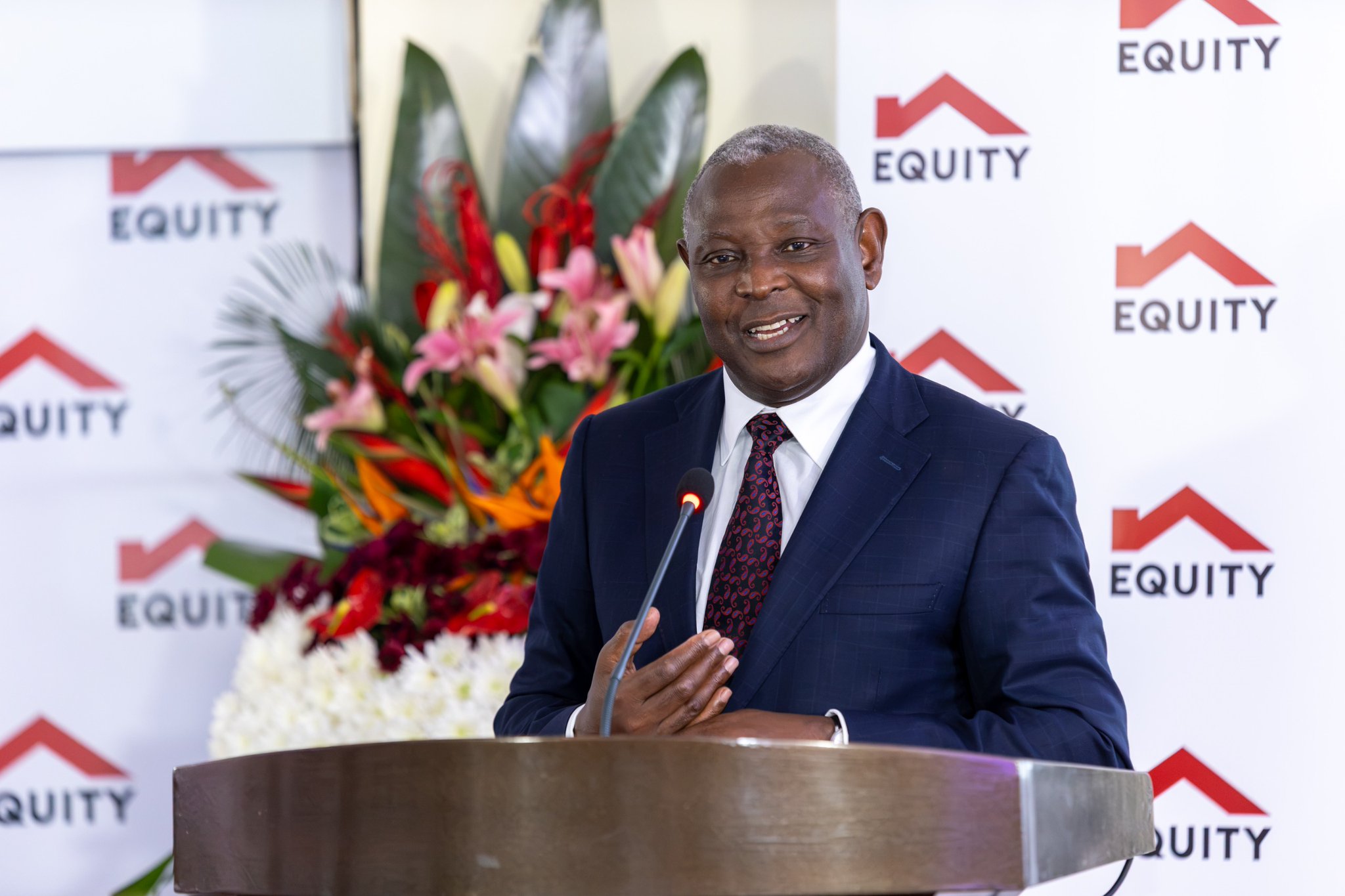
Equity Group’s regional subsidiaries now account for almost half of its profit before tax, giving the lender a growing source of earnings as it prepares to increase shareholder dividends while funding further expansion across Africa.
The group’s nine-month results to September 2026 showed a 32% increase in profit after tax to KSh68.7 billion. Non-interest income provided a major contribution to the growth, with management also pointing to stronger returns from businesses outside Kenya as evidence that its regional investment strategy is delivering results.
According to Equity Group’s third-quarter results, regional subsidiaries contributed 49.2% of group profit before tax and held 55.2% of total assets. The subsidiaries also accounted for 47% of banking revenue during the first half of the year, reflecting their growing contribution to the group’s operations.
The performance has given management room to pursue two objectives that require substantial capital: increasing returns to shareholders and expanding its presence in additional markets and business lines.



Regional subsidiaries become central to Equity’s earnings
Equity’s regional operations have developed into a major contributor to group profitability, with the Democratic Republic of Congo (DRC) emerging as its strongest example of growth following an acquisition.
The group’s investment in BCDC, acquired in 2020, initially produced a return on equity of approximately 7%. James Mwangi, Equity Group’s chief executive, told the lender’s latest results briefing that the combined DRC operation now generates a return on equity of 23%.
The subsidiary also recorded KSh24.7 billion in profit after tax in FY2025, representing annual growth of 58%, according to Equity’s full-year results. Its contribution to the group’s earnings has given management additional capital to pursue opportunities in other high-growth businesses.
Mwangi said the DRC operation could generate $200 million in profit, which would provide further resources for investment. He added that Equity had managed to reproduce the returns achieved in Kenya across newer markets within a shorter period.
The regional portfolio also includes operations in Uganda, Rwanda, Tanzania and South Sudan. Equity’s FY2025 results showed that its subsidiaries outside Kenya contributed 51% of banking profit before tax, while the third-quarter results put their contribution to group profit before tax at 49.2%.
The group has established particularly strong banking positions in the DRC and Rwanda, where its reported asset market shares stood at 22.8% and 17.3%, respectively. Its presence in Uganda and Tanzania remains smaller, at 5.3% and 1.9%.
Shareholders set for higher dividends as Equity retains capital
The growing contribution from regional businesses is central to Equity’s plans to increase shareholder distributions without abandoning its expansion programme.
Mwangi confirmed that dividend per share would increase in 2026, with the growth expected to track earnings per share performance at a minimum. The group has maintained a dividend payout ratio of 30%, the lower end of its stated policy range of 30% to 50%.
Equity did not declare an interim dividend despite the strong earnings growth. Management has instead prioritised retaining capital for investment in new business lines and geographical markets, with Mwangi arguing that the returns from these investments support future dividend payments.
The approach follows a substantial increase in the group’s previous annual distribution. Equity recommended a dividend of KSh5.75 per share for FY2025, up from KSh4.25 in FY2024. The FY2025 distribution amounted to approximately KSh21.7 billion.
The proposed increase for 2026 would extend that growth in shareholder payouts, although the final dividend per share will depend on full-year earnings and the group’s capital allocation decisions.
Equity’s dividend strategy also comes as the Central Bank of Kenya considers proposed capital conservation requirements that would link banks’ ability to distribute earnings to their Common Equity Tier 1 capital positions.
The proposed framework includes mandatory earnings retention for institutions whose capital ratios fall within specified thresholds. Banks with stronger capital positions would have greater flexibility over distributions.
For Equity, maintaining sufficient capital while expanding its regional operations is therefore an important part of its shareholder return strategy.
DRC operations demonstrate the returns from regional expansion
Equity’s capital allocation strategy extends beyond traditional banking, with management investing in additional financial services and healthcare operations across its markets.
In its first-half 2026 results, the group reported that subsidiaries accounted for 51% of banking deposits and 54% of banking loans. Their contribution to the balance sheet reflects the scale of the business outside Kenya, particularly in markets where Equity has established substantial banking operations.
The group has also expanded its insurance business and healthcare network, creating additional sources of income beyond lending and deposit-taking.
Equity Afia, the group’s healthcare business, operates 159 medical centres and has established a presence across all Kenyan counties. Mwangi said the network’s next expansion objective is to reach every sub-county.
The healthcare business currently concentrates on outpatient services, operating at Level 3 and 3B facilities. Management intends to expand into inpatient and tertiary care as the network develops.
Mwangi also outlined plans to reduce pharmaceutical prices by 40% in the short term, with a longer-term target of up to 80%. He said Equity could finance local pharmaceutical manufacturing to help achieve the reductions.
The pharmaceutical strategy builds on the group’s earlier move into pharmacy operations. Equity began piloting its first pharmacy in 2026, pursuing greater control over medicine procurement and distribution within its healthcare network.
Equity’s capital position and lending ambitions
Equity says it has sufficient capital to support further lending and expansion without compromising its regulatory position.
Mwangi put the group’s core capital ratio at 18%, approximately eight percentage points above the regulatory minimum, while total capital stood at 19% against a minimum requirement of 14.5%.
The lender is also raising Tier 2 capital at subsidiary level to maintain its capital buffers as it pursues additional lending and investment opportunities.
Management is monitoring net interest margin and operating efficiency as indicators of the sustainability of its earnings growth. Equity reported a net interest margin of 8.4% in the third quarter, while its cost-to-income ratio stood at approximately 47.9%.
The group expects its net interest margin to improve further by the end of the year, according to Mwangi.
Non-funded income has also become a substantial contributor to the group’s financial performance. Equity reported non-funded income of KSh84.3 billion in the nine months to September, representing annual growth of 34%. The category accounted for 43.9% of total income, compared with 40.1% in the corresponding period of 2025.
The growth follows a similar trend in the first half of 2026, when non-funded income increased 36% to KSh55.6 billion. Management has attributed the expansion to activities including trade finance, digital transactions, loan appraisal fees and insurance.
Kenya’s bad loans remain a challenge as lending pipeline grows
Asset quality remains an important consideration as Equity prepares to expand its loanbook.
The group’s non-performing loan ratio stood at 9.3% in the third quarter, down from 12.1% a year earlier. However, the absolute value of non-performing loans reached KSh100.2 billion, compared with KSh99.7 billion in the second quarter.
Kenya remains the main source of the group’s impaired loans, according to Mwangi. He said the other subsidiaries had maintained NPL ratios in the lower single digits, while bringing the Kenyan ratio below 10% would take the group’s overall figure below 5%.
Management is pursuing loan recoveries, monitoring overdue facilities and expanding new lending to improve the quality of the portfolio.
Equity has a KSh530 billion lending pipeline, half of which it intends to convert into loans by the end of 2026. Mwangi said the group was combining recovery efforts with negotiated settlements where necessary.
He also said corporate loans originated over the past seven years had not gone bad, with current recoveries concentrated on facilities dating back seven to ten years.
The bank’s technology investments form another part of its operating strategy. Mwangi said system availability had improved from between 68% and 72% to 100%, while the group had addressed vulnerabilities and social engineering threats affecting customers.
Equity’s digital banking operations accounted for 89.5% of transactions in its third-quarter results, while 98.3% of transactions took place outside physical branches. The group has also continued customer protection initiatives through its Hakikisha programme, which addresses fraud risks associated with digital banking.
Mwangi said cybersecurity threats could not be eliminated entirely, but the group had strengthened its defensive capabilities through its technology operations.
Equity’s expansion programme will therefore continue to draw on the earnings generated by its established markets, with the DRC providing a growing source of profits and capital for further investment. The group intends to increase dividends per share as those investments contribute to earnings growth.
Visit TECHTRENDSKE.co.ke for more tech and business news from across Africa and the world.
Follow us on WhatsApp, Telegram, Twitter, and Facebook, or subscribe to our weekly newsletter so you don’t miss future updates. Send tips to info@techtrendsmedia.co.ke

