

SpaceX wants to take on US carriers. The bigger story may be Africa

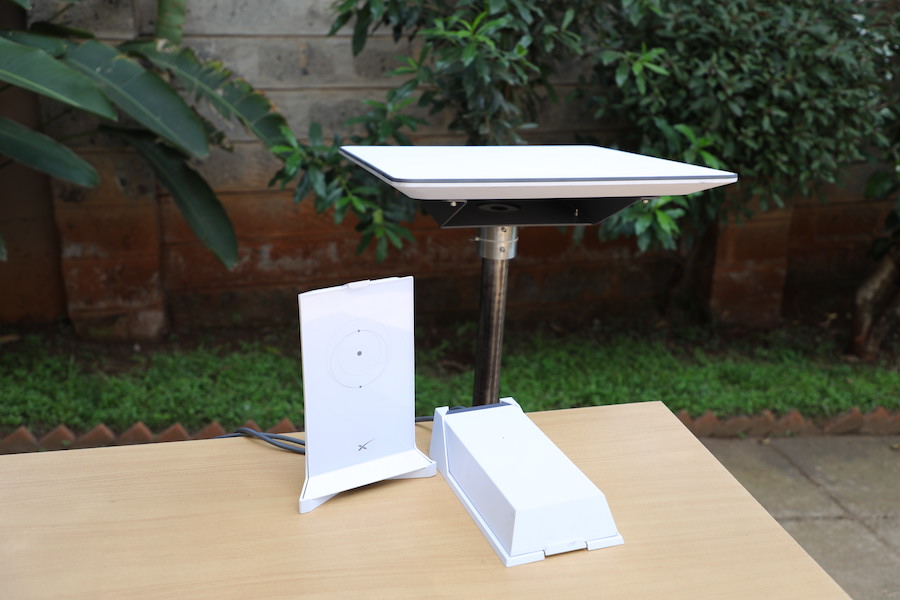
SpaceX’s mobile network ambitions are becoming much clearer after the company publicly confirmed that it intends to build ground-based telecommunications infrastructure alongside its Starlink satellite network. The announcement, made during SpaceX’s first earnings call as a public company, offers the clearest indication yet that the company wants to compete directly with established wireless operators instead of simply extending their coverage. If successful, the SpaceX mobile network strategy would move the company beyond satellite broadband into the mainstream telecommunications market.
Speaking to investors, SpaceX President and Chief Operating Officer Gwynne Shotwell said the company plans to develop the terrestrial component of the wireless spectrum it acquired through EchoStar, allowing Starlink to evolve into what she described as “a true mobile service.” She added that SpaceX expects to win customers from the three largest US carriers—AT&T, Verizon and T-Mobile—because it believes its service can deliver a better experience.
Those comments leave little room for interpretation. Earlier reports suggested SpaceX had discussed consumer mobile services with investors during its IPO roadshow, but the company’s public remarks now confirm that mobile connectivity sits at the centre of Starlink’s long-term strategy rather than alongside it.
Today’s Starlink Mobile service fills gaps in conventional cellular coverage. Compatible smartphones can connect directly to Starlink satellites when they move beyond the reach of terrestrial towers, enabling messaging and limited data services without specialised hardware. In the United States, that capability has been developed with T-Mobile, while Airtel Africa is preparing similar direct-to-cell services across its markets once regulatory approvals are complete.


SpaceX is now outlining something much broader. Rather than relying solely on satellites to complement existing mobile networks, the company wants to combine satellite capacity with its own terrestrial infrastructure. Shotwell said the EchoStar spectrum gives SpaceX the foundation to build the hardware and systems required for a full mobile offering, while Elon Musk revealed the company is exploring compact, lower-cost cellular base stations that could be deployed alongside Starlink broadband equipment.
That hybrid model addresses one of the biggest limitations of satellite-only mobile services. Satellites excel at extending coverage into remote regions where towers are difficult or uneconomical to build, but dense towns and cities still depend on terrestrial infrastructure for higher capacity, lower latency and consistent performance.
Bringing the two together would allow SpaceX to offer continuous connectivity while reducing its reliance on traditional mobile operators. Instead of choosing between satellite and terrestrial networks, the company is positioning Starlink to operate across both.
The EchoStar acquisition also appears more significant than originally thought. Earlier discussion around the deal focused on expanding Starlink’s direct-to-cell capabilities through additional spectrum. The earnings call suggests that spectrum is part of a broader strategy to operate terrestrial infrastructure capable of supporting a nationwide mobile network.
Building that network, however, will be a substantial undertaking. SpaceX would still require additional spectrum, extensive ground infrastructure and regulatory approvals before it could compete directly with established operators across the United States. AT&T, Verizon and T-Mobile have spent decades building nationwide networks, retail operations and customer support systems that extend well beyond radio coverage.
The announcement matters outside the US because it offers the clearest view yet of where Starlink is heading. Broadband delivered from orbit remains an important part of the business, but mobile communications are becoming an equally important growth area, particularly as next-generation Starlink Mobile V2 satellites promise significantly greater network capacity.
That direction also fits with Starlink’s wider expansion across Africa. Over the past few months alone, the company has continued adding new markets, with Seychelles becoming its 28th African country, while approvals in Côte d’Ivoire came as part of a broader package that included sovereign cloud infrastructure, government digitisation projects and cybersecurity investments. Together, those developments show that satellite connectivity is increasingly being considered alongside wider national digital infrastructure rather than as a standalone telecom service.
At the same time, Starlink’s experience in Kenya illustrates that entering a market is only the first step. After rapidly growing its subscriber base, the company paused new residential sign-ups in several counties because available satellite capacity had been exhausted, highlighting the engineering challenge of sustaining performance as adoption accelerates.
Even with those ambitions, Africa is unlikely to mirror the United States. The continent presents a different regulatory and commercial environment where spectrum licensing, ownership requirements and established telecom operators shape how new entrants expand.
Recent developments illustrate that no single playbook exists. Seychelles introduced Starlink through a regulator-led soft launch designed to complement existing internet providers, while Côte d’Ivoire approved commercial operations alongside major US-backed investments in digital infrastructure. Elsewhere, countries such as Namibia and South Africa have demonstrated that licensing decisions are closely tied to domestic telecommunications policy and ownership requirements rather than technology alone.
Companies including Airtel Africa, MTN Group, Safaricom, Orange, Vodafone and Vodacom already operate nationwide infrastructure, extensive distribution networks and long-standing regulatory relationships. That makes partnerships the more practical route in many African markets than attempting to build parallel mobile businesses from scratch.
Airtel Africa’s direct-to-cell collaboration with SpaceX reflects that reality. Satellite technology can extend coverage into remote communities, transport corridors and underserved regions without replacing terrestrial networks or disrupting existing customer relationships.
SpaceX’s latest announcement does not mean it will pursue the same retail strategy everywhere. What it does make clear is that Starlink is evolving into a communications platform built around satellites, spectrum and terrestrial infrastructure. Whether that model expands beyond the United States will depend not only on technology, but also on how well the company aligns with local spectrum policies, regulatory frameworks and the priorities governments are setting for the next generation of digital infrastructure.
Go to TECHTRENDSKE.co.ke for more tech and business news from the African continent and across the world.
Follow us on WhatsApp, Telegram, Twitter, and Facebook, or subscribe to our weekly newsletter to ensure you don’t miss out on any future updates. Send tips to editorial@techtrendsmedia.co.ke


