Kenya's broadband market grows as fibre, wireless and satellite add more connections

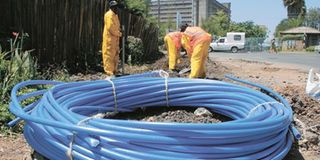
Kenya’s fixed internet market reached 2.84 million connections in the year to June 2026, giving the country a much larger fixed broadband base than it had a year earlier.
The Communications Authority of Kenya’s latest sector statistics show fixed data and internet subscriptions grew 32.4% year on year, with fibre accounting for the largest share of the expansion. Satellite and newer wireless technologies are also adding connections, creating a fixed broadband market with several competing ways to get a connection into homes and businesses.
Fibre optic connections rose 29.7% to 1.57 million during the year. That puts fibre at the centre of Kenya’s fixed internet market, even as other technologies continue to gain ground in places where laying physical fibre can be slower, more expensive or less practical. The scale of fibre also means the growth of satellite services such as Starlink should be viewed within a much larger terrestrial broadband market rather than as a replacement for it.
Fibre remains the backbone of Kenya’s growing home internet market
Fibre’s position is reflected in the size of its installed base. At 1.57 million subscriptions, it accounts for more than half of the country’s fixed internet connections, giving established fibre operators the largest pool of customers as household and business demand for permanent internet access grows.


The market has also become more competitive on the terrestrial side. Safaricom, Jamii Telecommunications and Wananchi Group remain among the largest fixed internet providers, while operators including Airtel, Faiba and smaller fibre providers have been competing through coverage, speeds and pricing. The result is a market where customers increasingly have several terrestrial options where fibre infrastructure is available.
The growth also has a practical implication for network capacity. A fixed connection can support several devices at the same time, including televisions, computers, phones, security cameras and other connected equipment. As more households rely on those connections throughout the day, the quality and capacity of the underlying network become increasingly important alongside the number of subscriptions.

Wireless is filling parts of the market fibre does not reach
Fibre is not the only technology adding fixed connections. The CA data shows strong growth in the category covering other fixed technologies, which includes newer radio-based deployments from operators such as Airtel, Jamii Telecommunications and Fiberlink.
That category grew 471.1% over the year, although it started from a much smaller base than fibre. The percentage therefore needs to be read alongside the absolute size of the market, but the increase shows that providers are using different access technologies to reach customers who may not sit within established fibre footprints.
Fixed wireless can also offer operators a different deployment model from laying fibre to every building. Radio links can be installed more quickly in some locations, allowing providers to serve neighbourhoods and premises where extending a physical fibre network may require additional infrastructure work.
This makes wireless an important part of the wider fixed broadband picture. Kenya’s connectivity infrastructure is being built through several layers, with fibre carrying the largest share while wireless technologies provide additional routes into areas where the economics or geography of fibre deployment are different.
Starlink is growing quickly inside a much larger fixed broadband market
Satellite remains a smaller part of the market, but its growth rate is attracting attention. Satellite internet subscriptions increased 54.4% year on year to nearly 27,700, with Starlink Internet Services Kenya accounting for 27,616 subscriptions and about 1% of the fixed internet market.
That is still a small share compared with fibre, but satellite has a different infrastructure proposition. Starlink can provide a broadband connection without requiring a terrestrial last-mile fibre network to reach the customer’s premises, making the technology particularly relevant where conventional infrastructure is limited or difficult to extend.
Kenya has already seen evidence of the capacity constraints that can accompany rapid satellite adoption. Starlink temporarily stopped accepting new residential customers in several high-demand counties in 2026 and moved prospective customers onto waiting lists while additional capacity was being addressed. The episode showed that satellite can bypass some of the physical constraints of terrestrial last-mile deployment, but its network still has finite capacity in particular service areas.
Starlink’s growth therefore sits alongside, rather than outside, the wider infrastructure story. Kenya is adding more fixed connections through fibre, wireless and satellite, while each technology comes with different deployment requirements and capacity considerations.
Kenya’s international bandwidth is expanding alongside fixed connections
The growth in access networks is being matched by a larger international connectivity base. Kenya’s total available international bandwidth reached 28,950 Gbps, an 18.5% increase over the year, with capacity supplied through submarine cable systems and satellite links.
The country’s international connectivity infrastructure includes cable systems such as SEACOM, TEAMS, EASSy, Lion2, DARE1, PEACE and 2Africa. These systems provide the international routes through which traffic from Kenyan networks reaches data centres, cloud platforms, content platforms and services hosted outside the country.
The bandwidth figures also help explain why fixed internet growth is an infrastructure story rather than simply a subscriber-count story. More connections create more potential traffic, while higher-capacity networks give operators greater room to support streaming, cloud applications, remote work, gaming, software downloads and other bandwidth-intensive services.
There is an interesting change within satellite infrastructure itself. Although satellite subscriptions rose sharply, the total available satellite bandwidth capacity reported by the CA fell 19.1% to 0.360 Gbps. The regulator’s figures reflect a market moving away from older VSAT systems toward newer low-Earth-orbit satellite services, which use a different network architecture.
The speed market remains concentrated below 30 Mbps
Despite the rapid growth in connections and international capacity, most fixed internet subscriptions remain in relatively modest speed tiers. The largest groups are connections offering between 2 and 10 Mbps and between 10 and 30 Mbps, while only 1,853 subscriptions nationwide were recorded at speeds above 1 Gbps.
That distribution provides useful context for the bandwidth expansion. Kenya is adding more international capacity at the same time that most fixed subscribers remain below the highest advertised speeds, suggesting that the market’s infrastructure growth is supporting a broad base of ordinary connections rather than being driven only by ultra-fast enterprise or premium residential packages.
The disappearance of older technologies is also visible. DSL, the copper-based fixed broadband technology, had fallen to just 23 subscriptions by June 2026, leaving fibre, wireless and newer access technologies to carry almost the entire fixed internet market.
Kenya’s fixed internet market is therefore becoming larger and more diverse at the same time. Fibre remains the dominant access technology, wireless is expanding into parts of the market where different deployment economics apply, and satellite is adding a rapidly growing alternative for customers beyond conventional fixed networks. With international bandwidth also expanding, the country’s broadband infrastructure is being built around a wider mix of access technologies and a larger capacity base than it had a year earlier.
Real ESG impact doesn’t happen in panels alone, it happens in the rooms where financiers, operators, and policymakers actually align. Our GreenShift Forum 2026 cuts the noise, bringing together the people rewiring Africa’s sustainability and energy frameworks for one focused day in Nairobi. Secure your seat.
Go to TECHTRENDSKE.co.ke for more tech and business news from the African continent and across the world.
Follow us on WhatsApp, Telegram, Twitter, and Facebook, or subscribe to our weekly newsletter to ensure you don’t miss out on any future updates. Send tips to info@techtrendsmedia.co.ke