

Safaricom Approves 14 Special Resolutions Formalizing Vodacom's Governance Rights

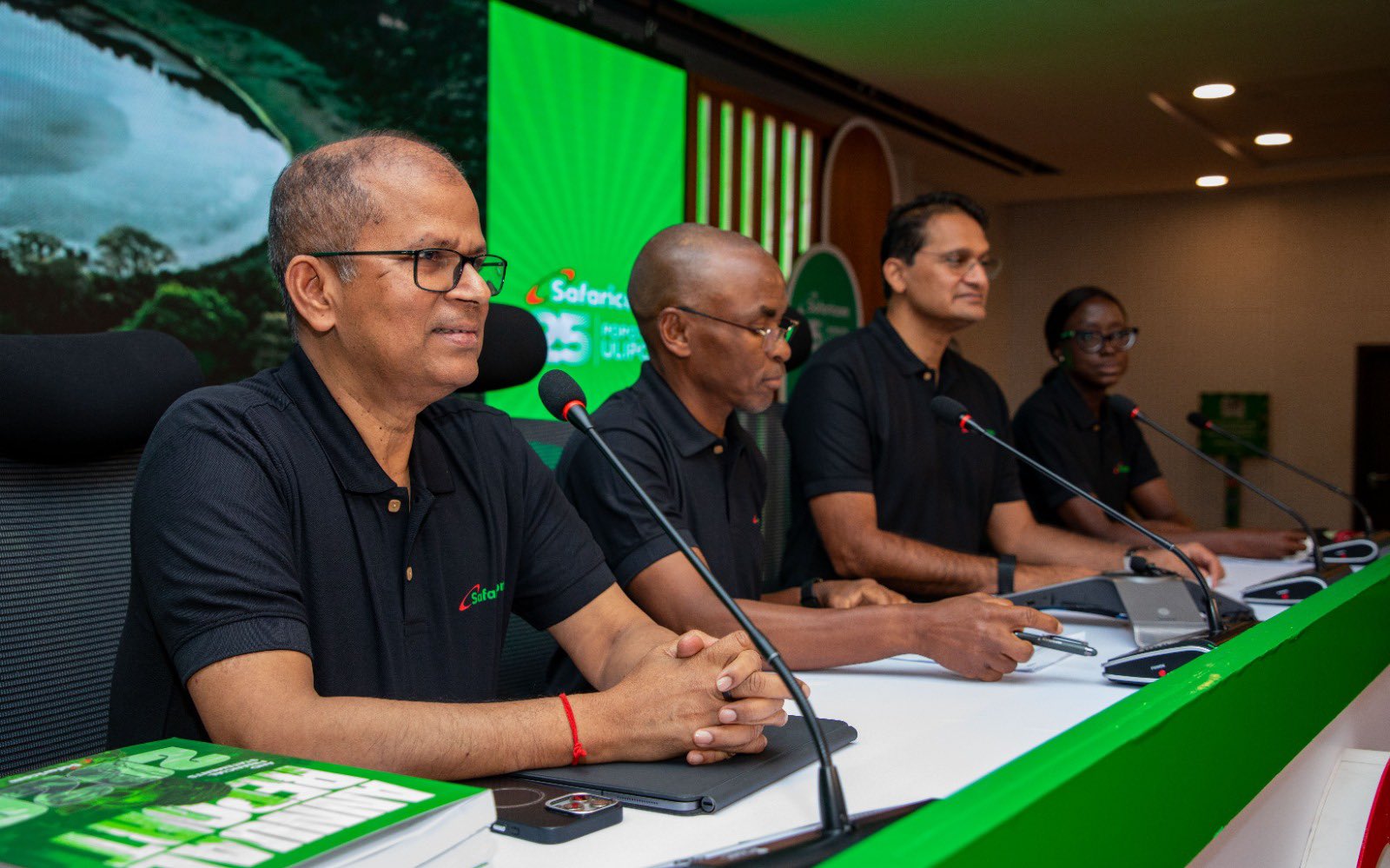
Safaricom shareholders have approved 14 special resolutions that formally align the company’s governance framework with Vodacom’s majority ownership following the completion of the group’s acquisition that lifted its stake to about 55%. The Safaricom special resolutions amend the company’s Articles of Association to define how directors are appointed, how the Chief Executive Officer is selected, how board disputes are resolved and where the Kenyan government retains oversight despite no longer being the largest shareholder.
The changes represent the constitutional completion of Safaricom’s ownership transition. They convert governance practices that would ordinarily accompany majority ownership into rules written directly into the company’s Articles of Association, giving shareholders, directors and investors greater certainty about how the company will be governed going forward.
At the centre of the amendments is a clearer allocation of authority between Vodafone Kenya Limited and the National Treasury. While Vodafone Kenya gains governance rights consistent with its position as the majority shareholder, the government retains approval rights over decisions considered strategically important to the company and the country.
Shareholders Align Governance With Vodacom’s Majority Ownership
The resolutions follow a series of corporate developments that culminated in Vodacom completing its acquisition of an additional stake in Safaricom, raising its ownership to approximately 55%. Soon after completing the transaction, Vodacom raised its Vision 2030 revenue ambition from more than ZAR200 billion to more than ZAR300 billion while also increasing its medium-term earnings and cash flow targets, underscoring Safaricom’s growing importance within the wider group.


Against that backdrop, the governance amendments appear less like routine constitutional housekeeping and more like the legal framework needed to support a company that now sits at the centre of Vodacom’s long-term strategy.
One of the most consequential changes concerns the appointment of Safaricom’s Chief Executive Officer. Under the amended Articles, the CEO must be selected from nominees put forward by Vodafone Kenya for as long as the shareholder maintains ownership above the 50 percent threshold.
The provision does not remove established corporate governance procedures around executive appointments. Rather, it defines where the nomination originates while reflecting the rights generally associated with majority ownership.
For investors, the amendment reduces uncertainty around future leadership succession by establishing a clear process tied directly to shareholding levels rather than informal practice.
The same principle extends to the composition of the board.
Vodafone Kenya will now be entitled to appoint one director for every complete 10 percent shareholding. Based on its current ownership, that translates to five board appointments. The National Treasury will retain the same entitlement formula, allowing it to appoint two directors based on its approximate 20 percent holding.
Rather than assigning board seats through negotiated arrangements, the Articles now establish a transparent formula that automatically reflects changes in ownership. If either shareholder’s stake changes materially in the future, board representation adjusts according to the same constitutional framework instead of requiring a fresh governance agreement.
The amendments also establish a mechanism for resolving disagreements that cannot be settled through normal board deliberations. Where disputes remain unresolved, directors appointed by Vodafone Kenya and the National Treasury will determine the outcome.
Although such provisions rarely attract public attention, they serve an important governance purpose by defining how deadlocks are handled before they arise. Large listed companies with multiple significant shareholders often incorporate similar mechanisms to reduce uncertainty during periods of strategic disagreement.
Government Retains Oversight Over Strategic Decisions
While the amendments strengthen Vodafone Kenya’s governance rights, they stop short of giving the majority shareholder unrestricted authority over every strategic decision. Shareholders approved provisions requiring government consent before Safaricom can change its brand or expand beyond Kenya and Ethiopia, preserving state oversight in areas considered nationally significant.
Those safeguards acknowledge Safaricom’s unique position within Kenya’s economy. The company is more than the country’s largest telecommunications operator; it also operates critical digital infrastructure used by millions of consumers, businesses and public institutions. The requirement for government approval means decisions that could reshape Safaricom’s identity or geographic footprint remain subject to an additional layer of oversight even after the ownership structure changed.
The reference to Kenya and Ethiopia also reflects the company’s current strategic priorities. Ethiopia has become Safaricom’s largest expansion outside its home market and an important part of Vodacom’s long-term growth plans. By specifically identifying those two markets, the Articles distinguish between existing operations and any future expansion into additional countries.
New Rules Clarify Dividend Policy and Board Structure
The amendments extend beyond ownership and board appointments. Shareholders also approved a provision requiring directors to follow the company’s approved dividend policy unless shareholders authorize a different approach.
For investors, that introduces greater consistency around capital allocation. Dividend policies can evolve as businesses grow or investment priorities change, but the revised Articles make clear that departures from the approved framework require shareholder backing rather than a board decision alone. The change reinforces accountability while giving investors clearer expectations about how future profits may be distributed.
Safaricom also introduced greater flexibility in the composition of its board. The Articles now provide for a minimum of seven directors without imposing a maximum number. That approach allows the company to expand the board as operational needs change, whether to strengthen expertise in telecommunications, financial services, technology, cybersecurity or regional operations.
A fixed minimum also ensures the board maintains sufficient diversity of experience while avoiding constitutional amendments every time additional expertise is required.
Why the Governance Changes Matter for Investors
Viewed individually, several of the amendments appear administrative. Taken together, they establish a governance framework that reflects Safaricom’s new ownership structure while preserving protections for other shareholders and the Kenyan government.
The resolutions also remove much of the ambiguity that often follows a change in corporate control. Leadership appointments, board representation, dispute resolution and dividend governance are now governed by explicit constitutional provisions instead of relying on convention or shareholder agreements that may be less visible to investors.
That clarity is likely to be welcomed by institutional investors, who generally place significant value on predictable governance arrangements. Companies with well-defined decision-making frameworks tend to provide greater confidence around succession planning, board accountability and shareholder rights, particularly when ownership is concentrated.
The amendments also illustrate the balance shareholders sought to achieve following Vodacom’s acquisition. As the majority shareholder, Vodafone Kenya receives governance rights that correspond with its ownership position. At the same time, the National Treasury retains oversight over decisions that carry broader strategic importance, ensuring the government’s role extends beyond its reduced shareholding.
For Safaricom, the resolutions complete another stage in the company’s evolution from a business with a dispersed governance framework into one operating under a constitutional structure that reflects its ownership today. They do not alter the company’s commercial strategy or day-to-day operations, but they establish clearer rules for how authority is exercised, how major decisions are made and how the interests of its principal shareholders are balanced as Safaricom enters its next phase under majority ownership.
Download the free Kaspersky SMB Cybersecurity Guide here to learn how businesses can move beyond traditional antivirus and build a more resilient approach to cybersecurity.
Go to TECHTRENDSKE.co.ke for more tech and business news from the African continent and across the world.
Follow us on WhatsApp, Telegram, Twitter, and Facebook, or subscribe to our weekly newsletter to ensure you don’t miss out on any future updates. Send tips to editorial@techtrendsmedia.co.ke


