

Inside Kenya Airways’ Boeing 777-300ER as the Long-Haul Flagship Returns

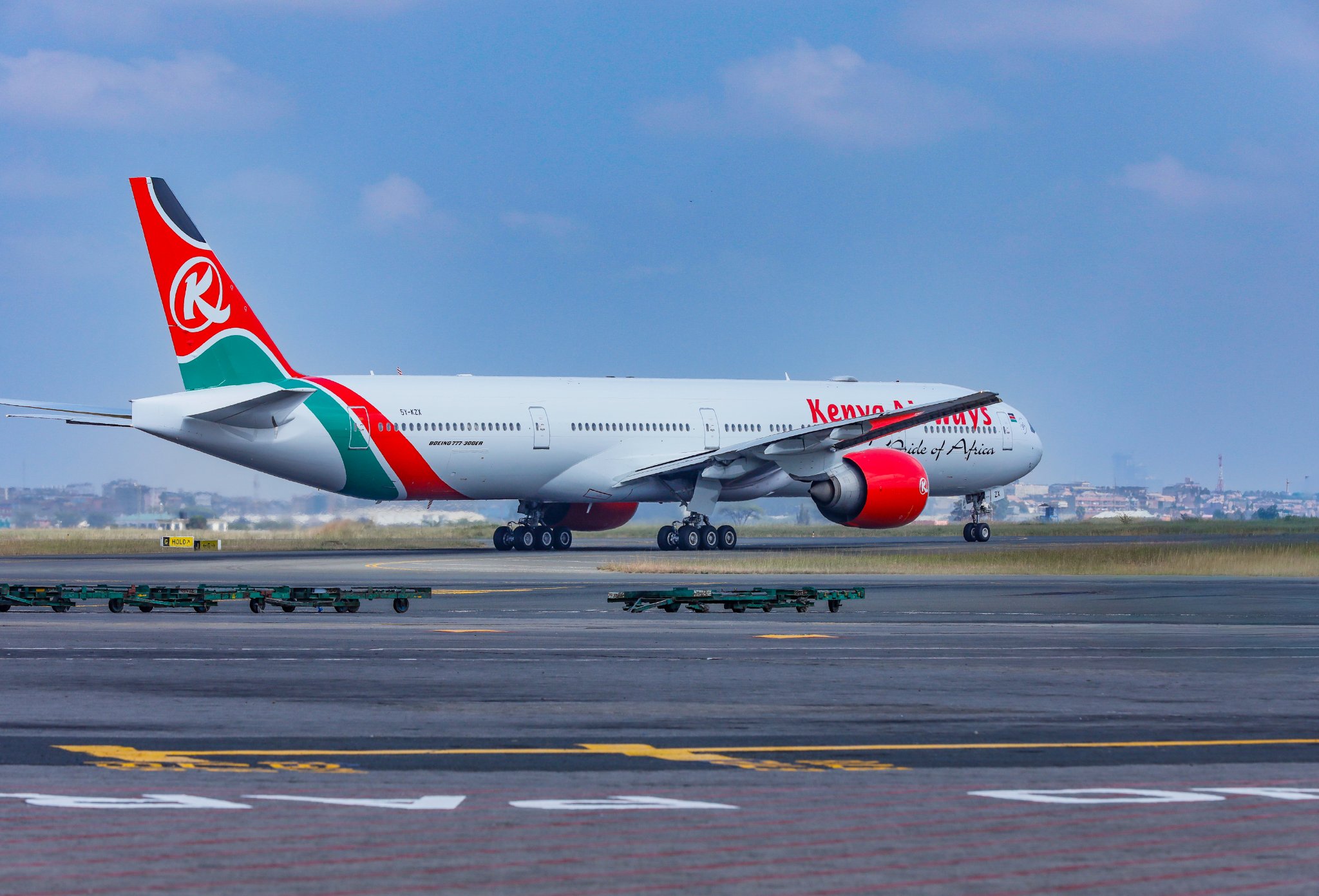
When the Kenya Airways Boeing 777-300ER touched down in Nairobi after a decade on lease to Turkish Airlines, it marked more than the return of one aircraft. It brought back the airline’s largest passenger jet at a time when Kenya Airways is rebuilding long-haul capacity and strengthening some of its busiest international routes. Before settling into regular London operations, the aircraft made an unexpected appearance on the Nairobi-Mombasa route, giving thousands of local travellers a chance to experience a long-haul cabin on a flight lasting less than an hour.
The Boeing 777-300ER rejoined the Kenya Airways fleet in early July after spending ten years under a sublease with Turkish Airlines. The aircraft, registered as 5Y-KZX, is one of the airline’s highest-capacity passenger jets and returns at a time when airlines worldwide continue to manage aircraft delivery delays while responding to sustained international travel demand.
Its arrival restores additional wide-body capacity without the airline taking delivery of a new aircraft, giving Kenya Airways greater flexibility across its long-haul network and reducing pressure on existing aircraft during peak operations.
Rather than placing the aircraft directly into scheduled international service, the airline first introduced it through a series of domestic flights between Nairobi and Mombasa.

At first glance, deploying a 400-seat aircraft on one of Kenya’s shortest commercial routes appeared unusual.
The flights served a practical purpose.
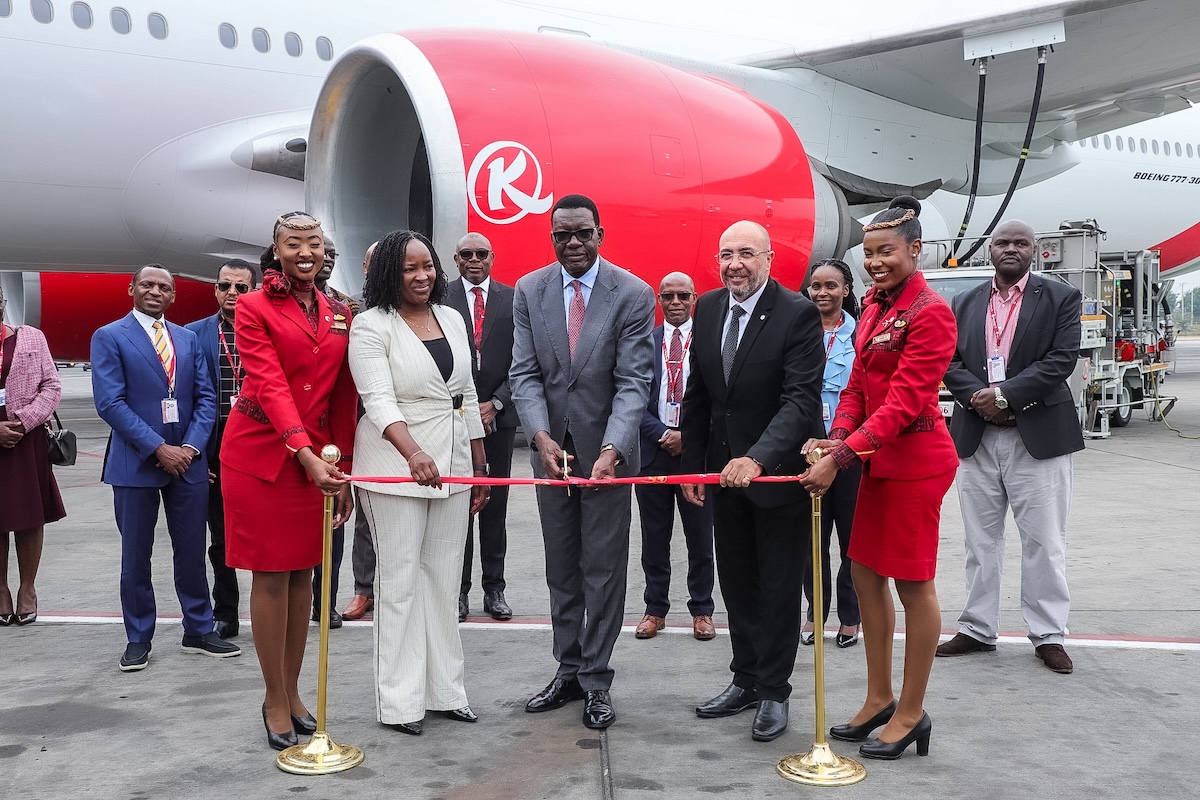
Pilots, cabin crew, engineers and ground operations teams used the rotations to familiarise themselves with the aircraft after its return to the fleet. Operating revenue flights also allowed Kenya Airways to complete these checks while carrying passengers instead of positioning an empty aircraft.
The airline paired the exercise with promotional fares, opening the experience to domestic travellers who rarely have the opportunity to board one of its flagship long-haul aircraft before it entered international service.
The Boeing 777-300ER is built for intercontinental travel.
In Kenya Airways’ configuration, it accommodates around 400 passengers across Business and Economy cabins, significantly more than the airline’s Boeing 787-8 Dreamliners, which seat 234 passengers. That additional capacity gives the airline more flexibility on routes where demand consistently exceeds what smaller wide-body aircraft can accommodate.
The aircraft also carries substantially more cargo beneath the passenger deck, with belly-hold capacity of roughly 22 tonnes alongside passenger baggage. That makes it particularly valuable on routes where freight contributes alongside passenger revenue. Fresh flowers, vegetables, avocados and other Kenyan exports destined for Europe can travel in the aircraft’s cargo hold while passengers occupy the cabin above.
For travellers, the aircraft offers flat-bed Business Class seats, a twin-aisle cabin and a long-haul onboard experience that differs noticeably from narrow-body domestic aircraft.
Following its domestic familiarisation programme, the Boeing 777-300ER entered scheduled service on Kenya Airways’ Nairobi-London Heathrow route.
London remains one of the airline’s most strategically important long-haul destinations, serving business travellers, tourists and the Kenyan diaspora while connecting Nairobi to one of the world’s busiest aviation hubs. It is also one of Kenya Airways’ strongest cargo markets, providing exporters with direct access to the United Kingdom and onward European connections.
Deploying the larger aircraft allows Kenya Airways to increase both passenger seating and freight capacity on a route where demand is already well established. The move also reflects a broader industry trend in which airlines concentrate their largest aircraft on proven international routes capable of supporting higher capacity and stronger commercial returns.
The return of the Boeing 777-300ER expands Kenya Airways’ operational options without adding a factory-fresh aircraft to its fleet.
It allows the airline to deploy more seats on high-demand routes, strengthen cargo capacity and reduce reliance on leased wide-body aircraft for some international services. More broadly, the aircraft supports Kenya Airways’ efforts to improve long-haul profitability by investing additional capacity where passenger demand and export volumes are already strongest.
For passengers who watched the aircraft make its brief appearance between Nairobi and Mombasa, those flights offered a rare opportunity to experience one of the largest aircraft ever scheduled on Kenya’s busiest domestic corridor.
Its regular home, however, lies on long-haul routes, where passenger demand and cargo volumes make full use of the Boeing 777-300ER’s size and range. As Kenya Airways continues its turnaround strategy and seeks sustainable long-term growth, the aircraft’s return represents more than a fleet addition. It is a calculated investment in one of the airline’s most commercially important international markets, where additional capacity can support passenger growth, strengthen Kenyan exports and reinforce Nairobi’s role as a leading aviation gateway between Africa and the rest of the world.
Download the free Kaspersky SMB Cybersecurity Guide here to learn how businesses can move beyond traditional antivirus and build a more resilient approach to cybersecurity.