Kenya Airways investor search stalls again as competing interests test the airline’s turnaround plans

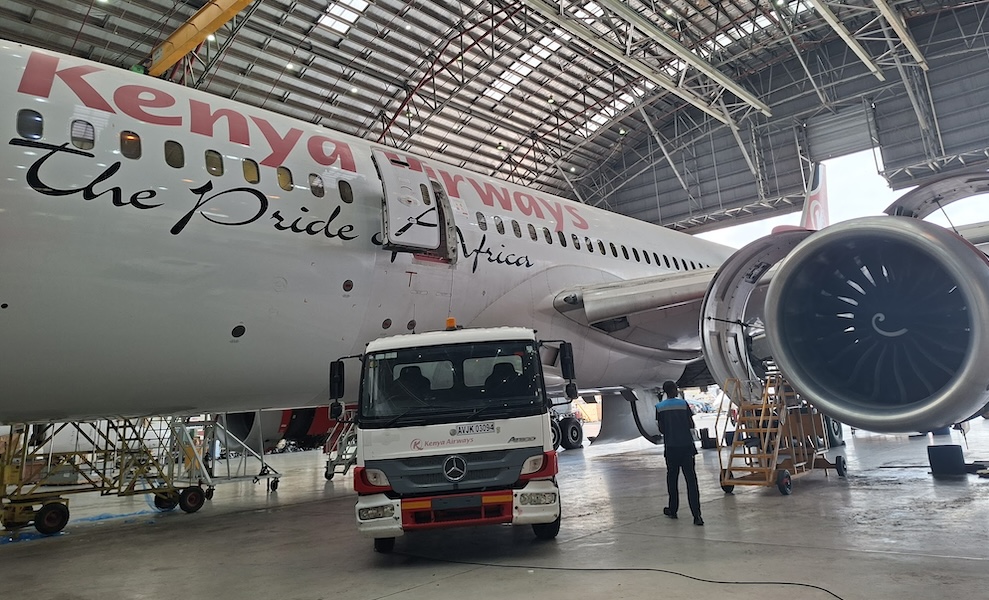
Kenya Airways’ search for a strategic investor has run into another complication just as the airline prepares for another change at the top.
An investment offer was reportedly close to being concluded in January 2026 before interest groups pushed for the process to be opened to more potential investors, according to people familiar with the turnaround plans. The airline subsequently moved toward a competitive tender, but nearly seven months later that tender has yet to be floated.
The timing matters because KQ is trying to solve several problems at once. Its revenue has held up despite aircraft shortages, but losses have widened, its balance sheet remains deeply negative and the airline needs more aircraft to take advantage of demand on some of its strongest routes. At the same time, Acting Group Managing Director and CEO George Kamal is leaving the airline, with Company Secretary and Director of Legal Services Habil Waswani due to take over as acting CEO on September 15.
The investor deal that reportedly fell apart
The most revealing part of the latest development is what happened at the start of the year. Business Daily reports that an investor offer was close to being sealed around January, but that some interest groups pushed for the field to be opened to more parties. Sources quoted by the publication said the dispute led KQ to revert to a tender process for selecting a strategic investor.
That account remains contested. KQ chairman Kiprono Kittony has denied that there has been a fallout over the investment process, saying the board is united and that the transaction remains on course. He said KPMG had completed the investor memorandum and that the airline was now working on appointing a transaction adviser before proceeding with the open tender.
That distinction is important. There is a reported account from insiders describing competing interests around the investor process, but the board’s position is that the process remains on course. What can be established more clearly is that the process has taken longer than initially expected, while KQ’s financial and operational needs have continued to mount.

KPMG’s involvement gives the exercise a more formal structure. The consultancy was brought in to prepare an investment memorandum that would guide the tender, and the KQ board approved the document. The next step, according to Kittony, is the appointment of a transaction adviser.
The problem is that the clock has already been running. KQ has been searching for strategic capital through successive leadership teams, and the latest process was already attracting multiple parties before the formal tender was ready.
Why KQ moved toward a tender
There is a straightforward reason for the board’s preference for an open process: Kenya Airways is publicly listed, and the chairman argues that competing proposals should be assessed through a transparent process.
That approach, however, creates a trade-off. A competitive process can give a company more options and potentially improve the terms available to existing shareholders, but it can also take longer than negotiating directly with a single investor that has already completed much of its assessment.
For KQ, time has a financial cost.
The airline reported KSh81.3 billion in first-half revenue, an increase of 9 percent despite a 9 percent reduction in capacity. Cabin factor also improved from 72.4 percent to 76.3 percent. Those numbers suggest that the airline can generate substantial revenue when it has enough seats and aircraft available.
Yet the improvement at the top line has not solved the underlying financial problem. KQ’s first-half net loss widened to KSh16.1 billion, while operating costs increased faster than revenue. At the end of June, the airline’s liabilities were far above its assets, leaving it with a deeply negative equity position.
That makes the investor process much more consequential than a normal fundraising exercise. KQ needs capital, but it also needs to make sure the transaction leaves the company with a structure that can support the business after the money arrives.
Four investors, very different proposals
The investor pool has also become more interesting than the conventional search for a single cash-rich strategic partner.
Kamal said in March that KQ was talking to at least four potential investors. The airline has not publicly identified them, saying disclosure could prejudice negotiations, but it has said that interest has come from the United States, China, South Africa and Singapore.
The proposals differ considerably. One potential investor has offered to provide a loan, another wants an equity position, while another has indicated that it has aircraft that could be contributed to Kenya Airways in exchange for a stake in the airline. KQ has also been open to having more than one investor participate rather than relying on a single partner.
That last option could be particularly relevant because KQ’s requirements are unusually broad. A financial investor can provide capital, but an airline or aviation company could potentially contribute aircraft, network access, operational expertise, training or commercial partnerships.
The aircraft-for-equity proposal is therefore worth watching closely. KQ has been dealing with grounded aircraft and maintenance constraints that have limited the number of seats it can sell. Its own fleet numbers 34 aircraft, but several have been unavailable at different points because of maintenance requirements and shortages of spare parts.
An investor contributing aircraft could address that problem directly. It could reduce the immediate cash KQ would otherwise need to spend on acquiring or leasing additional capacity, while giving the investor an ownership interest. The valuation of the aircraft, the size of the equity stake and the terms under which KQ operates those aircraft would determine whether such an arrangement is genuinely beneficial to the airline.
The proposal is particularly revealing because it addresses one of the central problems in the turnaround: KQ needs capital to get more aircraft flying, but it also needs more aircraft to generate the revenue that could support the wider recovery.
KQ needs capital, but it also needs aircraft
The fleet problem helps explain why the investor search cannot be judged purely by the size of the cheque.
KQ has been working to bring grounded aircraft back into service while planning further fleet growth. Its strategy calls for full fleet capacity to be restored by the end of 2026, while longer-term plans include substantial expansion. The airline has also identified routes where additional aircraft could support higher frequencies.
The return of its Boeing 777-300ER to scheduled service on the Nairobi-London Heathrow route showed what additional capacity can mean for the carrier. KQ is rebuilding its long-haul operation while trying to make better use of routes where demand remains strong.
The financial results reinforce the point. KQ generated more revenue with fewer available seats, while some routes recorded very high cabin factors during parts of the first half. The issue is therefore partly one of having enough aircraft available to serve demand consistently and do so at a cost the business can sustain.
That makes an aircraft contribution potentially attractive, but it does not remove the need for cash. Maintenance, fuel, staff, airport charges, debt servicing and other operating expenses still require liquidity. KQ’s investor therefore has to help solve both the capacity problem and the financial one.
The balance sheet makes the deal harder
KQ’s capital needs have grown as the airline’s financial position has become clearer.
Earlier in the year, the carrier was discussing a US$500 million recapitalisation alongside a search for a strategic investor. Its wider financing requirements have since been discussed at substantially higher levels, reflecting the scale of its negative equity, fleet requirements and turnaround needs. The latest reporting puts the requirement at roughly US$1.2 billion, while earlier coverage had discussed figures of up to US$1.5 billion.
These figures should be understood in the context of an evolving financing plan rather than treated as one fixed fundraising number. KQ has been considering different forms of capital and restructuring its balance sheet alongside the investor search.
The Government of Kenya remains central to that process. KQ management has said roughly 90 percent of the airline’s debt is owed to its largest shareholder, and discussions have included restructuring that debt and changing the shareholding structure. The government has also assumed part of KQ’s debt with the intention of converting it into equity once a strategic investor is secured.
That matters to prospective investors because the value of a new equity stake depends heavily on what the balance sheet looks like after the transaction. Bringing in fresh money without addressing the existing debt burden could leave the new investor funding a company whose financial structure remains difficult to sustain.
KQ has therefore been looking at bridge financing as a way of stabilising the airline before completing a larger strategic transaction. Management has also expressed concern about raising permanent capital while the company is in a severely weakened negotiating position, because an urgent funding need can translate into a lower valuation.
The leadership changes add another layer
The investor process is unfolding against another leadership transition.
Allan Kilavuka left as KQ’s substantive Group Managing Director and CEO in December 2025 after roughly six years at the helm. Kamal then became acting CEO on December 16, 2025. Now Kamal is leaving, and Waswani is scheduled to become acting CEO from September 15 while the board continues its search for a substantive appointment.
That means KQ is heading into its third CEO-level transition since December, although the roles need to be distinguished. Kilavuka was the substantive CEO, while Kamal and Waswani have held or will hold the position on an acting basis.
Kamal’s departure should also be kept separate from the investor dispute. He has denied that his resignation is connected to the search for strategic capital, saying that a personal matter required him to take leave and return home.
The timing is nevertheless consequential. Kamal had been one of the executives discussing the investor process publicly, including the emergence of multiple potential investors and the different forms of capital they were considering. His departure leaves the board to oversee the next stage while it also searches for a permanent chief executive.
Waswani brings more than 24 years of legal and corporate governance experience and more than five years at KQ. His appointment provides continuity at the executive level while the permanent search continues, but the wider question is whether the airline can maintain momentum across the investor, fleet and balance-sheet work during another interim period.
A strategic investor has to solve more than one problem
The history of KQ’s investor search shows why the current process deserves scrutiny.
The government previously sought a strategic investor for its 48.9 percent stake, including discussions with Delta Air Lines in 2022. Those talks did not produce an investment. Kilavuka later said in August 2024 that KQ was close to concluding negotiations with a potential investor, but those talks also failed to result in a deal.
The latest attempt is therefore arriving after several rounds of unsuccessful discussions. What has changed is the scale and variety of the proposals now being considered.
KQ has an operating network that can generate significant revenue, a strategic position at Nairobi’s Jomo Kenyatta International Airport and partnerships that extend its commercial reach well beyond the destinations it serves with its own aircraft. Its challenge is getting enough capital and capacity behind that network without recreating the cost pressures that have repeatedly weakened the airline.
The airline’s cargo ambitions add another part to the equation. KQ wants to increase cargo’s contribution to revenue, while its Maintenance, Repair and Overhaul business is also being developed as a separate source of income. Those businesses could give an investor more than a passenger airline to work with, provided the necessary capital and management discipline are in place.
That is why the strongest investor may not necessarily be the one offering the largest amount of money. An aviation partner with aircraft and commercial expertise could address constraints that a purely financial investor cannot. A financial investor, on the other hand, may be better positioned to provide the balance-sheet support KQ needs.
The terms will matter as much as the headline value.
What happens next for Kenya Airways
The immediate next step is the appointment of a transaction adviser, followed by the international tender for a strategic investor. KQ says the investor memorandum prepared by KPMG is already complete and that the process remains on course.
The harder question is how quickly that process can move while the airline continues to absorb losses and rebuild capacity.
KQ’s recent results show that there is a business worth financing. Revenue has grown despite reduced capacity, cabin factors have improved and management is bringing aircraft back into service. But the negative equity position, high operating costs and fleet requirements mean that a new investor will have to put much more than fresh cash behind the turnaround.
The airline is also entering another period of leadership uncertainty, even if the board insists the permanent CEO recruitment is progressing. That makes execution particularly important. The investor process has already gone through several iterations, while the amount of capital being discussed is large enough to affect KQ’s ownership, debt structure and ability to expand its fleet.
For Kenya Airways, the objective now is bigger than completing a transaction. It needs a deal that gives the airline enough financial room to restore capacity, repair its balance sheet and compete for the demand already visible across its network.
The next few months should reveal whether the latest investor search can finally move from proposals and memoranda to a transaction, and whether the capital structure that emerges gives KQ a realistic chance of sustaining its turnaround.
Real ESG impact doesn’t happen in panels alone, it happens in the rooms where financiers, operators, and policymakers actually align. Our GreenShift Forum 2026 cuts the noise, bringing together the people rewiring Africa’s sustainability and energy frameworks for one focused day in Nairobi. Secure your seat.
Go to TECHTRENDSKE.co.ke for more tech and business news from the African continent and across the world.
Follow us on WhatsApp, Telegram, Twitter, and Facebook, or subscribe to our weekly newsletter to ensure you don’t miss out on any future updates. Send tips to editorial@techtrendsmedia.co.ke